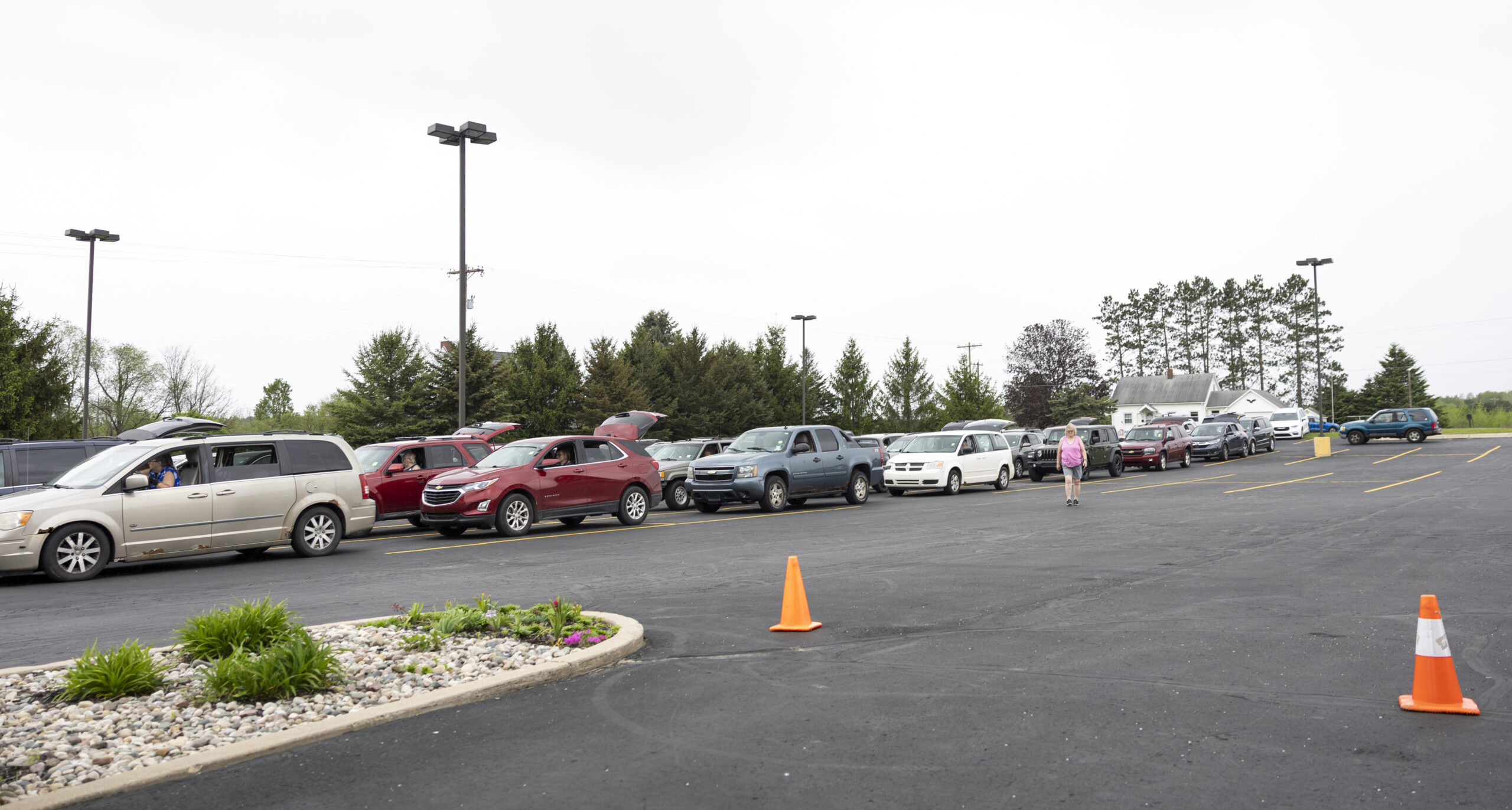
When Food Share of Ventura County in California started up a drive-through distribution program during Covid, it expected to run it for 60 days. Today, the drive-through is still going strong, pumping out tons of food to up to 1,000 cars every Wednesday.
The staying power of the drive-through at Food Share and a number of other food banks is a testament to their efficiency, versatility and the fact that people just plain like them. While drive-throughs have morphed a bit from the heyday of the mega distributions held during Covid, they still play a big role in food distribution at many food banks, helping to address a number of issues.
Feeding America West Michigan believes it made food banking’s first move toward drive-through distributions in the late 1990s when it refashioned an old soda truck and used it to bring food to locations where people would park their cars, walk about the truck, and pick what they wanted. The pandemic pushed that walk-up model to a drive-through model that persists today at just about every one of the food bank’s 1,600 or so mobile food distributions.
“It just became really efficient,” said Anne Hamming, Marketing and Communications Manager. “The people liked it, the volunteers liked it. So yeah, it really stuck.”
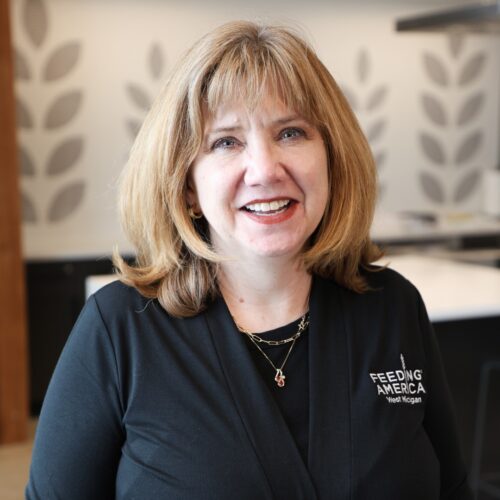
Drive-throughs serve a number of purposes. In Southern California, Food Share found that they offer a sense of security to neighbors nervous about leaving their cars in case of ICE, said Monica White, President and CEO. They are easier for people with mobility issues and handy for those with little kids. They go fast, with some being completed in an hour or less, and also resolve any concerns about parking. While they may fall short in terms of being able to offer clients a full choice of products, they fulfill the dignity of giving people the option of not leaving their cars.
At Feeding America West Michigan, drive-throughs have led to many more distribution outlets. Only about one-quarter of its drive-throughs occur at partner agencies, with the majority happening at community outlets such as rotary clubs or schools that may not have the capacity to operate a full pantry, but can mobilize enough outdoor space and volunteers to hold a drive-through distribution for a few hours every month.
“That’s the beauty of it,” Hamming said. “We can engage these willing partners who want to contribute and it’s a much lower barrier to entry.” In communities with limited bricks-and-mortar facilities, “as much as 70% of the charitable food that we get into that community comes through our mobile food distribution,” she added.
These days, drive-through distributions are proving useful for both large and small food banks. Gleaners, the largest food bank in Indiana, chose to lean into drive-throughs when the volume of clients coming to its on-site pantry became overwhelming post-Covid. And it recognized that the speed, convenience and autonomy of its Covid-era drive-through had won over many converts. (See our story, here.)
Smaller-scale Franklin Food Bank, which serves a single township in New Jersey, also continues to run a drive-through distribution it stood up during Covid. “We found that there’s really no reason to end what’s a very popular program,” said Allie O’Brien, Development Director.
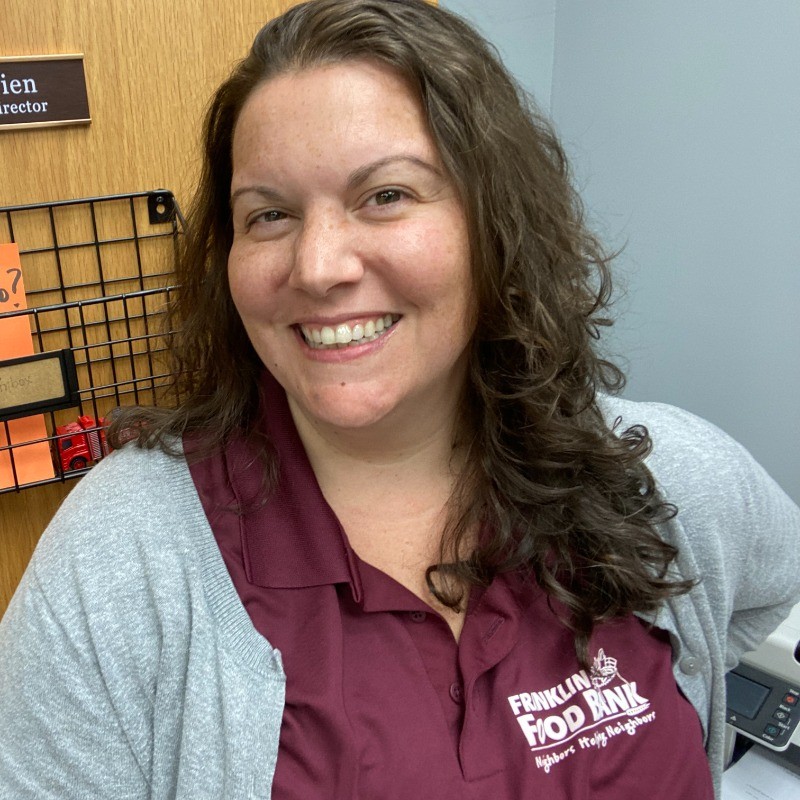
The drive-through, which distributes more than 1,100 packages of produce in about two hours, became so popular that the food bank had to move it to a new, bigger location. An added benefit of the new location is that it’s closer to a nearby struggling community. “We find this is a good way for us to expand our footprint into a region that we know is suffering in the ways that Franklin is suffering,” O’Brien said.
She noted that people appreciate the anonymity of a drive-through and added, “Our drive-through distribution is not like your normal drive-through. We’ve got music pumping out there. We have volunteers dancing. It’s a good time because we realize that we’re serving the community, but we’re also spreading joy as much as we possibly can.”
San Antonio Food Bank, which became well-known for its mega food distributions during Covid, has evolved its strategy to focus on smaller, more frequent ones. Instead of serving several thousand households at once, it is now serving several hundred at a time through dozens of so-called “mobile markets” being held in communities every day. “We were consciously trying to eliminate the wait times and make it more convenient,” said Eric Cooper, President and CEO.
In addition to meeting clients where they’re at, drive-through distributions can help fulfill specific operational goals. They are very handy for distributing produce, for example, because the food never has to make a stop at a pantry. Said Hamming of Feeding America West Michigan, “We can get fresh produce that’s near the end of its shelf life, and turn it around fast enough so people can still use it.” – Chris Costanzo
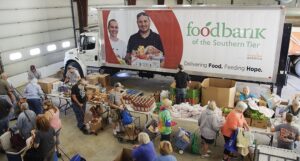
CAPTION FOR PHOTO, TOP: A drive-through distribution supported by Feeding America West Michigan.
Like what you’re reading?
Support Food Bank News
This article was made possible by the readers who support Food Bank News, a national, editorially independent, nonprofit media organization. Food Bank News is not funded by any government agencies, nor is it part of a larger association or corporation. Your support helps ensure our continued solutions-oriented coverage of best practices in hunger relief. Thank you!