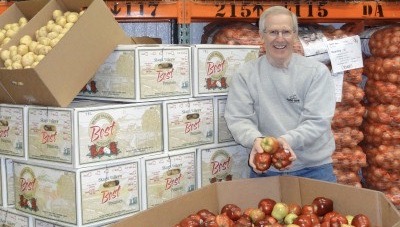
Vinnie Oakes used to order produce by the case. Now he buys it by the truckload.
That is just one of the differences Oakes encountered when he moved from a long career in restaurant and casino hospitality to Reno-based Food Bank of Northern Nevada, where he has served as Director of Food Purchasing since 2006.
With degrees in Culinary Arts and Hotel & Restaurant Management from the Culinary Institute of America and University of Denver, Oakes spent much of his hospitality career in casinos and hotels, overseeing service/food quality, training, menu development, revenue/cost control, and financial management.
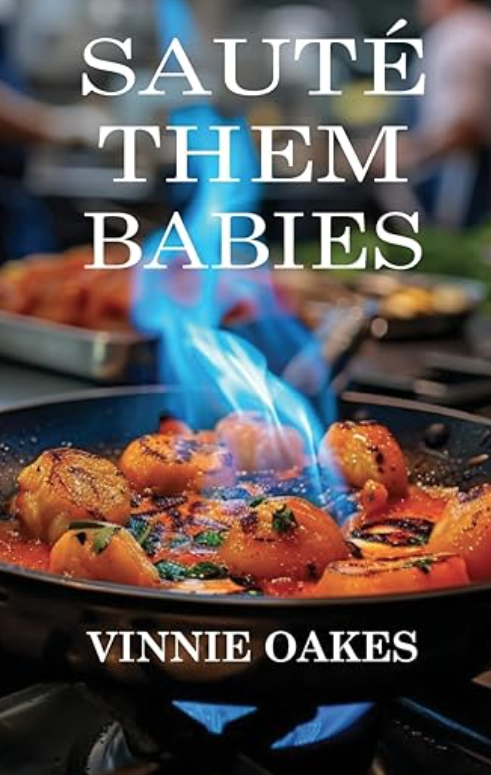
In 2025, Oakes added “author” to his resume. His memoir, Sauté Them Babies, recounts a career filled with unexpected turns, vivid characters, and distinct workplace cultures—from an early job opening a cafe in Central Park that included rowing garbage across a lake, to leading food and beverage operations at Harrah’s in its heyday. It includes stories about meeting a young Paul Prudhomme, who was working in a budget-priced “steak joint” in Denver, and managing Harrah’s Tahoe food venues through a bomb threat (and eventual blast) in a neighboring casino. It’s packed with lively anecdotes about the “very talented, loyal, and remarkable people” Oakes learned from, “whether they were above me, alongside me, or below me on a given org chart.”
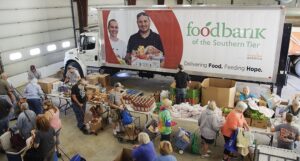
These days, Oakes oversees more than $5 million in purchasing at the Food Bank of Northern Nevada. He began volunteering there as his hospitality career wound down, and joined the staff roughly a year later. He readily admits his volunteer experience didn’t fully prepare him for his new job. “I thought food banking was a walk in the sun … putting cans of food in boxes and shipping it out,” Oakes said. “I found out, over time, that it is layered and layered with complexity.”
Oakes is quick to note that the differences between hospitality and food banking go beyond volume. In hospitality, where most food turns over at least weekly and often sooner, he “didn’t give a half a second” to code dates. “They are simply ‘not a thing’ in the restaurant business.”
Food banking also introduced Oakes to a new cast of characters: “closeout guys,” brokers who move food that cannot sell through normal channels because of labeling errors, packaging issues, overproduction, code dates, or failure to meet retail beauty standards. “I didn’t know there were crappy looking products, like lumpy apples,” he added.
Many closeout brokers don’t own what they’re offering, which makes “delivered cost,” not just product cost, the key factor. Otherwise, Oakes said, “you’ll also have to deal with shipping from wherever the product may be warehoused, which could be 3,000 miles away.”
Dealing with closeouts can also mean high-stakes timing, Oakes noted. Brokers often contact “dozens and dozens” of food banks simultaneously, and different brokers offer different deals on the same shipment. It’s like the NFL, Oakes said. “As with smart running backs, you have to be patient enough for the right moment to move through the gap … Often it pays to wait for the best deal, although other times you just need the food now.”
Unlike corporate budgets, grant timing is unpredictable. “You really can’t budget grants,” Oakes said. The beginning of each fiscal year can feel “kind of like approaching a cliff.” Spending deadlines can also create challenges. During the November SNAP crisis, Oakes had to spend $2.2 million in just five weeks. “It’s fun for people like me, because I press on the gas when I go to work. I like the action, but I’m sure that stresses some people.”
Unexpected donations can also complicate matters. “Every once in a while,” Oakes said, “an unexpected donation of perishable food, usually produce, will arrive just as a load or two of purchased refrigerated food gets delivered.” He often shares these unexpected surpluses with nearby Feeding America food banks cost-free, other than shipping.
Unlike the hospitality industry, closeouts and other secondary channels in food banking can result in unfamiliar brands and variable quality. Oakes emphasizes hands-on verification, including cutting cans to check drained weights. “Those kinds of things, the only reason I know about that is because of my weird background. Food bankers, that’s not their thing.”
Despite the differences, Oakes said, some things remain the same. Purchasing still means buying food. Scale still creates purchasing power, and relationships and service remain key. For Oakes, that includes his relationship with a nearby Walmart distribution center, which has been a longstanding source of food donations and – when he had to purchase that $2.2 million in food last November – extra freezer space.
Oakes offers practical advice for those stepping into food banking from the private sector. Be patient. Expect a slower pace. Remember that agencies have limited infrastructure and often rely on volunteers. He added, “Leave your Nordstrom clothes and the Italian loafers at home … You’re working in a warehouse now. So buy your clothes at a warehouse: Costco.”
Most importantly, he said, remember: “Hungry kids can’t learn. Keep that thought woven into your daily actions.” — Amanda Jaffe
Amanda Jaffe is a writer and former attorney with a deep interest in organizations and mechanisms that address food insecurity. You can find more of her writing on her Substack publication, Age of Enlightenment (https://amandajaffewrites.substack.com/), and at www.amandajaffewrites.com.