Long-standing tax incentives for renewable energy may have expired this month, but that has not dampened enthusiasm for solar projects among a growing set of food banks.
Commercial solar projects that begin after July 3, 2026 are no longer eligible for a federal tax rebate, which previously allowed organizations to recoup 30% of installation costs. Even so, food banks across the country are increasingly adopting solar panels and finding creative ways to finance their projects, including through fundraising campaigns, targeted donors and novel contractual arrangements.
“I would say that there may be opportunities with local and state governments that are beyond whatever the federal government’s providing,” said Michael Braude, Chief Financial Officer at San Francisco-Marin Food Bank. Braude also pointed to private funders and donations from local utility companies as opportunities. “If you have the team and the resources to do that sort of research as to what funders might not typically be on your radar,” he said, “there’s an opportunity there.”

San Francisco-Marin Food Bank was an early adopter of solar energy, installing its first solar array in 2007. By 2025 the food bank had added on, completing the installation of two new solar roofs at its San Francisco and San Rafael facilities. As CFO, Braude played a role in steering both projects, which were funded almost entirely through a capital campaign aimed at expanding and upgrading its warehouses. Relying heavily on private donors, the food bank raised $40 million, including just over $2 million for the solar installations.
While the federal tax incentives were “a nice way to help minimize the cost,” raising enough funds through the capital campaign was ultimately how the food bank moved forward with its solar projects, Braude said. Now the food bank expects to reduce its electric bill by 66% at one facility and 90% at the other.
At Island Harvest Food Bank in Long Island, New York, external partnerships played a large factor in its 2024 solar installation. SUNation Energy, a Long Island solar company, donated all 963 solar panels to the food bank, covering one-fifth of the total installation cost. “To get the panels donated, that in and of itself is a big deal,” said Greg May, Director of Government and Community Relations, adding that the solar panel donation was ultimately “worth more than the tax rebate.”
Two years later, May said the food bank’s solar roof has saved it the equivalent of 600,000 meals. For food banks looking to begin solar projects without the benefit of federal incentives, May also emphasized the importance of casting a wide net. “Talk to everybody. Talk to your board members, talk to your community leaders,” he said. “I think that is what’s going to help out the most.”
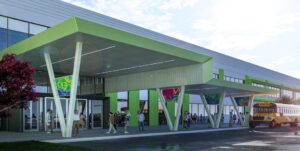
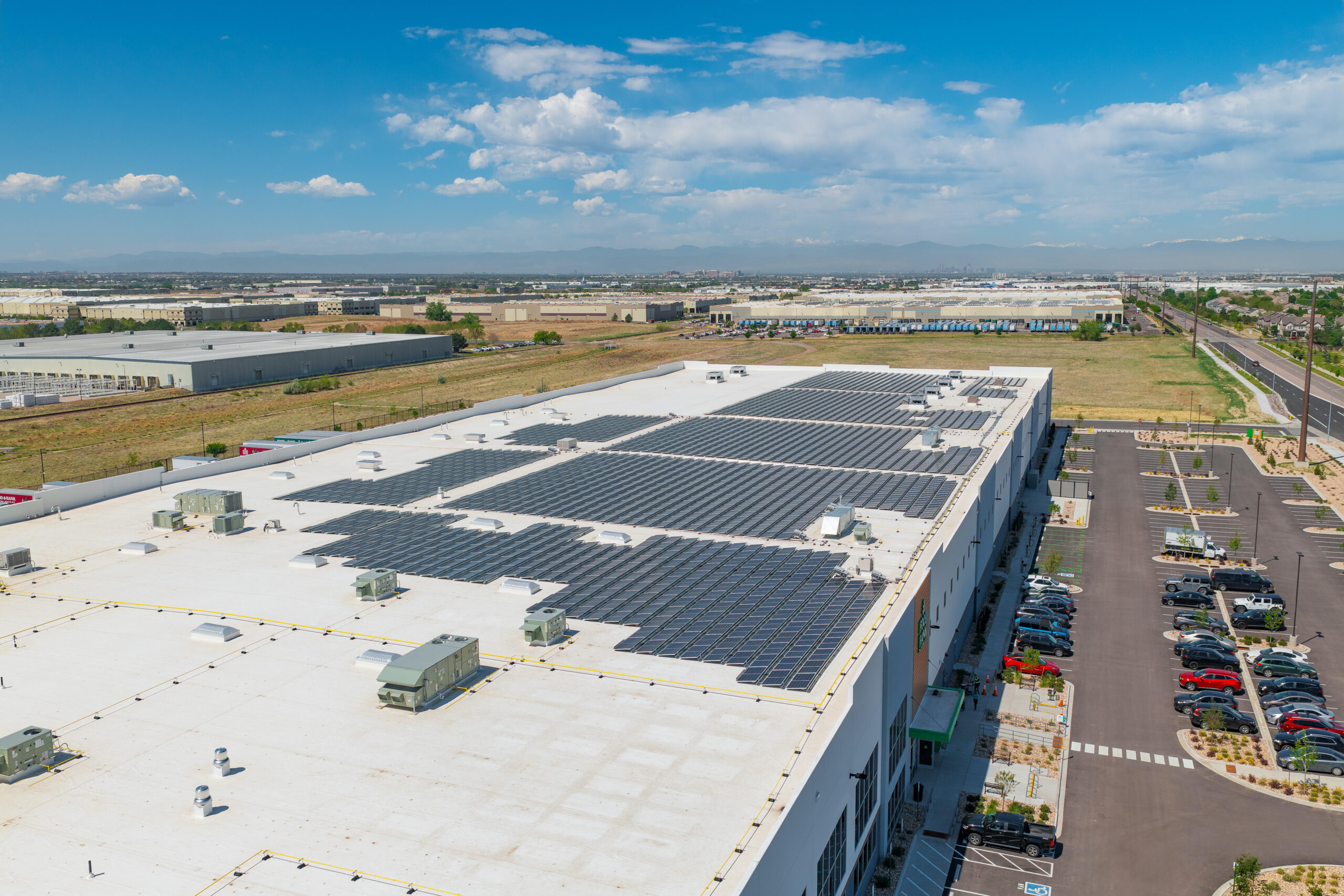
At Food Bank of the Rockies, funding to install the 2,350 solar panels on its newly opened facility in Aurora, Colorado came through a unique agreement with solar financing company Brightwell Capital and an independent investor. The food bank already managed a smaller solar roof at its Grand Junction location, which drew the support of donors and worked well in the Colorado climate. Installing solar panels on the new facility in Aurora “ideologically” made sense, said Steve Kullberg, Chief of Staff, though the food bank lacked the capital to install it on its own.
With an energy management service agreement or EMSA, Brightwell worked with the food bank to find a third-party investor, who covered the entire solar installation. In turn, the investor became the food bank’s solar provider, owning the roof’s generated energy.
Such an agreement effectively shifts the non-profit’s utility payments to the investor. Under the terms, the food bank’s utility payments are kept at a fixed rate, and the investor agrees to provide a designated amount of energy per year. This means the food bank is protected from external utility price hikes, and the investor is obligated to provide consistent energy from the solar panels, or else pay back the difference. Immediately after installation, the investor could benefit from solar tax incentives, and the food bank could begin saving money on energy bills.
In Food Bank of the Rockies’ case, the EMSA expires after 15 years, at which point the investor has said they will gift the solar roof to the non-profit. “We spent nothing” to install the roof, said Kullberg, but will immediately start getting power once it’s turned on. “It’s a very attractive deal,” he said.
The Regional Food Bank of Oklahoma also funded its 2024 solar roof installation with an EMSA through Brightwell. Like Food Bank of the Rockies, an investor paid for the entire installation up front, taking ownership of the energy generated. The food bank has immediately noticed cost savings. “Our electric bills, mostly in the wintertime, have dropped significantly,” said Stephanie Mendenhall, Chief Financial Officer. “We’re saving maybe $5,000 to $10,000 a year.”
Even though the federal tax incentives for solar have expired, Brightwell will continue to be able to fund solar projects. “Through the IRS Safe Harbor guidelines,” many solar tax incentives are “still advantageous,” said Nate Bauer, Director of Organizational Advocacy at Brightwell. The company recently purchased hundreds of solar panels in advance of the expiration deadlines, locking in a majority of available tax credits for its projects “through the end of 2029,” he said. With the capacity to start 140 more commercial projects within the next two years, Bauer said “this is the best time to consider” adopting solar as a non-profit.
Aside from the financial benefits, solar fits well into the larger theme of hunger relief. “Food banks, in many respects, are sustainability organizations,” said Braude of San Francisco-Marin Food Bank. “Money saved by generating your own power allows food banks to serve more people.” – Sidney Slon
Sidney Slon is a graduate student at the Craig Newmark Graduate School of Journalism at CUNY. He is a 2026 summer intern at Food Bank News, and has previously reported for the New York City News Service, U.S. News and World Report, and City Limits.
PHOTO, TOP: Solar panels atop Food Bank of the Rockies’ facility in Aurora, Colo.
Like what you’re reading?
Support Food Bank News
This article was made possible by the readers who support Food Bank News, a national, editorially independent, nonprofit media organization. Food Bank News is not funded by any government agencies, nor is it part of a larger association or corporation. Your support helps ensure our continued solutions-oriented coverage of best practices in hunger relief. Thank you!