About two years ago, Greater Cleveland Food Bank and Feeding Tampa Bay both pioneered a model of food banking that makes it easy for neighbors to access a wide variety of social services at the same time they get their food. The approach has been successful enough that both are building on the concept, even as they continue to assess the best way to increase its impact.
The idea of using food to lead people to other social services is not new. But the two food banks were among the first to embrace the concept in a big way. Each invested tens of millions of dollars into new facilities that house grocery-store style pantries, as well as permanent space for dozens of community partners. By providing easy access to other services, the hope is to reduce the need for charitable food in the first place.
The results have been encouraging, but also tinged by the idea that more could be done. “The concept has absolutely been proven that developing a comprehensive care model or a holistic model for neighbors works far better,” said Thomas Mantz, President and CEO of Feeding Tampa Bay. “What we’re still working our way through is what is the best mousetrap.”
Similarly, Greater Cleveland Food Bank is pleased to have created a popular space that registers very highly in terms of customer satisfaction. At the same time, it is working to get more insight into the outcomes of its efforts. “One of the challenges is tracking long-term impact,” said Kristin Warzocha, President and CEO at Greater Cleveland Food Bank.
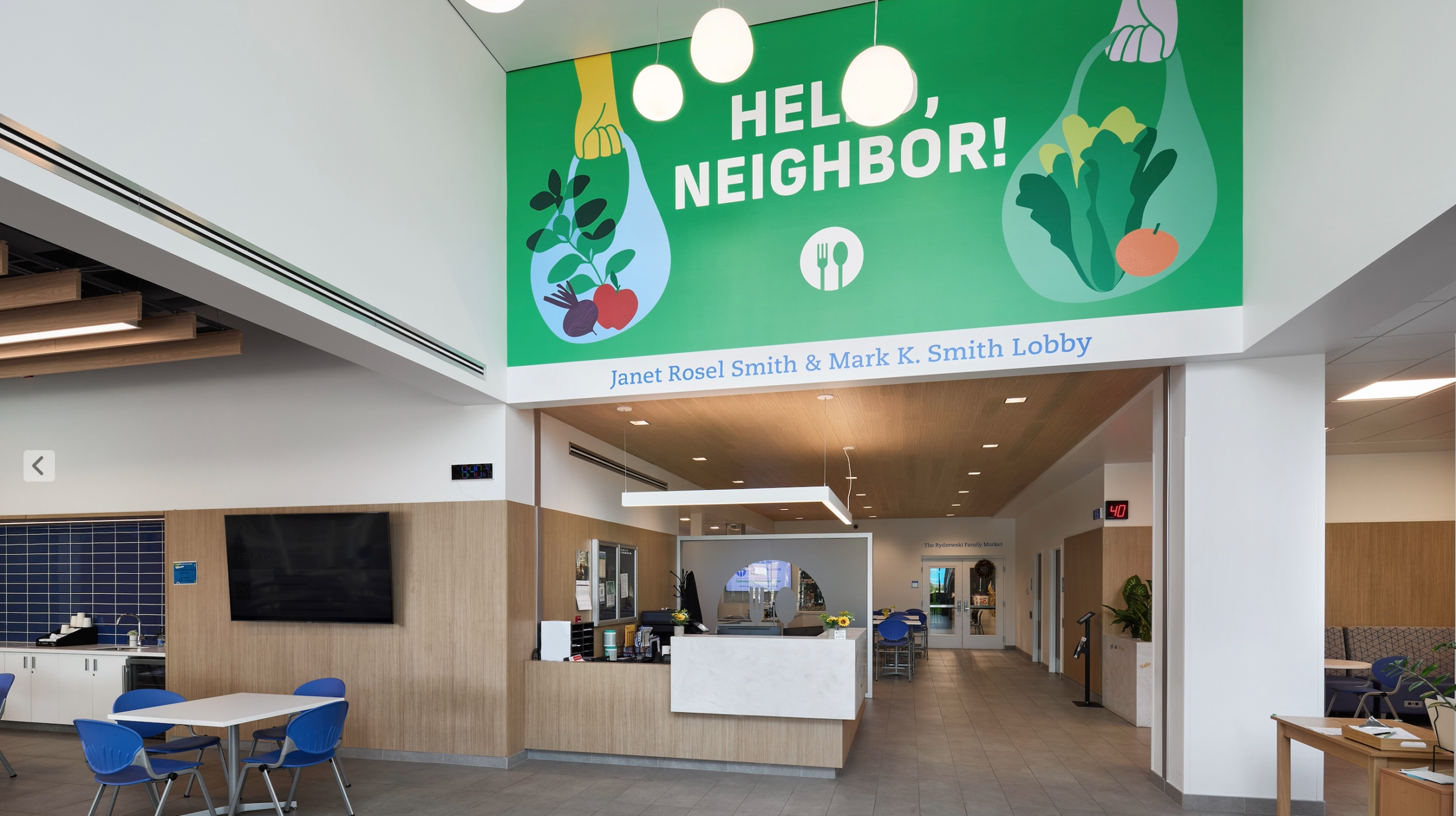
Greater Cleveland Food Bank opened its Community Resource Center at the end of 2023, featuring a large choice pantry and space for nearly 20 community partners. In its second year of operation, it served more than 53,000 unduplicated individuals at its pantry, essentially closing the food insecurity gap in what had previously been an underserved area, Warzocha said. “We were busy literally the first day we opened our doors,” she said.
During the last fiscal year, visitors to the Community Resource Center made more than 24,000 connections with the 17 partners leasing space at the center. For example, 2,395 neighbors were offered $182,000 in utility assistance; 1,283 visited the on-site health clinic; 2,036 were offered $214,014 in cost savings through the diaper bank, and 71 were connected to manufacturing careers.
Generally, while people are waiting for their number to be called to do their grocery shopping, they have the opportunity to interact with representatives from the partner agencies. “We encourage [partner agencies] to be in the lobby as much as possible to make those connections,” Warzocha said, adding that the food bank’s staff and volunteers are also trained to make connections.
The outcome of all that connecting, however, remains hard to know. “We’ve learned that sharing data is a big project,” Warzocha said. “We all track data very differently and have different systems.” While some of the partners are using a software program to track referrals, most are simply reporting back to the food bank on a monthly basis. Soon, the food bank will be announcing a partnership with a local university aimed at helping it identify the longer-term impacts of its referral process.
Warzocha estimates that the budget for operating the Community Resource Center is about $1 million a year. There are three full-time staffers for the market, a front-desk position to help visitors navigate the center, and a property manager position, given that the food bank is now a landlord to the 17 nonprofit partners renting space from it for a nominal fee. The market quickly became the food bank’s largest agency, spending in the six figures to purchase about 25% of the food distributed. “When we look at the number of people served and the amount of nutritious food we’re serving, it is a highly effective program,” Warzocha said.
Building on this success, the food bank announced last month that it would open a second Community Resource Center early next year. It hopes to replicate the 98% recommend rate that it has consistently achieved at the first center. “We want a space where people really feel supported, respected, embraced, loved, and our team has done a beautiful job creating that,” Warzocha said.
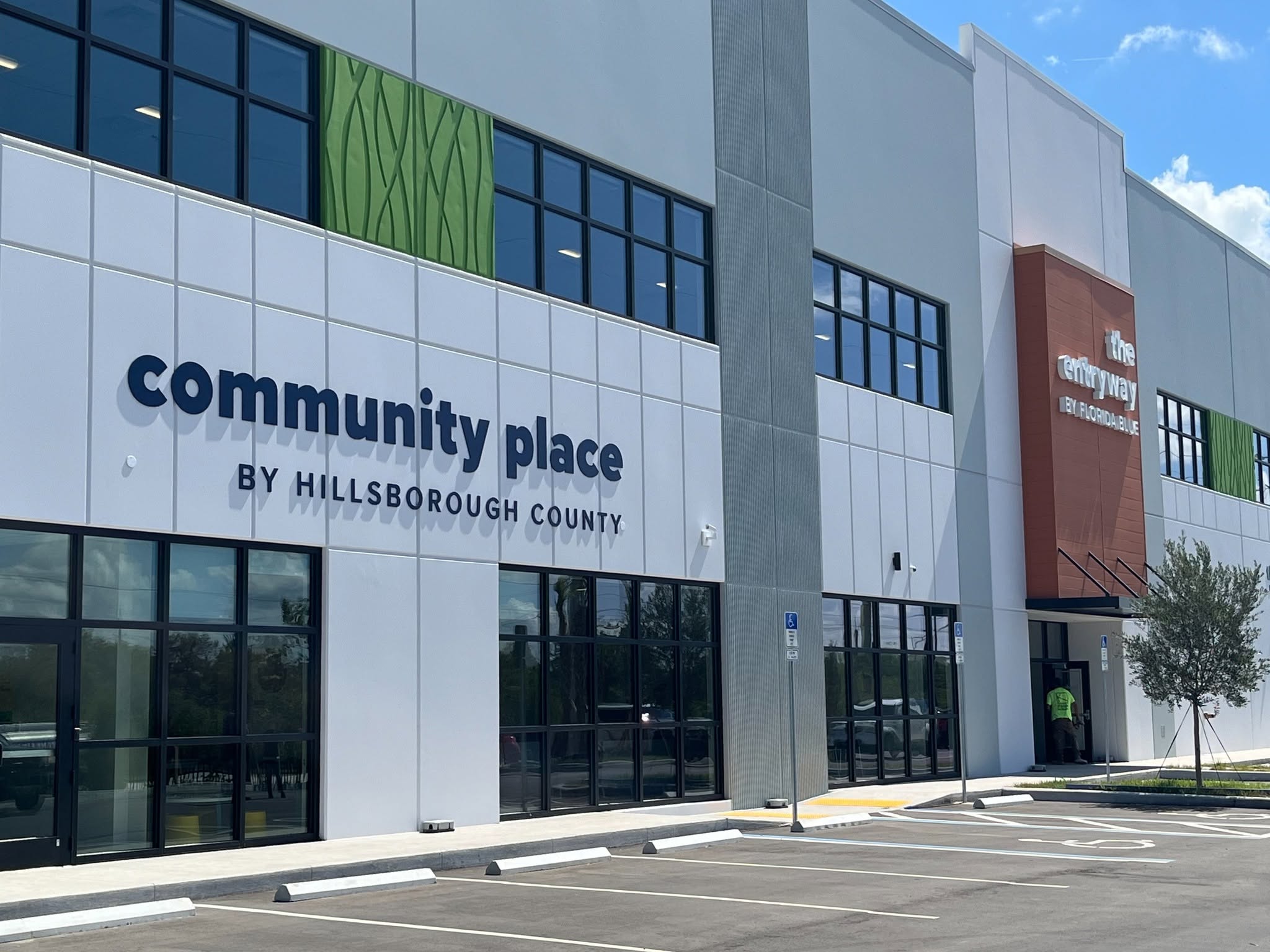
In Florida, Feeding Tampa Bay is also planning to expand the community-service model, bringing lessons from its Causeway Center to its ten-county, 9,000-square-mile service area. “Our vision has always been to build regional centers throughout the ten counties,” Mantz said. By the end of this year, once it has collected two full years of data, it will begin the process of analyzing its results and planning its expansion.
The food bank’s experience so far has led to some unexpected discoveries. For one, it has a new appreciation for how overwhelmed nonprofit providers already are. “Everybody we partner with is overtaxed,” Mantz said. A housing referral, for example, may put someone on a list for which they have to wait two or three years for housing.
The food bank has also had to take on more than it anticipated. “Once people found out there were products, programs and services here, they started calling the front desk,” Mantz noted. Feeding Tampa Bay has since stood up a call center, and also has several people performing intake duties in the lobby of the Causeway Center.
It has also dipped into transportation with the acquisition of a city bus that holds about 75 people and another that holds about 30, so that it can transport people to and from Causeway Center. “Did I ever think we’d be in the transportation business? No, but we have to figure out how to solve some of the underlying transportation issues,” Mantz said.
Moving forward, Feeding Tampa Bay expects it will continue to seek the right balance between providing actual services versus making referrals to other providers. “You realize that the depth of need is greater than you could have anticipated, and the width of folks who need is greater than you could have anticipated,” Mantz said. “We do have to find a spot in which we’re able to say, ‘This is where we think we can be most effective.’”
One piece of the puzzle is determining which nonprofit providers make the best partners. Feeding Tampa Bay started with a list of about 35, but not all of them were as effective as hoped, resulting in about 25 that continue to work with the center. Mantz noted that some nonprofits don’t necessarily have the bandwidth to place staffers at Causeway Center. “What we’re trying to figure out is, how does Causeway Center become the more effective place for them to deploy their resources?”
Despite the uncertainties, Mantz remains convinced that “holistic care works” and that developing a portfolio of services beyond food is important. “If you talk to enough neighbors, they will tell you that their problem is life, not food,” he said. “This is a much harder lift, it’s a much bigger lift, but I also think it’s the right lift.” – Chris Costanzo
PHOTO, TOP: The lobby of Greater Cleveland Food Bank’s Community Resource Center.
Like what you’re reading?
Support Food Bank News
This article was made possible by the readers who support Food Bank News, a national, editorially independent, nonprofit media organization. Food Bank News is not funded by any government agencies, nor is it part of a larger association or corporation. Your support helps ensure our continued solutions-oriented coverage of best practices in hunger relief. Thank you!