Central Texas Food Bank is like many food banks in opening a new distribution facility, but also stands apart for its extensive use of data to determine where to go.
Its new 64,000-square-foot facility includes a warehouse, a commercial kitchen, an on-site market and a community garden. Perhaps most important, it is located about 100 miles north of the food bank’s headquarters in Austin, in the high-need area of Waco, an area the food bank knew it wanted to expand into, thanks to extensive research it had performed.
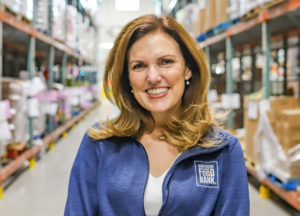
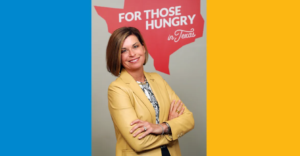
“Building the Waco facility is the direct result of what happens when you do research at the qualitative and the quantitative level, and you elevate that neighbor voice,” said Sari Vatske, President and Chief Executive Officer.
Vatske has been building up the research and data analytics capabilities of Central Texas Food Bank ever since she arrived four years ago from Feeding South Florida. The 11-person data department, expanded from a “skeleton crew” upon her arrival, is known as Strategic Insights. With a budget of about $1 million, the team works to measure the food bank’s impact, identify unmet community needs, and gain further insights through neighbor and stakeholder surveys.

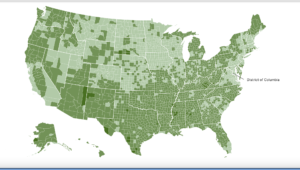
A notable outcome of the team’s work is its Central Texas Food System Initiative, a multi-pronged effort to understand the regional food system. The initiative began with the creation of a dashboard that describes virtually every detail about how food moves through the local system. You can find out, for example, that there are 9.1 times as many convenience stores and fast-food restaurants as grocery stores in Central Texas.
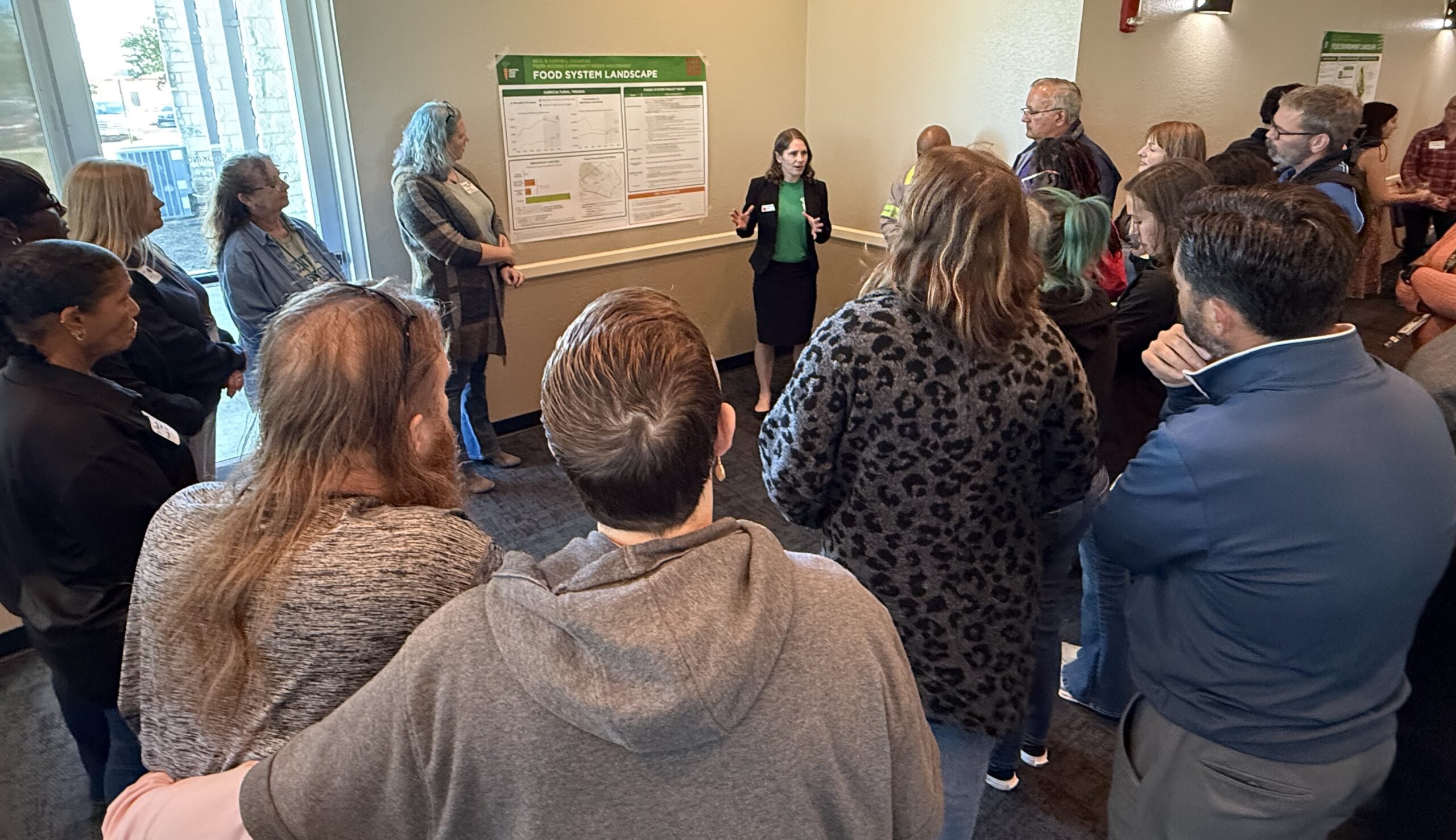
These overall findings are augmented by several highly detailed Community Needs Assessment reports, specific to individual communities. The food bank took no short cuts in compiling these findings. For the Waco report, for example, it did the following: performed a quantitative analysis; twice convened 45 people from 24 local community and nonprofit agencies to discuss the data; surveyed pantry partners across its 21-county service area; conducted 11 interviews with 20 Waco stakeholder groups, including farmers, health clinics and non-profits; engaged 206 Waco neighbors in an online survey; and conducted four focus groups with 27 Waco neighbors.
All the work revealed useful findings, including that only 48% of respondents in Waco accessed charitable food, despite 84% experiencing food insecurity. Of those who did not access, one-third said the distributions did not fit into their schedules and 23.3% said they were not aware of the available resources.
“The Waco [community needs assessment] showed that there was a lot of food going into the community, but people couldn’t access it after work, they couldn’t access it on weekends, and there were not really organizations helping with benefits assistance,” Vatske said. “So it was a no-brainer for us, based on that, to invest our resources” in a Waco-based facility.
The food bank’s expansion is also out of the ordinary for including a merger with a smaller organization whose operations and programming will be absorbed into the food bank’s new location. Waco, Tex.-based Shepherd’s Heart, which served about 100,000 families annually through mobile markets, school pantries, home deliveries and an off-site pantry, officially became part of Central Texas Food Bank on June 1. All of its operations will continue through the food bank’s new facility.
The agreement benefitted from good timing. Shepherd’s Heart was looking to initiate a capital campaign so it could move into a new space at the same time that Central Texas Food Bank was expanding into Waco. Bob Gager, the leader of Shepherd’s Heart, and Vatske had a close working relationship, and in fact had gone skydiving together to celebrate Gager’s 80th birthday. Under the agreement, the Shepherd’s Heart organization will be dissolved, but its name and legacy will live on through Central Texas Food Bank’s 7,500-square-foot on-site market, which will be known as the Shepherd’s Heart Market.
“It was a no-brainer to merge,” Vatske said. “We had the resources, we had the infrastructure, and we had the food, but we didn’t necessarily have that brand recognition in the community. Shepherd’s Heart had the trust and the support of the neighbors, so if we could bring our core competencies together, we figured that was a win-win.”
Vatske had overseen a similar type of merger while at Feeding South Florida, and expects such mergers may become more common. Though the food bank is focused on increasing the capacity of its partner agencies, it also recognizes that pantries are under mounting pressure as their volunteers age out of the population and as the cost of renting and operating facilities continues to rise. “Between a dwindling volunteer population and increased costs of operating, we found that if we were going to really meet people where they are, we needed to get into more direct service,” Vatske said.
Going forward, there is no doubt that the food bank will rely heavily on its data and research capabilities to determine where best to provide direct services. Data is going to become even more important now that the USDA is no longer publishing its annual food security report, Vatske noted. “We’re really leading by example and saying, ‘Hey, this work’s really important.’” – Chris Costanzo
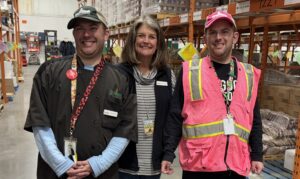
PHOTO, TOP: Neighbors at a Community Needs Assessment meeting.
Like what you’re reading?
Support Food Bank News
This article was made possible by the readers who support Food Bank News, a national, editorially independent, nonprofit media organization. Food Bank News is not funded by any government agencies, nor is it part of a larger association or corporation. Your support helps ensure our continued solutions-oriented coverage of best practices in hunger relief. Thank you!