At the Food Club Network in Michigan, patrons are not “clients” or “neighbors,” but “members,” highlighting a novel way of doing hunger relief that is about to expand.
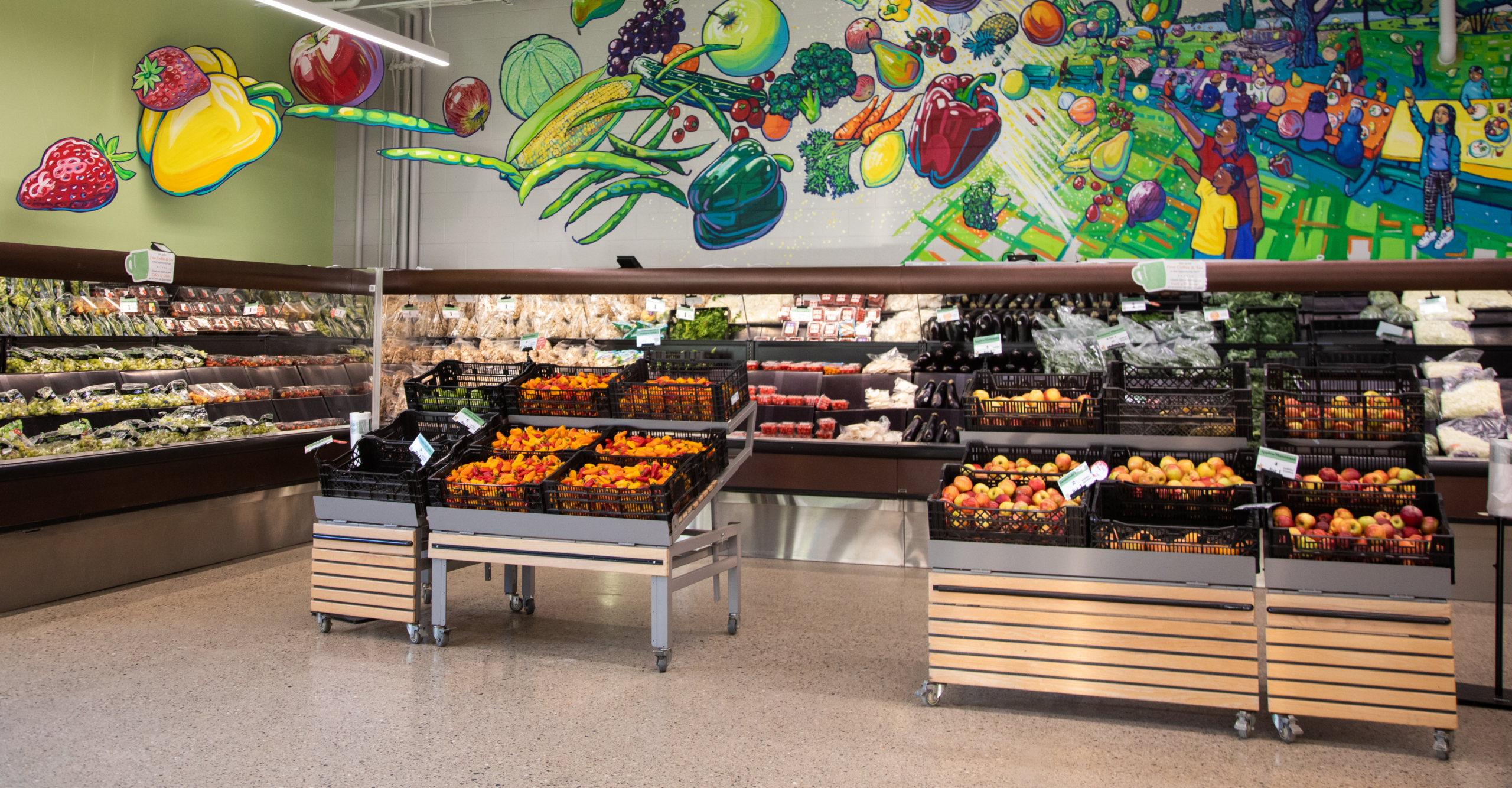
Seeking to create an experience that resembles typical grocery shopping, the Food Club Network has pioneered well-stocked, healthy-food pantries that offer 30-day memberships at a cost of about $12 to $18 a month. During the 30 days, members can shop as often as they wish until they use up all of their points, typically netting about ten days worth of food.
Since the first Food Club opened about ten years ago, the concept has expanded modestly, to two other locations. Now the network is poised to broaden beyond its incubation phase, adding a fourth location and bringing on a Founding Executive Director, Lura Barber, charged with growing the number of food clubs and coordinating them into a statewide organization.
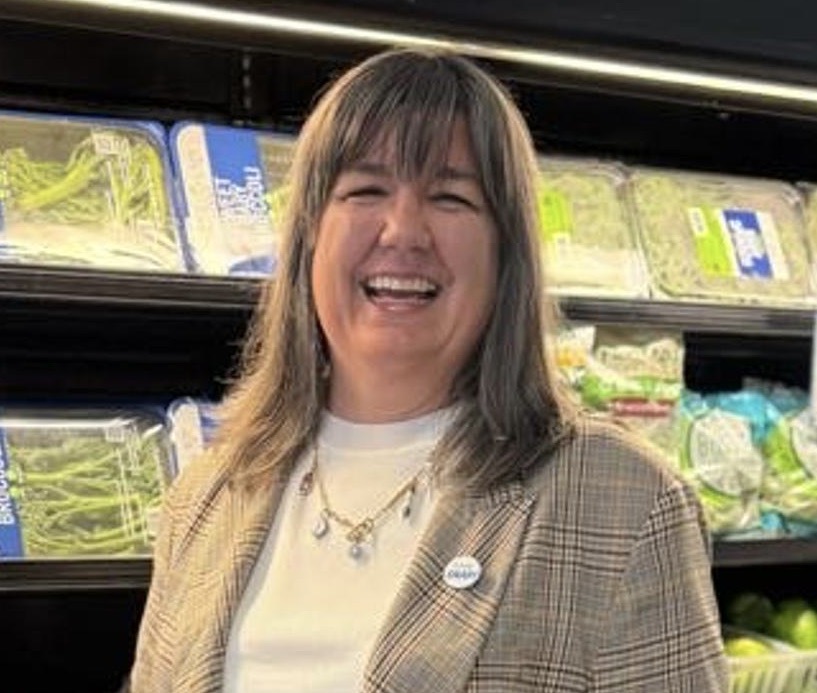
“We’ve got great data and best practices from ten years of food clubs being in existence, and I would like to be able to take that and use it to support the creation of new food clubs,” Barber said. “Up until now, there’s been nobody whose job it is to really focus on that.”
Designed to meet the needs of families who live paycheck to paycheck and need help accessing fresh food, food clubs incentivize healthy eating while welcoming customers as members who have a say in how the market-style shops run. Collectively, the network served more than 11,000 households and distributed nearly 5 million pounds of food last year.
In addition to expanding the food club model, Barber will help facilitate new partnerships. Health care partnerships are a particularly good fit because of the way the food clubs promote healthy eating, said Scott Rumpsa, who runs a food club, Community Action House in Holland, Mich., and is a steering committee member of the network.
Fruits and vegetables are in heavy demand at the food clubs, partly because they require the fewest amount of points. While some processed and snack foods are also available, they require more points. Indeed, funding from the Michigan Health Endowment enabled the network to hire Barber. The goal is to have the first network-level partnership in place by summer.
As more health systems recognize that access to fresh food improves health outcomes, some food clubs have already established direct partnerships with health care partners. The network offers a way to scale that effort, since it’s helpful for those partners “to be able to go to one front door that can speak on behalf of multiple communities,” Rumpsa said, adding, health care is “looking to invest in initiatives and efforts that scale beyond any one county.”
Charging a small monthly fee for membership, which varies based on income, adds dignity to the process and acknowledges the reality that more people showing up at pantries are employed but struggling to make ends meet. “It’s not that they have zero dollars. It’s that they have some, and it’s just not enough,” Rumpsa said. “There is power and a kind of dignified exchange and mutuality in paying some small amount.”
Surveys, focus groups, and advisory positions all enable members to share their perspectives, and each food club actively adjusts their offerings based on member feedback.
Food clubs tend to operate at a larger scale than small pantries, with longer, more frequent hours, and with warehouse and cooler capacity that lets them rescue large amounts of food. To offload a big donation of eggs from a farm, for example, the food club can simply offer more eggs per point to each member.
These aspects give the food clubs an advantage over smaller pantries that have struggled to survive in recent years, Barber noted. “We’ve seen many community-based and church-based pantries shut down post-Covid,” she said. “One of the really strong benefits of the food club model is that it provides very strong distribution partners for bringing food from the food bank out to the community.”
A longtime food access advocate who started as a volunteer at the first food club, Barber said she was struck by how differently families shop in a food club space. They might bring their children and discuss what items they wanted to try that week, for example.
“That helped me realize how rare that level of choice and ease is in many settings,” Barber said. “The food club model emphasizes choice, flexibility, dignity, access to fresh, healthy foods, and it does this in a way that I think is very respectful.”
Barber said that the model is a recipe for success in any community, and she hopes to help food clubs expand across the state and beyond. “Over the course of the last ten years, we’ve gone from wondering if this model would even work,” she said, “to a point at which we want to turn around and say, ‘We know this works, and we want to bring you in.’” – Ambreen Ali
Ambreen Ali is a journalist based outside Princeton, N.J. She is the founder of Central Desi, a news platform covering the Garden State’s South Asian population, and a longtime politics and business reporter who began her career on Capitol Hill.
Like what you’re reading?
Support Food Bank News
This article was made possible by the readers who support Food Bank News, a national, editorially independent, nonprofit media organization. Food Bank News is not funded by any government agencies, nor is it part of a larger association or corporation. Your support helps ensure our continued solutions-oriented coverage of best practices in hunger relief. Thank you!