Food Bank of Eastern Oklahoma was known years ago for having the first production kitchen in the Feeding America network. “We had the first, but we were way behind in what we were doing with it,” noted Jeff Marlow, Chief Executive Officer.
That’s no longer the case, with a recent expansion of the kitchen’s space and a sharper strategy for using it. Under a new initiative, the food bank will soon be producing about 12,000 frozen meals a day to be distributed to school kids all over the state, adding to its recently launched catering initiative.
Food Bank of Eastern Oklahoma is among a growing number of food banks across the country operating large-scale production kitchens aimed at serving various populations – from school kids to culinary trainees, the elderly, disaster victims, catering customers and the homebound. While kitchens may be relatively rare in food banking, they show a striking amount of strategic diversity in practice.
Under its new initiative, the Food Bank of Eastern Oklahoma is focused on nutritious meals that kids will be able to heat and eat on weekends, holidays and other times they’re not in school. By December 2028, it expects to be distributing more than 1.7 million meals annually at more than 200 schools throughout the state’s 77 counties. The food bank will distribute some through its 24-county network, with the rest going through the Regional Food Bank of Oklahoma.
Once the program is up and running, Marlow expects the food bank’s 12,000-square-foot kitchen will be operating close to its full capacity of 15,000 meals a day, up from about 2,500 currently. The kitchen, renovated in 2024, has already helped the food bank expand its summer meals program, from 86,000 before the renovation, to more than 500,000 this past summer. The kitchen also supports the food bank’s Table 24 catering business, which in six months exceeded its annual goal of generating $250,000 in revenue, and its cookie fundraising business.
Funding for the frozen-meals initiative is coming from a three-year, $9.4 million grant from an Oklahoma trust endowed by money from tobacco company lawsuits. With start-up expenses, the all-in cost of the meals is currently about $5.75, but expected to go down to about $4.50 by year three. Volunteers – ten in the morning shift and ten in the evening – will help the food bank keep costs down. In addition, the food bank will hire four part-time staffers for the project, adding to its six full-time kitchen staffers.
The project builds on a multi-year pilot the food bank ran with health insurer Blue Cross Blue Shield and a local healthcare foundation. The pilot, evaluated by the Center for Nutrition and Health Impact, showed a 5.5% increase in food security and a nearly 3% increase in nutrition security. The food bank expects similar results with the statewide rollout, in addition to improved academic-related outcomes of 4%.
Marlow, a former executive chef at a country club, is excited to be putting forth a replicable model of how a large food bank kitchen might be run. “I honestly feel this is a scalable model that could be used on a national level,” he said.
Other models in evidence at food banks around the country underscore the versatility of today’s food-bank kitchens.
Foodlink
Rochester, NY-based Foodlink expanded its kitchen just eight months ago – adding five ovens, four chillers, extra loading docks and additional food prep and storage space – but is quickly reaching capacity again. The kitchen prepares reimbursable meals for the national school lunch and summer programs, as well as for day cares and seniors. In 2024, it surpassed two million meals annually for the first time, and now is up to about 12,000 hot and cold snacks and meals a day.
Business for the kitchen has grown substantially since a handful of other food service providers in the area shuttered during the pandemic, leaving only two, including Foodlink. The food bank has thrived despite being a relatively high-cost provider, given its insistence on using fresh ingredients and paying fair wages. It has remained competitive by making an effort to educate customers, encouraging them to write their bids in a way that prioritizes fresh, healthy ingredients, for example. “That took a lot of hand-holding and relationship-building,” explained Terra Keller, Chief Operating and Financial Officer.
Despite its growing volume of reimbursable meals, the food bank still needs to fundraise to cover the kitchen’s $8.9 million budget. “I don’t think reimbursement rates will ever be high enough to fully cover our costs, at least with our model,” Keller said. That model includes a year-long culinary apprenticeship program designed to prepare students for skilled professional positions in the restaurant and hospitality industry.
The 22,000 square-foot production kitchen should eventually start to generate greater economies of scale. (In addition to the production kitchen, the operation includes about 20,000 of additional square feet for storage, food prep, and docking.) Following its expansion last summer, the food was able to whittle down its waitlist, as well as start offering meals to seniors. Now it is back to running a waitlist.
Going forward, the food bank is looking at additional shifts, expanding beyond its current staff of 32 and eight drivers, to be able to continue to add new meal customers. “We want to be able to continue to say yes to the children’s meals, and also increase the number of senior meals,” Keller said.
Houston Food Bank
About eight years ago, Houston Food Bank boosted the size of its kitchen from 3,000 to 10,000 square feet, increasing meal production from under one million to 3.7 million a year. The added capacity let it expand programming to children and seniors, said Nicole Lander, Chief Impact Officer, who noted that 60% of public school kids in Texas rely on free and reduced lunch. “We know that out-of-school time is an opportunity for those families to have added resources,” she said. She estimated the kitchen produces an average of 6,000 meals a day for after-school and summer programs, and about 1,000 meals for seniors, giving it room to still get to its full capacity of 20,000 meals a day.
Just a few months ago, Houston Food Bank began producing medically tailored meals, in response to Texas Medicaid making it possible for non-medical services like nutrition to be reimbursed through an in lieu of services program. The food bank is only producing a few hundred such meals a month so far, but sees a lot of opportunity for growth there. In addition, it is in the early stages of constructing a building that would house cold storage for perishable food, wrap-around services, as well as another kitchen to support catering services.
Maryland Food Bank
The 12,000-square-foot community kitchen at Maryland Food Bank runs two major initiatives: a culinary training program and an afterschool and summer feeding program. Its 12-week FoodWorks training program instructs up to 24 students at a time and graduated 87 students in 2025, up 30% from 2024, said Jennifer Small, Senior Vice President, Neighbor Engagement. A kitchen expansion in 2023 doubled the number of students who could enroll in each cohort, and also added a computer learning lab so students could work on job interviewing or resume skills.
The food bank, taking note that its trainees are increasingly entrepreneurial, is looking to add more instruction related to owning businesses or food trucks. It is also considering adding evening hours or other accommodations to support students who don’t have availability during the day. The food bank’s youth meals program, meanwhile, produces about 1,500 reimbursable meals a day, and served nearly 600,000 meals in 2025, up more than six percent from 2024. As with other food bank kitchens, fundraising is an important aspect of both programs, Small said.
Food Share of Ventura County
Food Share doesn’t have a kitchen yet, but it plans to include one in a new 85,000-square-foot facility, which will double its space and annual distribution capacity, and replace three separate warehouses. Monica White, President and CEO, sees a kitchen as a potential game-changer in helping Food Share offer new services. High on her list is the potential to accept donations of prepared food, such as from caterers or cafeterias, and transform it into individual meals. Such a service would let the food bank help California businesses struggling to meet a new legal requirement to donate their excess food. She also envisions the kitchen responding to food needs during disasters. The new facility is allowing Food Share to dream big, White said. “What do we want to be able to do in the future that we can’t do today?” – Chris Costanzo
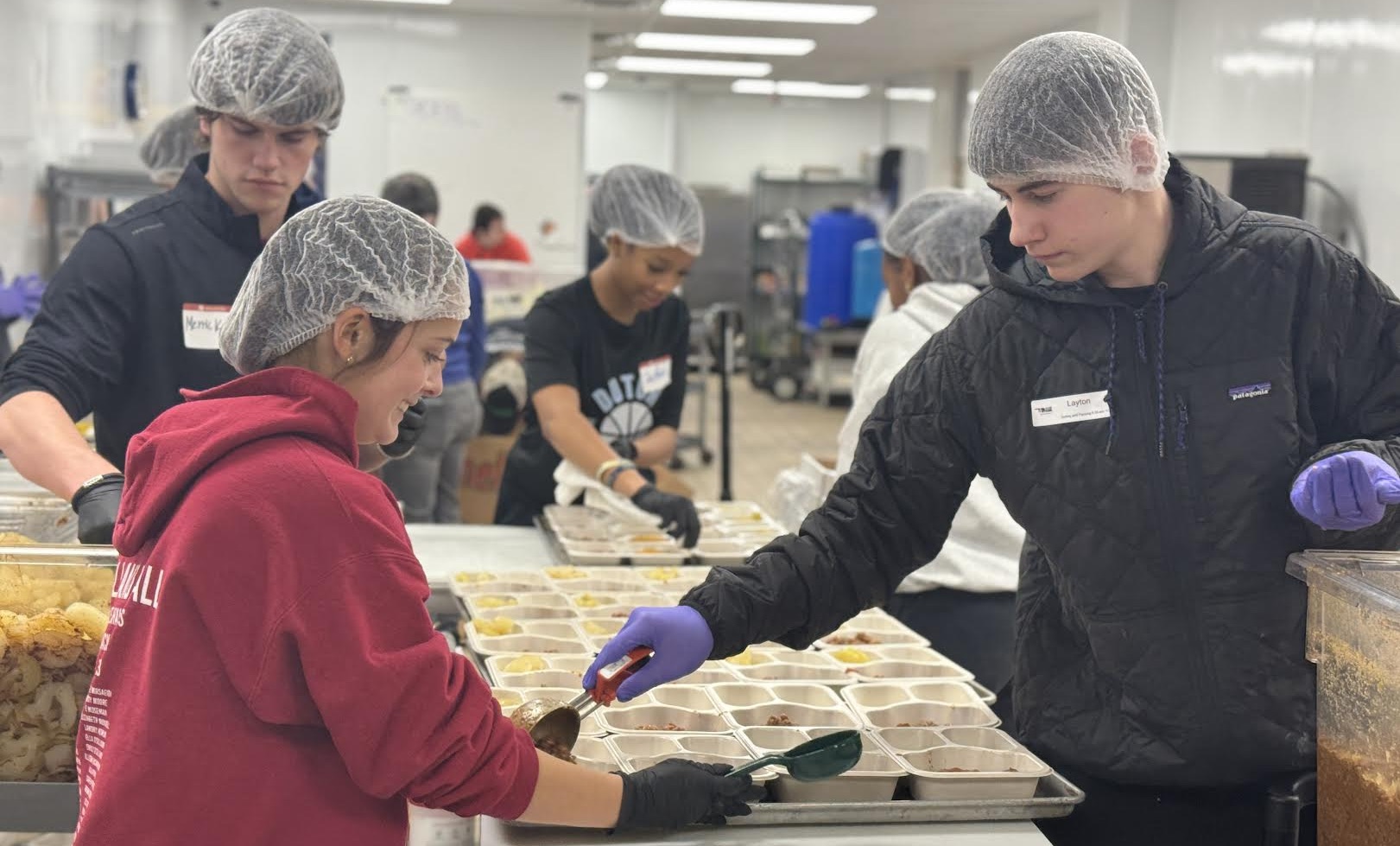
PHOTO, TOP: Volunteers in Food Bank of Eastern Oklahoma’s kitchen.
Like what you’re reading?
Support Food Bank News