Our annual scan of the website advocacy efforts of the top 100 food banks (by revenue) uncovered a noticeable trend toward food banks seeking to engage visitors in activities related to voting.
Their efforts ran the gamut, from passing along basic information on how the government works, to nudging people toward registering to vote, to educating them about local politicians. All of it underscores the importance of people exercising their right to vote as a way to push meaningful change in the landscape of hunger relief.
These findings on voting are part of our annual look at how food banks promote advocacy through their digital presence. While advocacy mostly happens “in real life” through conversations, meetings and lobbying, there is much that food banks can do through their websites to raise awareness and advocacy around hunger relief.
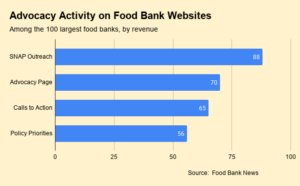
This year we found that 47 food banks out of the top 100 (by revenue) are active in all four areas identified as being important to website advocacy, earning them placement on our “High Honor Roll.” These four areas include having SNAP outreach, having an advocacy page, having calls to action, and outlining policy priorities.
Another 16 food banks were found to be active in three of the four areas, granting them the distinction of “Honor Roll.” (Our findings cover only the website advocacy activities of the 100 largest food banks by revenue, as identified in our 2024 report on the Top 300 Food Banks.)
An honorable mention goes to Daily Bread Food Bank of Canada, which as a Canadian institution does not appear on our Top 300 Food Banks list nor have the ability to offer access to SNAP, but nonetheless scored a big advocacy win this year (read more here).
For a detailed look at all the food banks on our High Honor Roll and Honor Roll, see our special report, 2025 Advocacy Honor Roll.
Seventy food banks of the top 100 have a page on their website devoted to advocacy, with a growing number of them emphasizing access to voting. Northern Illinois Food Bank, for example, presents a clear trifecta at the top of its page, urging people to use the linked tools to find their elected officials, register to vote, and directly share their own story.
Many food banks are taking advantage of a tool from Feeding America that lets users easily send pre-written form letters about topics, such as TEFAP or the farm bill, to their elected officials. Mid-Ohio Food Collective and God’s Pantry Food Bank are among the organizations with dynamic advocacy pages that have strong calls to action utilizing the Feeding America tool. Similarly, Community Food Bank of New Jersey uses a tool from SoftEdge that acts as a dashboard for users wanting to know about specific bills, legislators and upcoming elections.
Connecticut Foodshare stood out for an inviting advocacy toolkit with many interactive features, including an instructive case study about one food pantry partner that hosted an open house for people to meet candidates. The detailed case study even included a copy of the letter inviting candidates to the event, as well as details about timing, budgeting, and volunteer assignments.
A handful of food banks took their promotion of voting to the next level by creating pages on their websites specifically devoted to voting. Houston Food Bank’s Ready to Vote? page offers an enthusiastic endorsement of voting, including why it matters, how to have a voting plan, and lots of other information and links designed to ease the process.
On its Vote to End Hunger page, San Francisco-Marin Food Bank went beyond the pack by gathering information from each candidate running for various local offices about their positions toward hunger relief. A click on each candidate’s head shot reveals their responses to questions posed by the food bank on hunger relief policy.
The most common advocacy activity on food bank websites is to offer help in understanding SNAP and/or filling out SNAP applications, with 83 out of 100 food banks doing so (see chart, top). Greater Boston Food Bank has a comprehensive SNAP outreach page that answers basic questions, as well as offers eligibility information, FAQs, a video, and an online form in both English and Spanish. Blue Ridge Area Food Bank offers much of the same, along with a link to a SNAP eligibility calculator.
Some food banks are offering up to date information to explain how the administration’s budget reconciliation bill will impact SNAP benefits. The Idaho Foodbank’s page on this includes a video and a downloadable one-page PDF. The Oregon Food Bank has written several blog posts helping to explain the legislation.
Food banks were less likely to have calls to action on their advocacy pages (63) and fewer still offered or linked to details about their policy priorities (54). For more information on our Advocacy Honor Roll, including the full list of food banks on our High Honor Roll and Honor Roll, please see our special report. – Chris Costanzo, with research provided by Gabriela Flores
Like what you’re reading?
Support Food Bank News