Houston Food Bank is intent on getting out the vote.
In what appears to be a first, the nation’s third-largest food bank is building a network of “civic hubs,” aimed at educating people about the power they have to direct government activities via their right to vote.
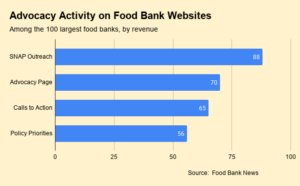
The initiative advances ongoing efforts by food banks across the country to put more power into the hands of people experiencing food insecurity. A growing number of food banks, for example, have begun training select groups of clients with lived experience on how to educate and lobby lawmakers about food insecurity.

Houston Food Bank is seeking even broader engagement by emphasizing the right of every citizen to vote. “We really feel there’s a role for food banks to play in increasing knowledge about the power of voting,” said Katherine Byers, Ph.D., Government Relations Officer at Houston Food Bank.
Grounding the effort is the food bank’s vast network of relationships with food distribution partners, volunteers, donors and neighbors. Houston Endowment, which kickstarted the initiative through a three-year, $235,000 grant, was drawn to working with the food bank precisely because of its large network, Byers said.
Drawing from its 1,600 food distribution partners in 18 counties (including schools), the food bank has so far created or identified ten agencies to serve as civic hubs. The hubs “do a little bit of everything,” Byers said, from registering people to vote, to having people sign voting pledges, to holding focus groups.
An important function of the hubs has been simply to educate people about civics. “We kept having neighbors say they didn’t know what the government did or who to contact,” Byers said. That discovery led to the creation of a fold-out magnetic resource that can live on the fridge to inform people about different levels of government, and how to access them.
On the partner side, agencies worried they would threaten their 501(c)(3) status by giving people basic voting information, (which is not a violation). “It was really us gaining the knowledge first, and then helping our partners and neighbors understand, and then we were able to build more infrastructure around that,” Byers said.
Resources include voter guides, pledge-to-vote cards, an activities toolkit and a calendar of suggested events to follow. Each of the ten civic hubs, for example, will conduct several focus groups of about eight to ten people throughout the year. “The calendar helps keep people accountable and at a decent pace,” Byers said.
Houston Food Bank maintains memorandums of understanding with each of the civic hubs. They receive stipends to do the work, as do the neighbors who participate in the focus groups. Hubs conduct their own focus groups, after receiving training from the food bank. “We really want to empower and train our network,” Byers said.
For partners without the capacity or desire to serve as a civic hub, the food bank encourages small steps, such as putting out voter guides or hosting a community presentation. “Not everyone is going to be able to be a hub,” Byers acknowledged. “That’s just not realistic.”

The food bank is tracking its progress in getting out the vote in a number of ways. Working with Houston in Action, it can determine how many people who pledged to vote actually voted. It also does surveys before and after every community presentation to see whether knowledge levels are increasing.
With its first round of pledge-to-vote efforts, the food bank found it had succeeded in getting 20% of pledgers to actually vote. It hopes to increase that rate by putting in place an automated text system that will send timely reminders about when to vote.
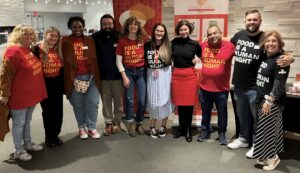
Like other food banks, Houston Food Bank also has an Advocacy Council of neighbors with lived experience who are tasked with identifying policy priorities and engaging with legislators. By the end of the year, the eight-person Council will have visited with every legislator representing them at the local, state and federal level at least once. It also will have hosted a webinar aimed at getting more neighbors involved in civic engagement and will help out with focus groups at some of the civic hubs.
While the Advocacy Council is separate from the civic hubs, it’s “another way of engaging our network,” Byers said. “You can level those up because your partners and your neighbors have so much to contribute. It can go beyond the provision and receipt of emergency food.”
Looking forward, the food bank hopes to keep adding more civic hubs. Said Byers, “We want to keep going and see how much we can really spread this work and get those hubs to create some ripples.” – Chris Costanzo
Like what you’re reading?
Support Food Bank News