Many food banks operate agency co‑op purchasing programs, but few fully optimize them. One mid-sized food bank recently demonstrated how much untapped potential these programs hold. Without adding warehouse space, hiring staff, or investing in new infrastructure, the organization increased annual co‑op revenue from $72,000 to more than $600,000. At the same time, partner agencies paid less than retail and consolidated more of their purchases through the food bank. The transformation didn’t come from working harder. It came from rethinking pricing, sourcing, and the role of the co‑op program itself.
The Challenge: Agencies Were Shopping Elsewhere. The food bank’s purchasing manager began noticing a troubling pattern: agencies were routinely buying staple items at local and discount retailers instead of through the food bank. They even sent in receipts showing lower retail prices for items the food bank stocked.
The issue wasn’t operational inefficiency. The food bank could receive, store, and distribute products effectively. The problem was a flat 10% markup applied across all co-op items. While simple to administer, this model created two major issues:
- Commodity items became overpriced, pushing agencies to buy them at retail
- High value items were underpriced, leaving a significant margin uncaptured
Agencies weren’t trying to undermine the food bank — they were trying to help. Their receipts highlighted exactly where pricing gaps existed. They wanted to consolidate purchasing with the food bank, but the pricing made it financially impossible.
The Turning Point: Understanding True Agency Demand. Before making changes, the food bank partnered with Value-Added Food Sales (VAFS), and together, we surveyed agencies and conducted detailed competitive price checks at the same retailers the agencies were frequenting.
The findings were clear:
- Agencies were buying the same types of products the food bank offered
- They were purchasing them elsewhere solely because of the price
- They wanted to buy from the food bank — if pricing became competitive.
Armed with real market data, the food bank had the foundation for a new pricing strategy.
The Breakthrough: Variable Rate Pricing. The organization replaced its flat markup with a variable rate pricing model based on competitive retail benchmarks: Retail Price – Delivered Cost = Margin Opportunity.
This allowed the food bank to:
- Meet or beat retail pricing on every item
- Capture appropriate margin on higher‑value products
- Stop losing sales on low‑margin commodities
This shift immediately restored agency confidence. Agencies were able to streamline their sourcing and began consolidating their purchasing with the food bank.
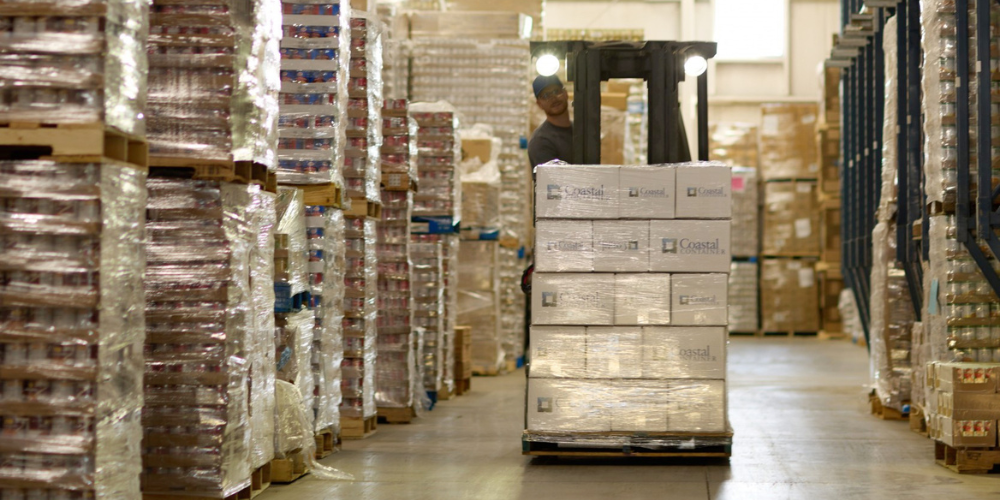
The Operational Lever: Switching to a Mixing Center Model. With pricing aligned to agency needs, the food bank tackled its next constraint: limited warehouse space and cash for inventory. Historically, like many large food banks, they relied almost exclusively on full truckload (DFM) purchasing, which requires:
- Large cash outlays
- Long lead times
- Significant warehouse space
- Slow inventory turns
By shifting to a mixing center sourcing model, they flipped their purchasing strategy:
- 90% mixed truckloads
- 10% full truckloads (primarily produce)
This enabled them to:
- Expand from 20 items to 90, later optimizing to 70 core items
- Increase warehouse turns from five to 14.3 annually
- Reduce cash tied up in inventory (mixing center requires roughly 1/8th the cash of DFM)
- Shorten lead times to five days
The Results: A Win‑Win for Agencies and the Food Bank. The transformation produced measurable, replicable results:
Financial Impact
- Co‑op revenue increased from $72,000 to over $600,000 annually
- The program became fully self‑sustaining, requiring no grant support
- Significant unrestricted revenue enabled new program investments
Agency Benefits
- Agencies consistently paid below retail
- They reduced time spent shopping across multiple retailers
- They gained access to a broader, more reliable product mix
Operational Improvements
- Warehouse throughput tripled
- Pounds distributed increased significantly year‑over‑year
- Cost per purchased pound dropped from $0.59 to $0.38
A Replicable Blueprint for Food Banks. This case is one of many successful implementations that VAFS has helped facilitate in organizations throughout the U.S. The consistent results have proven that food banks of all kinds can dramatically increase both agency value and organizational sustainability by treating their co-op programs as strategic business units.
To read more about the case study referenced in this article, head to Table Talk with VAFS or reach out to Tyson Miller (tysonm@valueaddedfoodsales.com) for a consultation.
This article is a sponsored post provided by Value Added Food Sales.