Food banks broke the record books in 2025 in terms of raising funds and growing donors, outperforming even Covid-era results.
The government shutdown during the fall, combined with ongoing reductions in SNAP funding, drove a year-end surge in crisis-driven fundraising, according to RKD Group’s 2025 food bank benchmark report, which compiled results shared by 79 food banks.
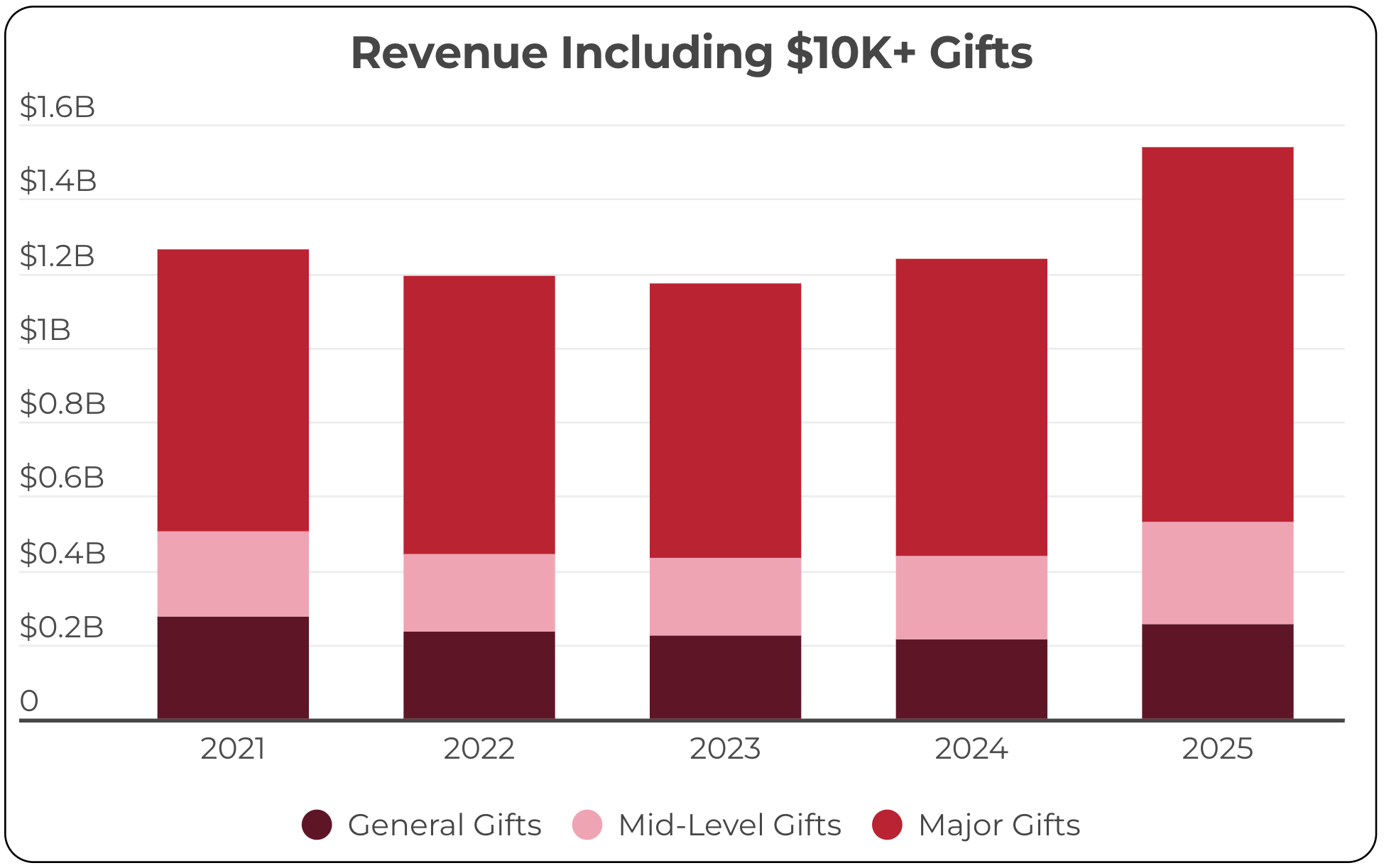
Compared to 2024, food bank revenue from gifts under $10,000 increased 21.9%. Including gifts of $10,000 or more, the increase was 23.9%. The number of active donors grew by 23% year over year, while new and reactivated donors grew by 76%. New sustaining donors, meanwhile, increased by 34%.
Said Eddy Camas, RKD’s Senior Vice President, Client Partnership, “If you had told me, Eddy, five years from now we’re going to have … a government shutdown that is going to outperform Covid, I would have said no way — and that’s what happened.” The threats to SNAP and the government shutdown “collided together to create this media frenzy of awareness. It absolutely had an impact.”
Julie Butner, President and CEO of Tarrant Area Food Bank, which serves Fort Worth, Texas, and 13 surrounding counties, provided ground-level confirmation of the RKD report and Camas’ analysis. “I’ve been in food banking only six years now, but I have seen that time and time again, this basic human necessity called food and nutrition is something that the public is not willing to compromise on for its citizens,” she said.
The timing of the shutdown appears to have shifted the typical cadence of fourth quarter giving, Camas noted. About 60% of digital giving that ordinarily might have occurred in December happened instead in October and November, when the government shutdown raised public awareness of threats to SNAP.
The October-November giving surge also helps explain the report’s two negative metrics, which Camas described as false negatives. While gift frequency fell 7.7%, the influx of new donors so close to year-end left little opportunity for a second gift in 2025. Likewise, Camas explained, while revenue per active donor was down 0.9%, the influx of lower, first-time gifts pulled down the average. “This is a rare case where I can look at these numbers and I could say food banks didn’t have anything decline,” he added.
Food banks stood apart from all of the nonprofit sectors that RKD tracks, which includes animal care, missions, health and hospitals, and humanitarian action. Across these sectors, revenue excluding gifts over $10,000 grew 6%, compared with 21.9% for food banks. The next closest sector was animal care, at 7.3%. Including gifts over $10,000, revenue growth across all sectors RKD tracks was 10.7%, less than half of food banks’ 23.9%.

The strong 2025 results create both opportunities and challenges for food bankers around retention and forecasting. “We got all these first-time gifts, but now the fear is, how many of them are actually going to stay on board? We know that clock is ticking,” Camas cautioned. Donors who respond in an emergency tend not to give until the next emergency comes around, he added.
This also presents challenges for forecasting the future revenue for funding programming and operations. After the Covid bump, Camas noted, some food banks saw revenue dip 15%, while others saw dips as high as 30%. “There’s going to be a decline. And I hate using that word, but it’s just natural after a crisis event,” he said.
RKD offers three recommendations for food bankers: steward donors who gave in response to urgency; convert new donors into monthly givers; and focus on long-term retention through second-gift conversions, mid-year touchpoints, and meaningful reporting.
Camas emphasized stewardship, particularly for emergency-oriented donors, who tend not to give again until the next emergency. RKD recommends communicating differently with these donors, reinforcing the crisis and sharing stories of ongoing need and solutions. “It’s a real struggle to retain donors that are acquired during a disaster or crisis,” he said. Ongoing developments, such as TSA workers going without a paycheck and rising fuel costs, he noted, provide new opportunities for food banks to make their case to donors motivated by urgency. “[Donors] are seeing what’s going on. Oftentimes we just have to make sure we’re in a position to leverage that awareness that already exists.” – Amanda Jaffe
Amanda Jaffe is a writer and former attorney with a deep interest in organizations and mechanisms that address food insecurity. You can find more of her writing on her Substack publication, Age of Enlightenment (https://amandajaffewrites.substack.com/), and at www.amandajaffewrites.com.