Food banks and farms have long had a special bond, which is proving to have staying power, even without the aid of federal funding.
Building ties with local farms was made easy for many food banks during the Biden Administration, thanks to targeted funding from the Local Food Purchase Assistance (LFPA) program. Even though that funding has gone away, food banks continue to be drawn to working with farms for reasons that go well beyond being able to put fresh food into the households of people who need it.
Working with farmers lets food banks boost local economic activity, improve community health, and stabilize local supply chains and family businesses. “It supports farmers, it supports the community, and it supports the food system,” said Michelle Orge, President and Executive Director of the Second Harvest Foodbank of Southern Wisconsin. “It has many different value adds.”

Even though Second Harvest never had the benefit of tapping LFPA funds due to the way the program was structured in Wisconsin, the food bank is planning to expand a local farmer’s market program it started a few years ago. The Market Harvest program purchases unsold produce from area farmers markets at the end of the day at fair prices, giving farmers confidence that, even on rainy days, setting up at the market will be worth their while.
A new development is an effort called Seed to Feed, in which Second Harvest provides funding to farmers in advance of the growing season, allowing them to invest in things like seeds, labor or equipment. “We’re solidifying the connection between the farmer and Second Harvest before a crop is even planted,” Orge said, adding that smaller farmers especially appreciate the reliability the investment provides.
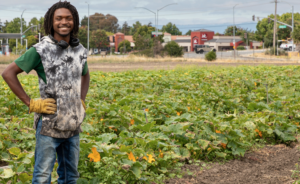
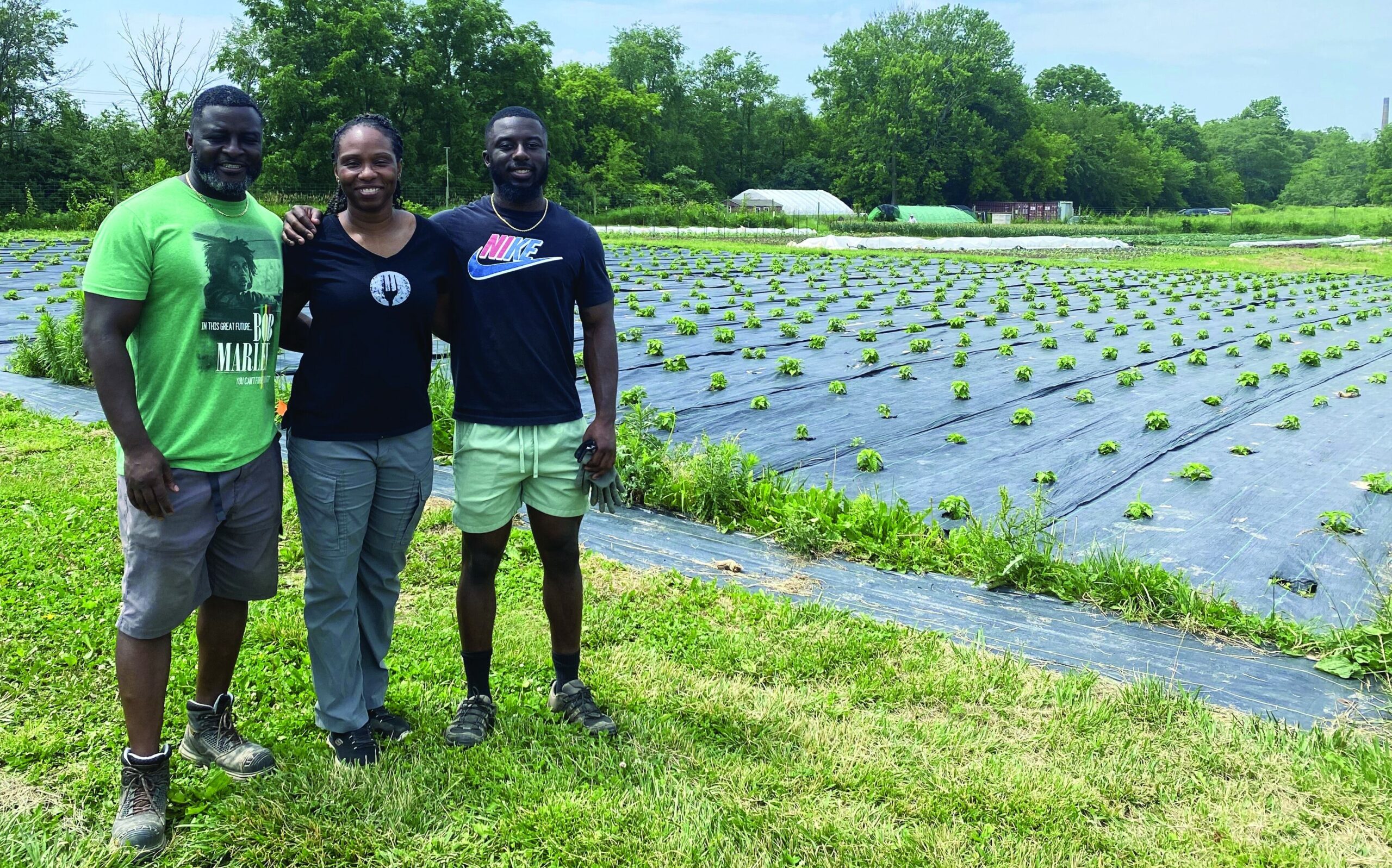
Forty Acre Farm in Madison, Wis., is one farm that has benefitted. “Having a contract with upfront payment has provided much-needed stability for Forty Acre Farm,” said owner Sei Kidau, pictured above left with his wife Melissa and son. “Overall, it transformed our operations from reactive to strategic, strengthening the long-term stability of the farm.”
Second Harvest is budgeting $800,000 in the upcoming year to support farm-to-food bank initiatives. That adds to a $10 million investment made in the local food system since 2020, including federal funding provided at the height of the pandemic. With each dollar of investment providing about $1.60 in return to the local economy, Second Harvest estimates ripple effects of about $16 million.
Those ripple effects are important, given that Second Harvest could purchase produce from other sources for less money. “But it’s not going to be local,” Orge said. She expects 40% of the food bank’s produce budget this fiscal year to be spent with local Wisconsin vendors. While resources may fluctuate going forward, the general trajectory for the food bank’s local farm-based initiatives is “continued growth,” she said.
Maryland Food Bank also prioritizes relationships with local farmers. Often, those relationships begin with Amy Cawley, also known as “Farmer Amy,” who grew up on a grain farm in Maryland’s Eastern Shore and has served as the food bank’s Farm to Food Bank Coordinator since 2011. “We like being in a relationship with our farm partners,” said Meg Kimmel, CEO. “It’s not just a transaction. Amy does a great job of making sure that that’s how we show up as a food bank.”
In addition to gleaning produce that would otherwise go to waste, the food bank for many years has struck advance contracts to purchase produce when it comes out of the ground, giving farmers the assurance of payment. The food bank has 46 such growing contracts with area farmers, supported by dedicated funding from the state of Maryland. In fiscal 2026, it will spend more than $1.5 million with local farmers, to receive about 3.2 million pounds of produce.
Maryland Food Bank is especially proud of its self-funded Culturally Inclusive Crop program, which fosters conversations between farmers and immigrant communities on the types of produce neighbors would like to have. Such conversations have added vegetables like callaloo, a leafy green used in popular Caribbean stews, and okra to pantry distributions, giving neighbors the comfort and dignity that comes with being able to access familiar, culturally relevant food. “We think that connection point that we’re fostering between neighbors and farmers is really powerful,” said Meg Kimmel, CEO.
Looking forward, the food bank is seeking to partner with organizations that help small farmers gain the skills needed to sell to large institutions. From an advocacy perspective, the food bank wants to highlight the need for a produce-processing capability in the state, which does not currently exist. “We’re getting smarter about who we are and what the agriculture infrastructure and system needs are,” Kimmel said.
Community Food Bank of Southern Arizona has long centered farmers and community systems. It runs a weekly farmer’s market on its site that welcomes emerging farmers, especially those who identify with historically marginalized groups. Some of those farmers grow their crops on the food bank’s six-acre community farm, where the food bank charges them a nominal fee to cover basic costs.
Since 2014, the food bank has acted as a connector between farms and institutional buyers such as schools and hospitals that want to add more local produce to their menus. At pre-season meetings convened by the food bank, buyers indicate which products they’d like to purchase during the growing season and farmers decide which they can supply at the requested volumes. In 2024, this Farm to Institution program secured more than $600,000 in advance contracts for local farmers.
CEO Natalie Jayroe estimates the food bank is spending about $2 million a year on local food systems, with about half of that going toward local food purchases and the other toward grants and micro-loans in support of food-related community projects. The food bank’s Thriving Communities Grant program makes annual awards of up to $50,000 on projects that strengthen the local food system.
The food bank already has one farmer on its board and would like to have more representation from local farmers. It is also contemplating equipping its Caridad Community Kitchen with produce-processing capability so growers can create value-added products that have longer shelf lives.
All of these efforts are part of an overall plan to use the capacity of the food bank to improve the local food system, said Jayroe. “It’s a sign of what food banks should be doing, which is collaborating and building local capacity,” she said. “Not necessarily creating it ourselves, but strengthening organizations that already exist in local communities.” – C.C.
CAPTION FOR PHOTO, TOP: Sei and Melissa Kidau, the owners of Forty Acre Farm in Wisconsin, pictured here with their son, are benefitting from Second Harvest Foodbank of Southern Wisconsin’s Seed to Feed program.
Like what you’re reading?
Support Food Bank News
This article was made possible by the readers who support Food Bank News, a national, editorially independent, nonprofit media organization. Food Bank News is not funded by any government agencies, nor is it part of a larger association or corporation. Your support helps ensure our continued solutions-oriented coverage of best practices in hunger relief. Thank you!