In February 2024, Alameda County Community Food Bank became the first food bank in California to receive an insurance reimbursement from the state for providing healthy groceries to a patient. Since then, it has grown the number of patients in its Food is Medicine program to about 130 a week.

Now, it is poised to double the number of people it serves monthly through a $300,000 multi-year investment by Blue Shield of California, announced last month. The investment is the food bank’s first and largest corporate sponsorship of its Food is Medicine program, and represents half of a total $600,000 that Blue Shield of California plans to invest in seven hunger relief providers across the state.
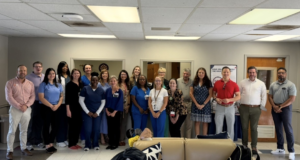
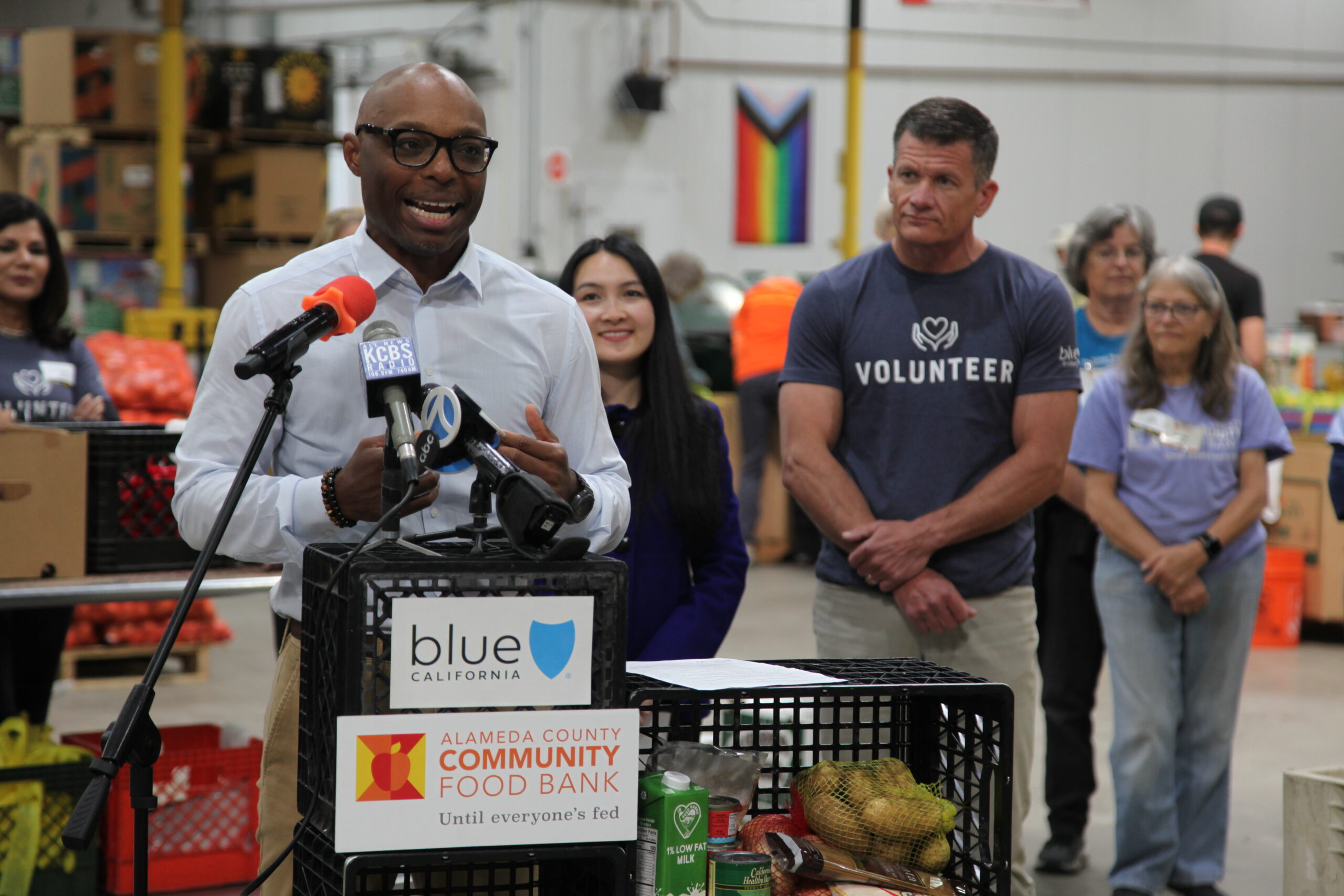
The announcement (see photo, top) brought together local leaders and food bank executives from across the state “showcasing that what could be done here in Alameda County could also be replicated in other communities,” said Regi Young, Executive Director at Alameda County Community Food Bank.
Three takeaways from the announcement:
- The partnership underscores a growing synergy between hunger relief and healthcare, especially as research backing the value of Food is Medicine becomes more prominent. Food banks skilled in using food to improve health make it easy for healthcare providers to do the same, Young said. “It wasn’t hard to convince [Blue Shield of California]” to get involved, given that the food bank had already set up a Food is Medicine operation. “It presented an opportunity for them to align their goals along with our goals in a mutual setting that impacts a common population,” he said.
- The partnership highlights the many funding opportunities available in Food is Medicine, and the need to tap several. Though Alameda County Community Food Bank had been receiving steady insurance reimbursements from the state for every bag of groceries it distributed, it still was not covering all of its costs, Young said. Whether a food bank is serving two dozen patients or two hundred, it still needs to make various investments, including staff to manage the program, as well as systems to track customers, referrals, and deliveries. “You’re not breaking even on reimbursements until you get to a certain level of scale,” Young noted. “As you scale that, you absolutely can get to that point in which you’re breaking even, and you can even get to the point where you’re making money.”
- Healthcare providers value the ability to partner with community-based organizations. The providers at the event emphasized “the importance of working with organizations in the communities most impacted, as opposed to a lot of the corporate entities that are coming into the space that don’t have those connections and have not been working in those communities like we have for four decades,” Young said.
Alameda County Community Food Bank is on its way to scaling up its operation, having increased the number of healthcare partners from which it’s receiving patient referrals from only one in early 2024 to now 60. It had already used Salesforce to manage its agency and food-rescue partners, and now has extended that system to also manage its healthcare partners and referrals. The full Food is Medicine team consists of a manager, two people to handle referrals, a logistics person, and drivers to deliver the food directly to peoples’ doors. Young expects that much of the funding provided by Blue Shield of California will go toward purchasing food, including directly from BIPOC farmers such as Dig Deep Farms, in which the food bank has made a major investment.
While the food bank has the benefit of operating in a state that supports Food is Medicine reimbursements through Medicaid, Young noted that every food bank has the opportunity to connect with healthcare providers. “These healthcare institutions are supporting the same people that we are, and there’s a vested interest in us partnering together to really address the mutual challenges our neighbors are experiencing,” he said. – Chris Costanzo
PHOTO, TOP: Regi Young, Executive Director of Alameda County Community Food Bank, at the podium during the announcement of the Blue Shield of California investment.
Like what you’re reading?
Support Food Bank News
This article was made possible by the readers who support Food Bank News, a national, editorially independent, nonprofit media organization. Food Bank News is not funded by any government agencies, nor is it part of a larger association or corporation. Your support helps ensure our continued solutions-oriented coverage of best practices in hunger relief. Thank you!