As the SNAP crisis unfolded during last year’s government shutdown, a food pantry in St. Louis identified a gaping problem: It wanted to expand to help more people, but it didn’t know which communities were most affected.
There was public data available about food insecurity, as well as information about pantries scattered across websites, but there was no single place to see which communities had fewer pantries and were in greater need of help.
“All of us were kind of caught flat-footed. The need was crushing, and it was all of a sudden,” said Angela Gabel, who became Executive Director of the Ritenour Co-Care Food Pantry two years ago. “What should I expect in my pantry? Where are the people who are going to need to come in? How do I open my borders? How are we going to divide and conquer?”

Gabel, a former attorney, was accustomed to asking for help from her days of practicing law, when she would routinely call colleagues if she had a question about a client’s case. In this case, she didn’t have to look far, turning to nearby Washington University in St. Louis, where her husband works as a researcher and political scientist.
Through the Weidenbaum Center on the Economy, Government, and Public Policy, her husband Matt Gabel and Andrew Reeves, the center’s director, had been developing a data dashboard to bring together disparate sets of information on electoral politics in the county.
It turned out that the tool could be adapted to develop a Food Pantry Desert Map. Launched earlier this year, the map overlays federal data on food insecurity with information about where food pantries are located to help area food pantries better identify and serve community needs.
To develop the model, the team assumed that pantries serve a one-mile radius, but hours and capacity vary greatly among pantries. Some, like Ritenour, can serve hundreds of families multiple times a week and offer days worth of food each time. Others are just a box with canned goods where people can come take food when they need it.
Still, the map offers a way for pantries to see where food assistance levels are low or non-existent. “We’re going to have political disasters, we’re going to have environmental disasters, and we need some basic tools so that we can figure out where the need is and how we can jump into action a little quicker,” Gabel said.
Even without a precipitating disaster, more families are struggling across the nation. Federal funding cuts to SNAP in the Trump Administration’s H.R. 1 bill enacted last July have resulted in a loss of benefits to more than 3.5 million people, or about 9% of enrollees as of February, based on government data compiled by the Center for Budget and Policy Priorities.
Through a coalition she helped launch, Gabel is spreading the word about the map and identifying new use cases. Operation Food Search, a St. Louis food bank, plans to use it to determine where to take its mobile food market and to recruit new pantry partners. Gabel and the Wash U. team also see the potential to develop other maps that identify deserts for services such as housing and health insurance.
The new coalition, which includes about 100 people from dozens of pantries, recently identified another technology project that could help with food distribution. A member is helping develop Foodfinder, a software tool that makes it easier for pantries to alert one another when they receive a large food donation they want to share.
“A lot of pantries are all volunteer-run and are doing so much with so little,” Gabel said. “For the larger pantries that do have employees and paid staff, there’s a lot of room for us to create systems that can help everyone.” – Ambreen Ali
Ambreen Ali is a journalist based outside Princeton, N.J. She is the founder of Central Desi, a news platform covering the Garden State’s South Asian population, and a longtime politics and business reporter who began her career on Capitol Hill.
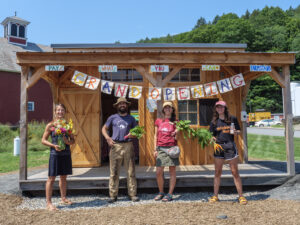
PHOTO, TOP: The Ritenour Co-Care food pantry in St. Louis, Missouri.
Like what you’re reading?
Support Food Bank News
This article was made possible by the readers who support Food Bank News, a national, editorially independent, nonprofit media organization. Food Bank News is not funded by any government agencies, nor is it part of a larger association or corporation. Your support helps ensure our continued solutions-oriented coverage of best practices in hunger relief. Thank you!