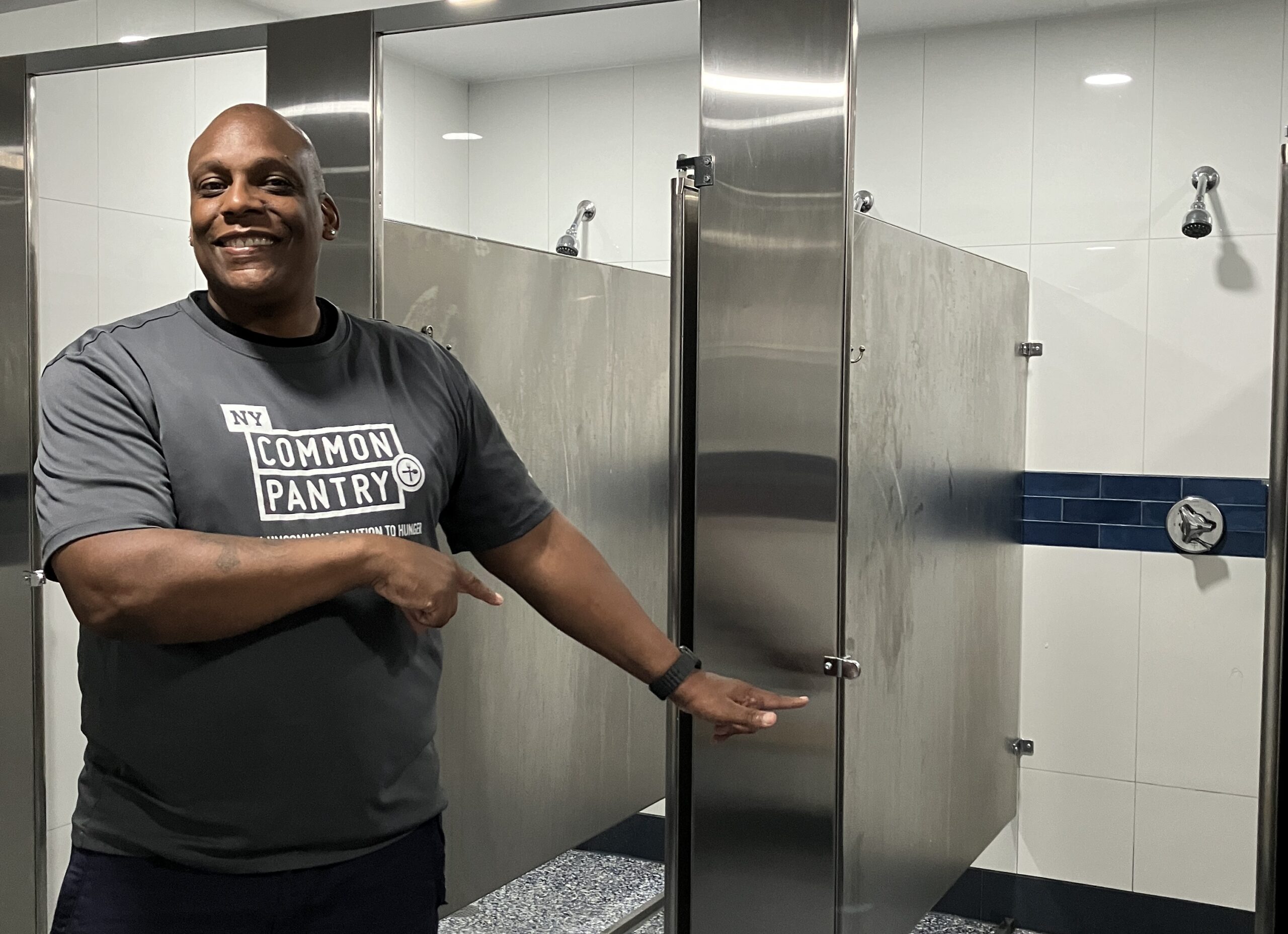
New York Common Pantry in New York City is rare among hunger relief organizations for offering hygiene services like showers. Recently, the pantry doubled down on hygiene, unveiling a renovation that adds more shower stalls than before, laundry facilities and even a space for haircuts.
The upgraded amenities fall under a larger initiative known as Project Dignity, which supports unhoused individuals by also providing access to services like housing, SNAP eligibility and mail services. The goal is to ultimately provide as many services as possible per visit.
The $450,000 renovation of the shower area – which is situated next to where free breakfast is served – is helping to start more conversations with pantry visitors, acting as a springboard for staff to introduce them to the additional supports.
“People might come here because they need the food, and then realize everything else that we can do for them,” said Judy Secon, Deputy Executive Director. “It’s about being able to carry people to other services.”
Located in East Harlem, Common Pantry is on track to serve 12.5 million meals this fiscal year. It used to operate a small shelter out of the building as well, so shower service isn’t new for the organization, but old infrastructure made it difficult to operate. “We used to have two or three working showers” with old pipes that sometimes flooded, said Shawn Smith, Project Dignity Coordinator at Common Pantry.
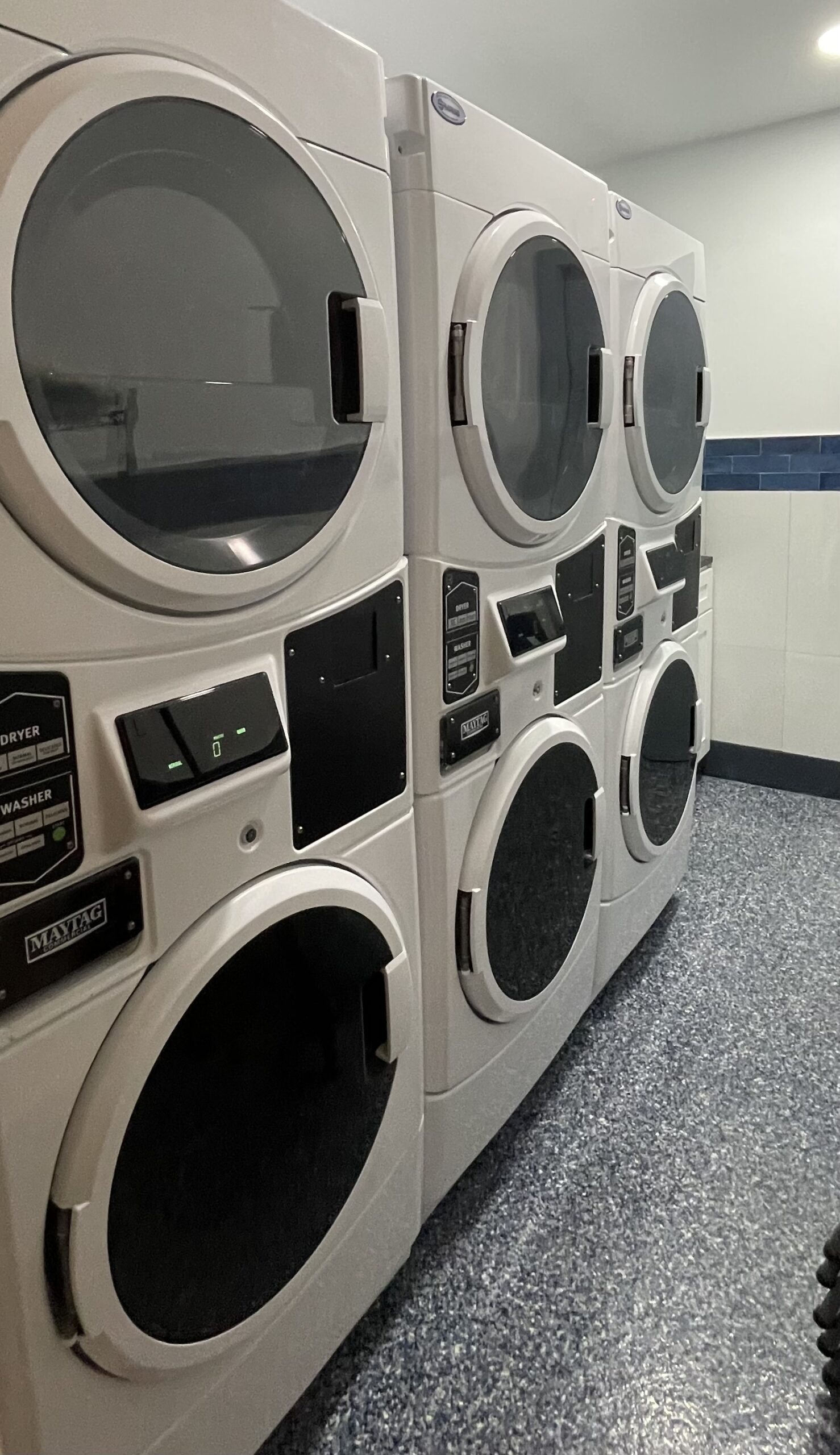
Private money and funds approved through New York State finally allowed for a renovation, which was completed in March, as well as space for new laundry machines. “We were able to tear up all the pipes that used to flood here” and clean up the basement area with new flooring and lighting, he said.
Smith and his team have become experts at managing the logistics of hygiene services. Setting expectations about timeliness and daily capacity is important, he said. Each visitor gets 10 to 15 minutes in the shower, and if there are too many waiting, they’re told to come back the next day. The same applies for laundry and haircuts.
“The whole catch is just having structure and consistency,” Smith said. “If everything is consistent, then you have no problem.” Visitors can access showers and laundry facilities on Mondays, Wednesdays and Fridays. Free haircuts are offered on Tuesdays and Thursdays.
While pantry visitors wait for a shower or laundry services, staffers have time to strike up conversations or provide them with meals. During the waiting periods between laundry loads or shower times, Smith or another pantry employee may check in to gauge if any other social services are applicable, like acquiring identification, SNAP benefits, housing or even rehab. “We try to do as much as we can,” he said.
Open seven days a week, the pantry has adopted other innovations in its food services. It offers choice by letting visitors place their grocery orders online in advance or sit with a volunteer to select food options on a tablet upon arrival. In addition to daily afternoon hot meals, the kitchen staff has also begun re-introducing weekday breakfast, to offer more meal options to their guests throughout the day.
As a 360-degree service organization, dispensing dignity and continuity of care alongside food is paramount. “We try to do as much as we can to give them as much dignity as we can, and they love it,” Smith said. “They love it here.” – Sidney Slon
Sidney Slon is a graduate student at the Craig Newmark Graduate School of Journalism at CUNY. He is a 2026 summer intern at Food Bank News, and has previously reported for the New York City News Service, U.S. News and World Report, and City Limits.
PHOTO, TOP: Shawn Smith of Common Pantry in NYC shows off the pantry’s new shower stalls.
Like what you’re reading?
Support Food Bank News
This article was made possible by the readers who support Food Bank News, a national, editorially independent, nonprofit media organization. Food Bank News is not funded by any government agencies, nor is it part of a larger association or corporation. Your support helps ensure our continued solutions-oriented coverage of best practices in hunger relief. Thank you!