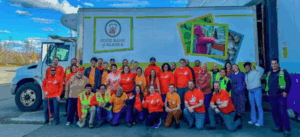
Hatch for Hunger, an entrepreneurial supplier of animal protein to food banks, is stepping up to a new huge goal with the announcement last month of a new coalition.
With over 102 million protein meals delivered to 120 food banks in 2025, ten-year-old Hatch has proven successful at scaling its operations. That impact is significant for a number of communities, but falls short of closing the “protein gap,” a phenomenon in which animal protein makes up only 14% of total food distributed in the charitable food system, according to the CDC Foundation. Closing the gap would require up to three billion protein-rich meals to be delivered annually, according to industry estimates, a whopping thirty-fold increase from Hatch’s 2025 impact.
Experts note a massive shortfall of animal protein across the nation’s food relief system, despite it being the most requested ingredient. Hatch’s new Coalition to Close the Protein Gap, a partnership with industry food producers, other nonprofit organizations and government agencies, aims to raise $40 million to close the gap and permanently alter the way charitable food organizations handle animal protein.
“Closing the protein gap is not something any one of us can do alone,” said Daniel Leckie, Hatch CEO.
To reach three billion meals, Hatch aims to invest in what Leckie sees as one of the largest barriers to bringing more animal protein into the charitable food system – supply chain infrastructure from farm to food pantry. “We’re looking to create the dedicated supply chain end to end” that doesn’t exist today, he said.
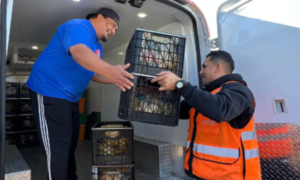
This doesn’t just include installing the freezers and refrigerators necessary for food banks to receive donations of meat, eggs and dairy. It also means a national packing and cold shipping network to source animal protein directly from food producers, and make it pantry-ready without shipping it elsewhere. “That’s the goal,” said Leckie, “to create that connective tissue that allows everyone to communicate and everything to work.”
Hatch’s mission has always been focused on closing the protein gap, but it found its start looking at protein disparities on the retail market. “We did get our start in small and medium eggs,” said Leckie. “Recipes call for large eggs, and so egg producers didn’t have a great market” for smaller ones. Purchasing the smaller eggs to supply food banks provided farmers with consistent revenue for the lower-demand product, as well as a donation stream for food banks, and established a model for Hatch to expand into other protein sources.
In 2023, Hatch began delivering chicken meat as well, including thighs, legs and whole chickens. “We took that same model and we looked at it in terms of meat,” said Leckie. Hatch now supplies protein beyond eggs and chicken meat, including whole turkeys, ham and various ground meat products, and they’re looking to expand into non-processed cheese.
The connections that Hatch established with food producers and charitable organizations over the last decade has laid the groundwork for what Leckie hopes will eventually become a sustainable system for protein supply to meet demand. Alongside the announcement of the new coalition, Hatch also launched a new crowdsourcing initiative, “The Missing Piece,” a national campaign in partnership with the CDC Foundation and hunger advocate Tony Robbins to jumpstart expansions in protein cold storage and shipping infrastructure for food banks.

The timing of Hatch’s initiative takes advantage of the company’s ten years of effort, as well as a notable shift this year in American food governance. Under the influence of Sec. Robert F. Kennedy Jr. and the Make America Healthy Again movement, the Department of Health and Human Services authored sweeping changes to Americans’ dietary guidelines this January, prioritizing animal protein. Hatch seized the moment, securing government support and up to $15 million from HHS and the USDA for its mission. “Politics aside,” said Leckie, “there was momentum and support around this topic, and the idea that they wanted to increase protein uptake.”
Even with the newly formed coalition however, reaching three billion meals annually won’t happen overnight. With the funds raised this year, Leckie sees an opportunity to build the infrastructure and industry connections for “a billion, maybe even two” billion annual meals delivered. “We’re not going to get to three billion protein meals on donations alone,” he said. “There has to be an exchange, there has to be revenue generation, or else you’re not going to get the supply that you need from the protein partners, and so our goal is to get the infrastructure in place.”
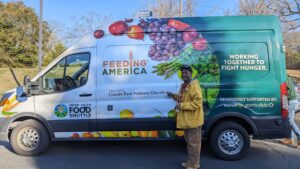
Feeding America is also focused on protein and has already invested in the infrastructure for 13 facilities to receive bulk protein shipments, with plans for a 14th by 2027, Brit Videbeck, Chief Supply Chain Officer wrote in an online post. In a future where food banks in both the Feeding America network and independent food banks have the cold storage infrastructure to accept a wide variety of animal protein shipments, Hatch sees a reality of strong collaboration with large protein producers across the charitable food system. Companies like Tyson Foods, Simmons Foods, Purdue Chicken and Fairlife are just some of the industry giants Leckie says are partnered with Hatch. “A decade of operations taught us one thing: supply alone doesn’t close the gap, and infrastructure alone doesn’t close the gap. They must move together,” he said.
By 2030, Hatch expects to have indirectly impacted the cold storage infrastructure of every food bank nationwide, including in Puerto Rico, Alaska and Hawaii. “We were always low profile, high impact, and now all of a sudden we got thrust into high profile, high impact,” said Leckie, since the announcement of the coalition. “We’ve really started to pull the pieces of this chess game together.” – Sidney Slon
Sidney Slon is a graduate student at the Craig Newmark Graduate School of Journalism at CUNY. He is a 2026 summer intern at Food Bank News, and has previously reported for the New York City News Service, U.S. News and World Report, and City Limits.
Like what you’re reading?
Support Food Bank News
This article was made possible by the readers who support Food Bank News, a national, editorially independent, nonprofit media organization. Food Bank News is not funded by any government agencies, nor is it part of a larger association or corporation. Your support helps ensure our continued solutions-oriented coverage of best practices in hunger relief. Thank you!