GUEST POST FROM KRISTIN FROST ALBRECHT OF THE FOOD BASKET, INC. – My office is a windowless “cave,” a repurposed corner of a warehouse in Hilo, on Hawaiʻi Island, with a mouse hole in the wall that predates my tenure. Today, that hole is plugged with a bright orange plastic flower, a small burst of color in a space otherwise defined by the machinery of hunger.
From my vantage point here, at the far edge of the most isolated population center on Earth, I spend my days confronting a reality that is becoming harder to ignore: on Hawaiʻi Island (known to many as the Big Island), 43 percent of residents, and 62 percent of children, struggle to stay fed. But lately, my focus has shifted from the pallets of emergency food below me to the soil beneath our feet.
Here on Hawaiʻi Island, in the middle of the Pacific, we are not just vulnerable; we are an early warning system for a fragmenting world. As the war with Iran disrupts shipping through the Strait of Hormuz, a chokepoint for a third of the world’s seaborne fertilizer—the consequences are already rippling outward. Major agricultural producers like India and Brazil feel the strain, but in a place like this, where Hawaiʻi imports roughly 85 to 90 percent of its food, those ripples become something else entirely: a threat to survival.
Statewide, nearly one in three households across Hawaiʻi is already food insecure, a crisis hiding in plain sight. On this island, at the outer edge of the supply chain, the pressure arrives first, and often hardest. For decades, food banks have served as a critical safety net, but a safety net is not a solution; it depends on the very global systems now under strain. As war and climate disruption begin to reshape those systems, we are forced to confront a harder truth: we cannot outsource our survival.
In moments like this, it is easy to feel powerless. The answer, I believe, begins with creation. To plant, grow, and harvest food is an act of peace, a refusal to remain a bystander. Real security does not begin with military strength; it begins with local food systems.
On Hawaiʻi Island, we are building that future through Hoʻolako, a Food Systems Campus. Its name, gifted by our kūpuna (elders), means “the place that provides.” We are rebuilding the “infrastructure of the middle”, the missing processing and distribution links, through a Food Innovation Center that will keep the food we grow on our island.
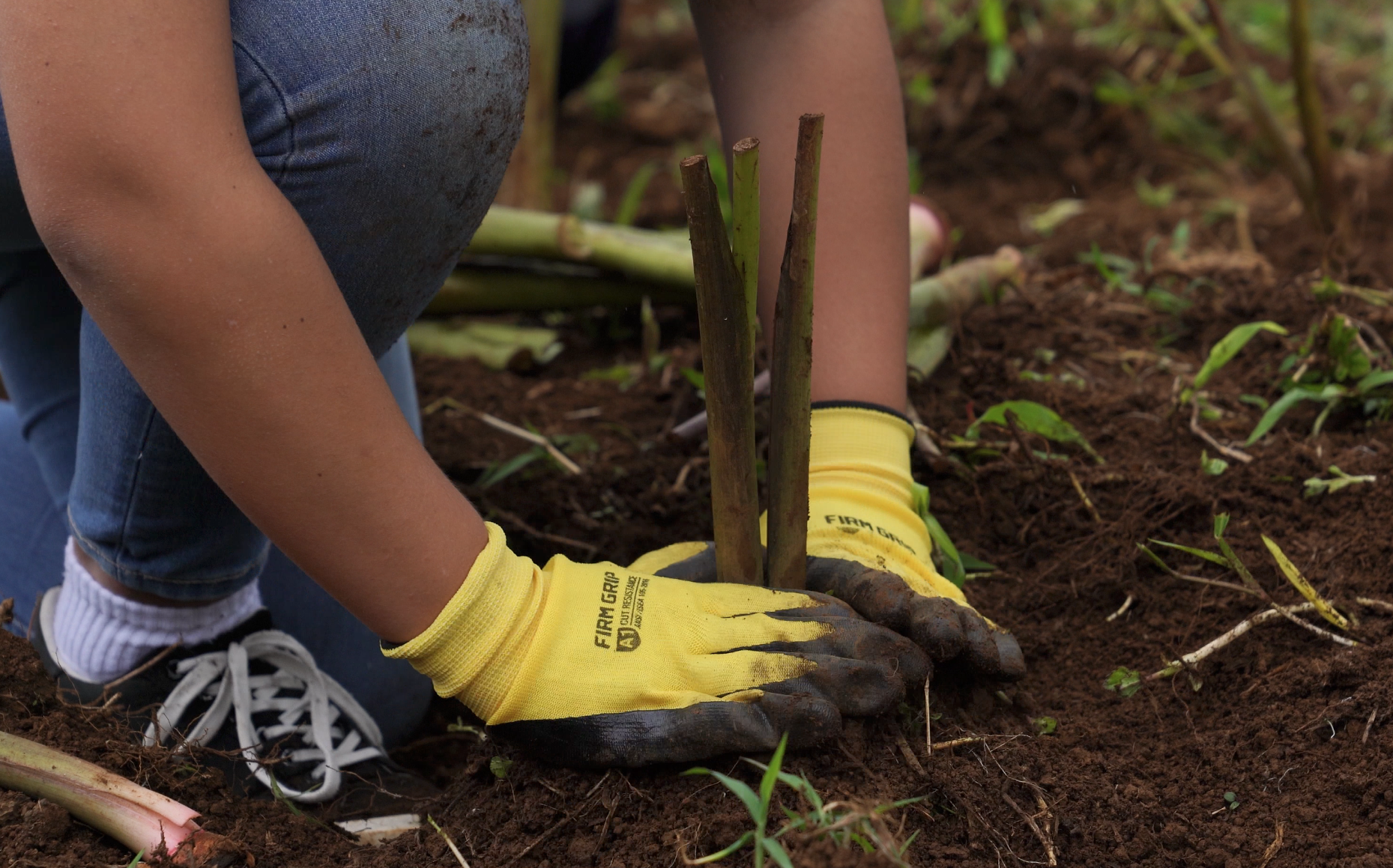
While our campus is still in development, the work of the land has already begun. Recently, a group of seventh graders came to plant kalo, or taro, alongside a longtime farmer, Richard Kodani. He arrived in his pickup truck with huli, or taro cuttings, fresh from his own farm. By placing them in the students’ hands, he wasn’t just sharing plants; he was passing on a lineage.
Before Western contact, Hawaiʻi was entirely self-reliant. A sophisticated system of land management called the ahupuaʻa, which runs from mountain to sea, sustained hundreds of thousands of people without imported food. We are not inventing something new; we are remembering. As those students tucked the huli into the earth, they were reclaiming that history.
This is the work we have been building toward for years. In 2014, we launched “DA BOX,” a community-supported agriculture program, and in 2017, we introduced “DA BUX” Double Up Food Bucks, helping low-income families afford Hawaiʻi-grown produce statewide. Today, we source over half of our food from island producers and businesses. That shift means families in need are not just receiving calories; they are receiving poi from Waipiʻo Valley and grass-fed beef from Hāmākua, food that connects them to place.
Soon, we will launch a “truck market” on our campus, where farmers can sell directly from the backs of their trucks. We are currently finalizing the federal authorizations to ensure that every family can use their SNAP and DA BUX benefits from the very first day. It is a small shift, but a powerful one, shortening the distance between those who grow food and those who need it.
Whether you live on an island or in a city, the vulnerability is the same when we outsource our survival. Food security is a collective act of faith; it begins with the smallest unit of production, a seed in a paper cup. If you have a windowsill, plant herbs. If you have a yard, grow tomatoes. These are not hobbies; they are acts of resilience in a fragile system.
True security lives in relationships, between people, and between people and the land. It is passed down, like Richard’s huli, from one generation to the next. As the world beyond our shores grows louder and more divided, the act of growing food offers something rare: common ground.
There is an ʻōlelo noʻeau, a traditional Hawaiian proverb: He aliʻi ka ʻāina; he kauwā ke kanaka. The land is a chief; people are its servants. If we remember that, and return to that relationship, the ʻāina, the land that sustains us, will continue to feed us.
The barges may not come. The world may remain uncertain. But here on Hawaiʻi Island, we are learning something essential: We do not need to grow our way home; we only need to remember that we are already there.
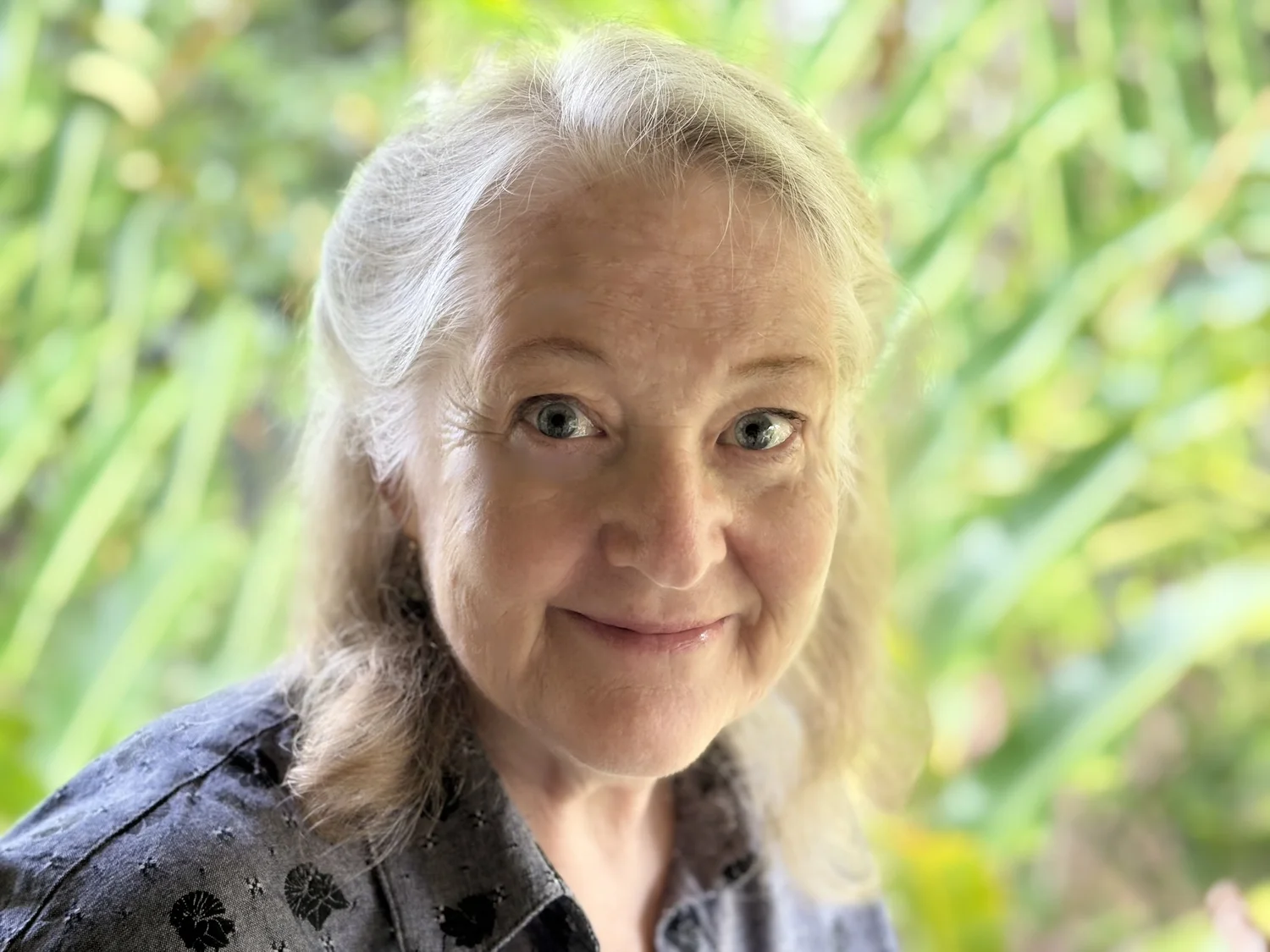
Kristin Frost Albrecht is the Executive Director of The Food Basket Inc., the food bank serving Hawaiʻi’s Big Island. Originally from Oregon, she has been with the organization since 2014 and has served as its Executive Director since 2017.
Like what you’re reading?
Support Food Bank News
This article was made possible by the readers who support Food Bank News, a national, editorially independent, nonprofit media organization. Food Bank News is not funded by any government agencies, nor is it part of a larger association or corporation. Your support helps ensure our continued solutions-oriented coverage of best practices in hunger relief. Thank you!