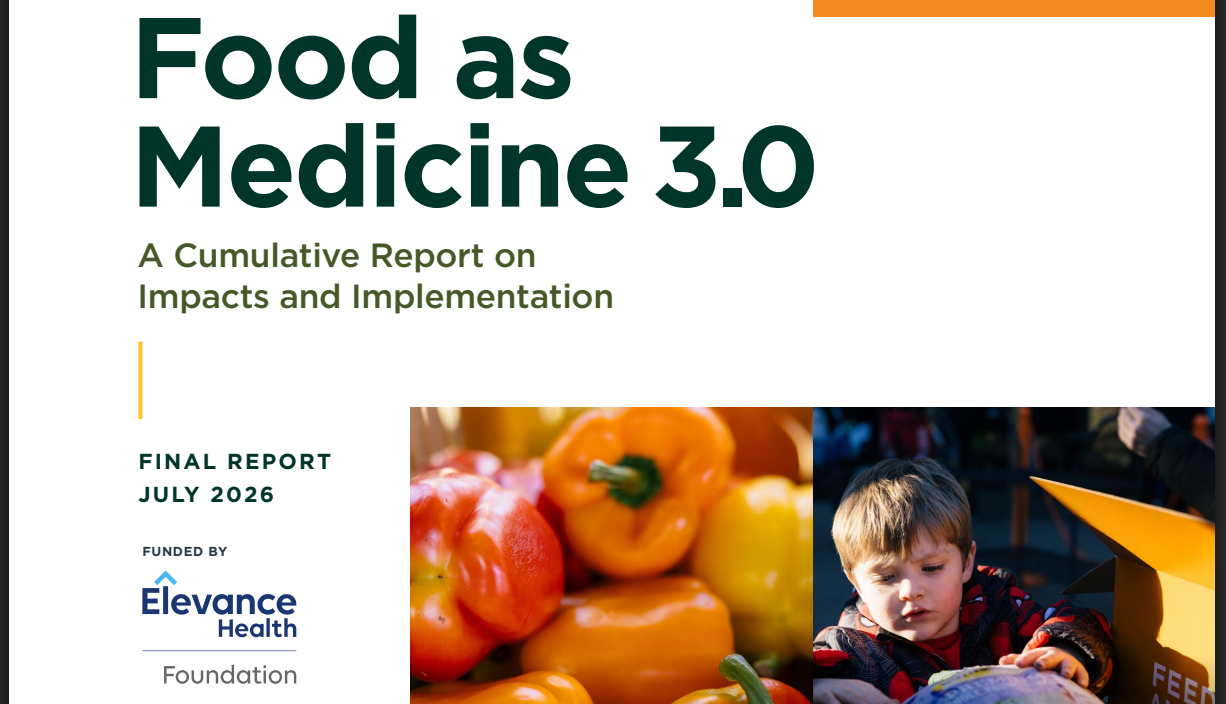
The results of a massive study released this month by Feeding America found that food banks working with healthcare positively impacted health outcomes in their communities, underscoring food banks’ integral role in the still-evolving landscape of Food as Medicine.
The 21 food banks participating in the Food As Medicine 3.0 evaluation contributed to a 14% decrease in hospitalizations and an 11% decline in emergency room visits by providing healthy food to food-insecure patients. Other impacts included a 47% increase in food security for patients after they participated in the program, as well as meaningfully improved blood-sugar, cholesterol and body-mass index levels.
The findings come at a time when for-profit companies continue to make inroads into Food is Medicine, taking advantage of funding that’s available from insurers and state governments. Even so, the study highlighted the singular role non-profits like food banks can play, due to their specific focus on food-insecure patients.
“Food banks are in a position of strength in this work,” said Melanie Hall, Chief Health, Research and Evaluation Officer at Feeding America. “We have a very specific target audience of food insecure people and that is where we shine.” She added, “The for-profit world isn’t always trying to serve food-insecure people, so there is room for multiple players to play.”

Food banks demonstrated an impact no matter how they chose to distribute food. While most provided food through in-clinic pantries, others guided patients to specific distribution points, such as refrigerated lockers. Some programs included nutrition education, while others helped patients enroll in benefits like SNAP. “Seeing that we had some results across the board, regardless of the type of model that was used, was very encouraging,” Hall said.
Over the course of the three-year study, the 21 food banks and their healthcare partners screened 1.45 million patients for food insecurity, leading to nearly 162,000 patients receiving healthy food. Notably, 59% of the patients served were new to the charitable food system, Hall said, highlighting the ability of healthcare interventions to uncover and address food insecurity. “There’s a lot of negative stigma about charitable food, but if your entry is your doctor saying this is a prescription for your health, that’s a different experience from the get-go,” Hall said.
About one-third of the food banks offered patients nutrition education along with their healthy food distributions, which was consistently associated with improvements in health outcomes. “Nutrition education lowers the chances of the food not being used because now patients have more information about the food, how to prepare it, and most importantly how to enjoy it,” Hall said.
The activities of the food banks were supported by a $14.1 million grant from Elevance Health Foundation, which was also behind two previous evaluations (see here and here). Looking forward, the expectation is that more food banks eventually will get compensated for providing healthy food through insurance reimbursements. Creating a framework that would support reimbursements is “part of the work ahead,” Hall said, noting reimbursements would help bring sustainability to Food is Medicine programming, as well as help food banks scale up to serve more people.
Food is Medicine can benefit from the type of nuanced services food banks offer, Hall said. For example, a food-insecure household is likely to share prescribed groceries, even if the groceries are intended to address only one person’s chronic illness. “We understand how a Food is Medicine intervention needs to be different for some food-insecure people,” Hall said. “Food banks have a great opportunity to bring forth those customizations, and that’s going to be vital for the people we serve.” – Chris Costanzo
Like what you’re reading?
Support Food Bank News
This article was made possible by the readers who support Food Bank News, a national, editorially independent, nonprofit media organization. Food Bank News is not funded by any government agencies, nor is it part of a larger association or corporation. Your support helps ensure our continued solutions-oriented coverage of best practices in hunger relief. Thank you!