Capital Area Food Bank is one of only a handful of hunger relief organizations to issue a comprehensive report on food insecurity rates in its region, but President and CEO Radha Muthiah says the effort and investment are well worth it.
“There’s no question,” she said in an interview following the release of its 2026 Hunger Report in mid-September. The report, in its seventh consecutive year, found that food insecurity in the region is at a five-year high, surpassing even the levels seen at the height of the pandemic.

The report is based on a general population survey of nearly 4,000 residents conducted by the independent social research organization NORC at the University of Chicago. The food bank invested more than $300,000 in NORC’s work, as well as in staff time to analyze and write the report, and an outside vendor to design it. “It’s a significant investment,” Muthiah noted.
Payoff comes in several ways. Statistically rigorous down to the county level, the findings let the food bank be more targeted and deliberate about where to distribute food, Muthiah said. Because the report collects data by age, gender, education level, household income and employment status, it also sheds light on the types of partners and solutions that could work best in particular areas.
Perhaps most important, the annual report has become meaningful to outside entities, including local governments, universities and hospitals. “Every county waits for the hunger report,” Muthiah noted, and several make appropriation decisions based on its findings. The food bank also hosts webinars or meetings to present tailored findings.
One county that has used the hunger report over the years to drive investments in food security was found this year to have reduced its food insecurity by four percentage points, from 35% to 31%. Among the actions that Montgomery County in Maryland took was to maintain basic-needs service hubs that had sprung up during the pandemic, and ensure that those continued to provide food.
The county also supported a local farm-to-food bank effort and made direct contributions to the food bank and large agency partners. Finally, it matched a portion of hunger relief funding provided by the state. Noted Muthiah, the report “really does have a very strong life that resides outside of the food bank that results in some very positive outcomes for nutrition programming across the area.”
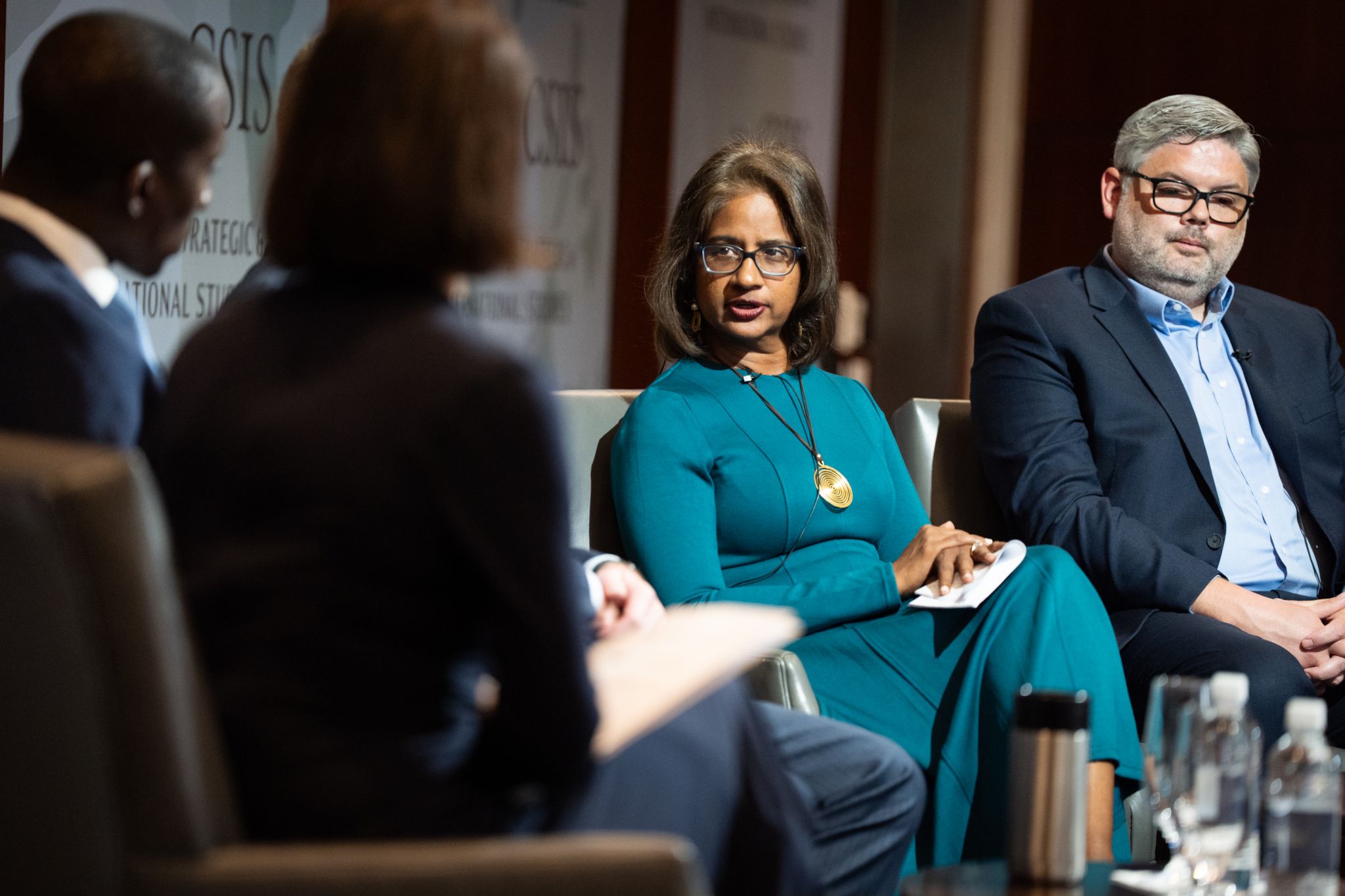
In a first, the food bank this year launched its hunger report in partnership with the Center for Strategic and International Studies, making the connection that food security is linked to national security. The launch event, which included a panel discussion with leaders across various sectors, helped make the case that data and evidence should influence policy at the local and national level. “We are really lifting up evidence that I hope is used as part of the policy development and policy discourse,” Muthiah said.
Capital Area Food Bank is not the only food bank to conduct a comprehensive survey of food insecurity in its region, but it is one of a few. In September, Greater Chicago Food Depository released its inaugural hunger report in partnership with NORC, as did the Federation of Virginia Food Banks. In April, Greater Boston Food Bank released its sixth annual report on food access, which it worked on with Mass General Brigham.
The reports partially fill the void left by the elimination of the USDA’s annual household food security report, though they are far more localized and use different methodologies. Muthiah is hopeful the USDA report will eventually be restored, perhaps with the benefit of using new ways of capturing information, as demonstrated by the food-bank-produced reports in the field. – Chris Costanzo
PHOTO, TOP: Radha Muthiah, President and CEO of Capital Area Food Bank, center, in conversation at the launch of the food bank’s 2026 Hunger Report, held in partnership with the Center for Strategic and International Studies.
Like what you’re reading?
Support Food Bank News