Food drives sometimes get maligned for being more trouble than they’re worth, but that’s not the case with a grassroots effort to engage the legal community in raising food and funds.
Known as Food from the Bar, the national grassroots campaign taps the energy and talent of local law firms, resulting in food drives that have consistently raised $500,000 or more for some food banks. This spring, for example, the Los Angeles Regional Food Bank’s campaign raised $602,000, while D.C.-based Capital Area Food Bank raised $565,000.
“Since 2012, we’ve been able to provide more than 10 million meals from this campaign alone,” said Megan Curran, the Capital Area Food Bank’s Director of Community Engagement. Echoed Roger Castle, Chief Development Officer for the Los Angeles Regional Food Bank, “We have other peer-to-peer fundraising campaigns, and none of them raise this amount of money.” While Castle estimates $50,000 to $60,000 of this year’s tally was likely a response to the Los Angeles wildfires, the food bank’s Food from the Bar campaign consistently raises about $500,000 each year.

Food from the Bar encourages food banks to collaborate with their local legal community, including law firms, corporate legal departments, legal associations, and even law schools. Working together, the food banks and steering committees comprised of members of the legal community plan four-to-six-week campaigns that often involve friendly competition between participating firms, which can earn points by raising funds, donating food, and/or volunteering. Most campaigns occur in late spring, providing food banks with crucial support before children lose access to school-based meals for the summer.
Two California food banks – Food Bank of Contra Costa and Solano and San Francisco-Marin Food Bank – launched the first Food from the Bar campaigns in 1992. Since then, versions have spread across the country, benefiting food banks in Texas, Louisiana and – for the first time this year – Idaho, among others.
Truly a grassroots campaign, there is no set template for how Food from the Bar operates. Every aspect, from the dates of the campaign to the logo, is determined locally. There do, however, tend to be some common elements.
One common feature is competition. In addition to recognition for funds raised and hours volunteered, teams may also vie for awards. Capital Area Food Bank, where over 30 teams participate each year, recognizes the team with the highest participation level and the highest monetary donations on the campaign’s first day, among others. At the campaign’s end, it also invites teams to nominate a member for an annual “MVP” award.

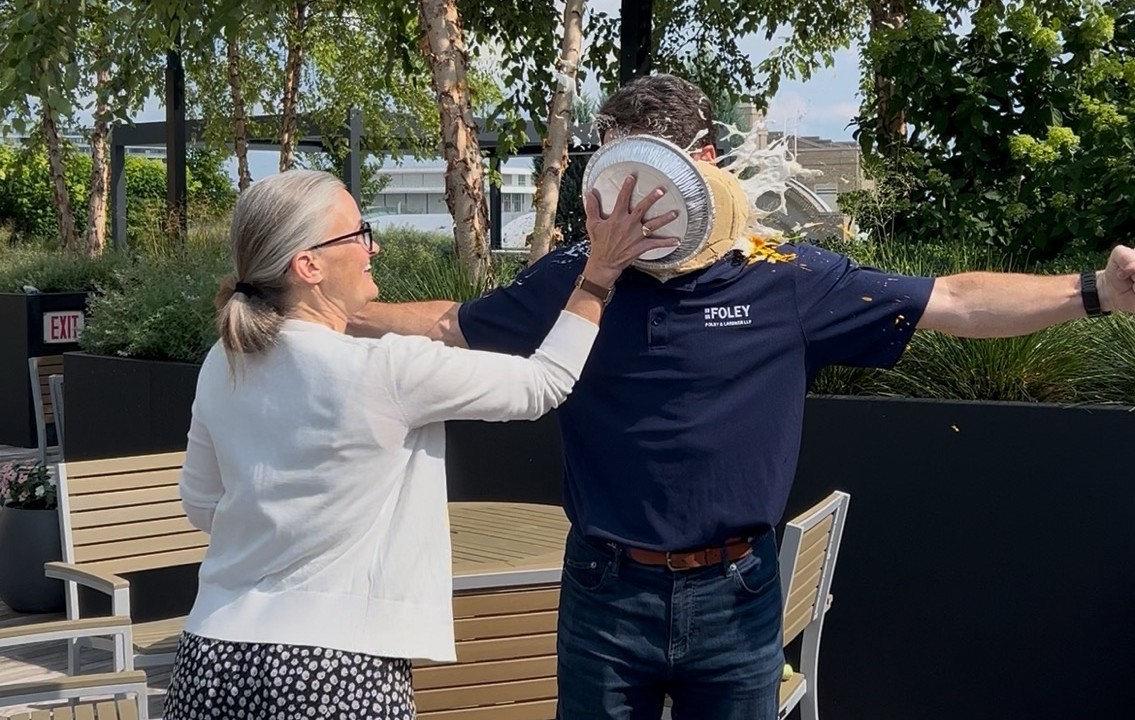
Creative fundraising ideas, which both food banks recognize with a Creativity Award, are also common. There are “Pie a Partner” contests with donations fueling which law partners do (or don’t) get a pie in the face, and trivia contests. One firm has turned its hallways into a putt-putt course, while another hosts a version of “The Price is Right” using items distributed by the food bank. Yet another has hosted “Dareaoke,” where attendees bid to force one another to sing karaoke or to buy their way out of having to do so.
Food drive season is here! Check out our Food Drive Resource Hub.
In addition to raising funds, Food from the Bar lets food banks educate the community about hunger relief through information sessions at local law offices or on-site volunteering. “There are a lot of folks that want to help their community or neighbors, and they do not know how,” Curran said. “Campaigns like this give them an outlet.” Just as important, Food from the Bar steering committee members become “food bank ambassadors,” she said.
Castle urged food banks to look for law firms among their current supporters. “Reach out to them and see if they would start a steering committee to help organize this in a formal way. Then use your staff to support them with the materials they need.” The Los Angeles Regional Food Bank usually has 50 to 60 Food from the Bar teams.
Fixed campaign dates are also important, Castle noted, as most donations come in the last week of the campaign. Timing is important too. A late-spring campaign brings in donations at what would typically be a slow time of year, in addition to boosting child nutrition programs ahead of summer.
Curran encouraged food banks to find a core group of champions willing to take on the cause – and to exercise patience. “It’s easy to want to go all in at the beginning, but you need to get that buy-in.” She also emphasized the importance of reaching out to firms early, before they’ve planned their budgets and filled their calendars for the coming year.
The process, she said, is ongoing. “We are never not recruiting for this campaign.” – Amanda Jaffe
Amanda Jaffe is a writer and former attorney with a deep interest in organizations and mechanisms that address food insecurity. In addition to writing articles for Food Bank News, she publishes humorous essays on her Substack, Age of Enlightenment (https://amandajaffewrites.substack.com/). You can find more of her writing at www.amandajaffewrites.com.
CAPTION, TOP: During the 2025 Food from the Bar campaign benefitting the Capital Area Food Bank, the DC office of Foley and Lardner LLP raised money by voting through their donations to decide which law firm member would receive a pie in the face.
Like what you’re reading?
Support Food Bank News