In a report that Amazon put out earlier this year about charitable meal delivery programs, it identified various ways to make such programs more sustainable. One suggestion, gleaned from focus groups of food bankers, was to have third-party meal-delivery providers (like Amazon and DoorDash) provide longer-term agreements to their partner charitable organizations.
Amazon delivered on that suggestion this week with the announcement that it will provide its free meal delivery services to its 40+ food bank partners through 2028, bringing greater consistency to the programs. Typically, Amazon has renewed its partnerships with food banks on an annual basis.
“We’ve been wanting to do this because we know that food banks have been in need of this kind of stability,” said Josh Hirschland, Principal Product Manager of Food Security for Amazon Community Impact.
Since 2020, Amazon has delivered more than 60 million meals directly to families’ homes for free. Like many food banks, it got into charitable home delivery during the pandemic when the need was extremely high.
Food banks have been heavily reliant ever since on third-party delivery providers like Amazon and DoorDash to help them keep meal deliveries going. DoorDash, for its part, currently works with more than 300 partners in 45 states, and has delivered more than 135 million meals since 2018 through its Project DASH program, which generally provides meal-delivery services at cost or with subsidies.
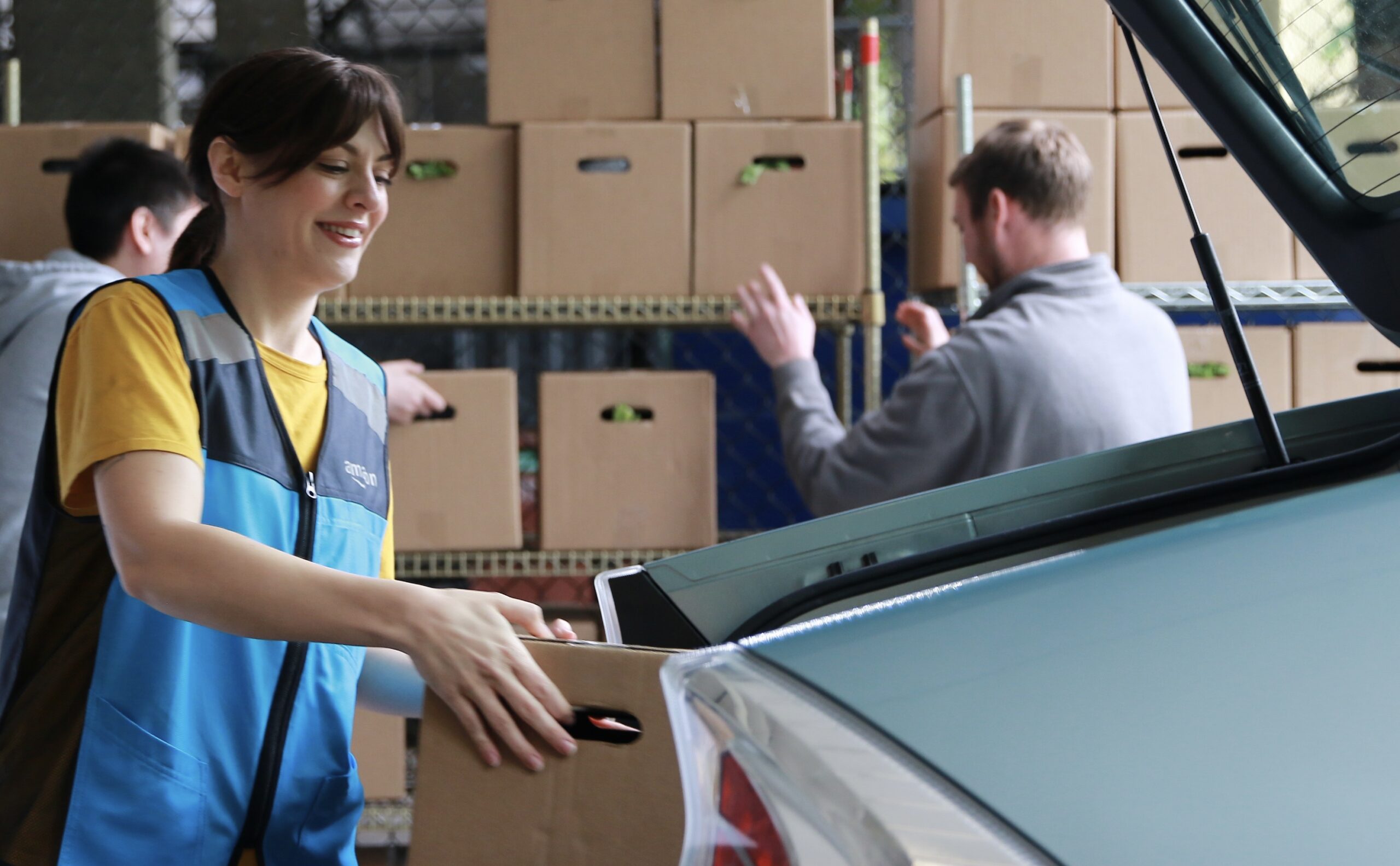
About 80% of the work that Amazon does with food banks is through its Flex program, in which drivers using their personal vehicles collect food from a food bank site and deliver it to homes within a specific radius.
Under another model, Amazon sends a 53-foot truck to a food bank warehouse to receive labeled and palletized packages that get injected into one of Amazon’s sort centers. From there, the food packages blend in with all the other Amazon packages being processed, eventually getting delivered by one of its big blue vans.
“That works well for deliveries that need to go a bit farther,” Hirschland said. The method is also appropriate for non-perishable food since it takes more than a day for those deliveries to happen.
Amazon is amenable to working with new partners, Hirschland said, and expects to add ten to 15 new partner distribution sites over the next year. It looks for organizations that are doing at least 50 deliveries a week, and anticipate keeping up that pace for the foreseeable future. “If you’re below about 50 deliveries a week, we’re probably not the best solution for you,’” he said.
Hirschland indicated that Amazon’s commitment to free meal deliveries is ongoing. “We fully expect that this is going to be a longer term program” with the potential to go beyond 2028. “We love this program,” he said. “We want to keep investing in it.” – Chris Costanzo
Like what you’re reading?
Support Food Bank News