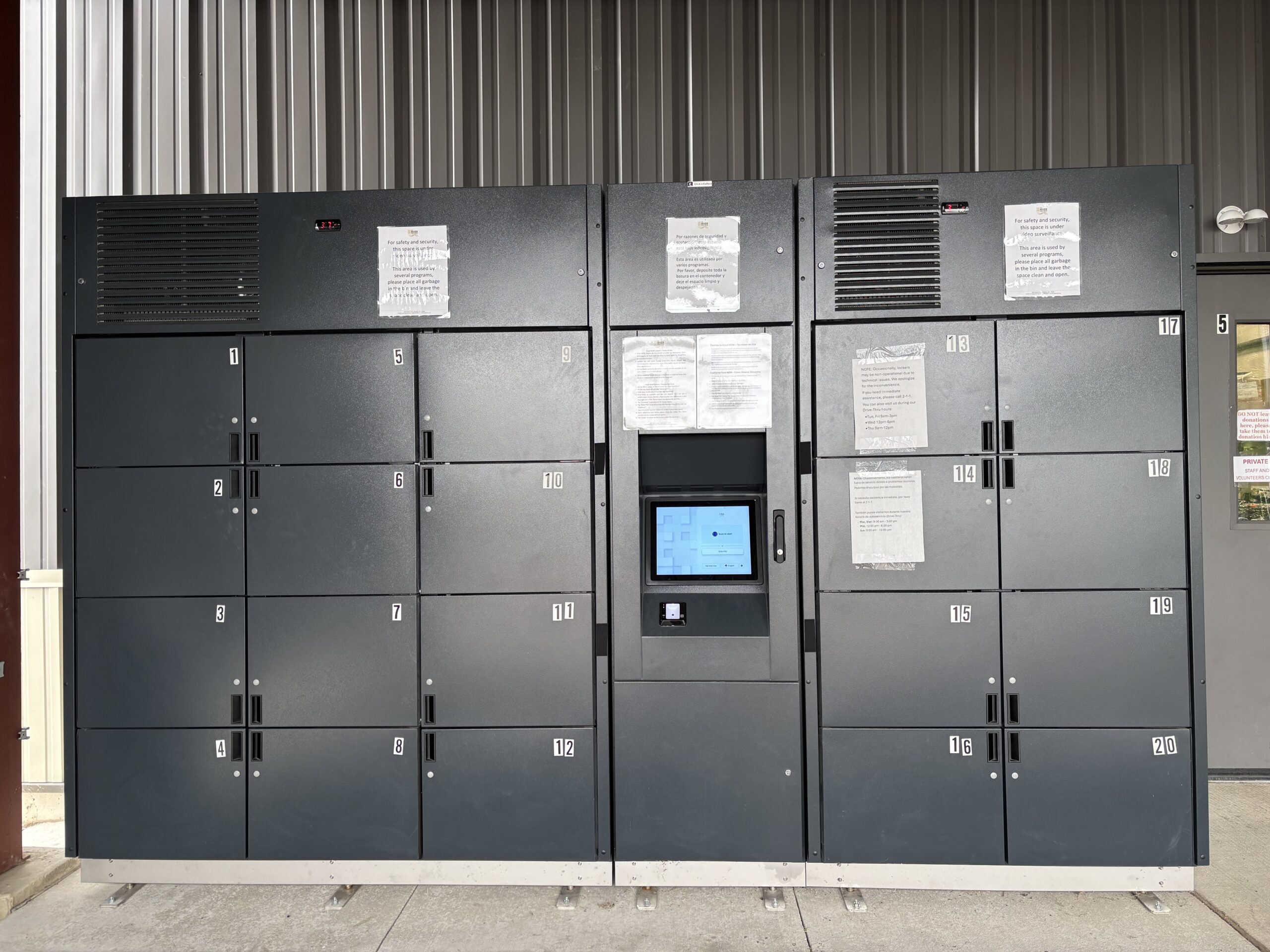
Food lockers may be a relatively new concept, but The River Food Pantry in Madison, Wis. is already on its second version. The lockers are helping fulfill its mission of reaching clients wherever they’re at.
The River introduced the updated version of its after-hours locker program earlier this year to meet the immediate needs of clients when its other distribution options are not available. Anyone can access the 20 refrigerated lockers, called Food NOW (Nights or Weekends), whether they’re a registered client or not.

“Our philosophy is to do what we can to help people where they are. That’s really the driving force behind the creation of a lot of these programs,” said Anupam Devkota, ePantry Coordinator at The River, which serves some 4,000 people a week.
The original version of Food NOW launched in 2023, when a group of University of Wisconsin-Madison students received funding through the Wisconsin Idea Fellowship Program to help bring the idea to fruition. The original lockers were metal, with programmable locks, and users had to complete a form on The River’s website to obtain a QR code to access a locker.
“We tried to make things work, but there were certainly lots of issues,” Devkota said. The locks didn’t always work. Moreover, the metal lockers weren’t a great fit for Wisconsin winters, so The River added heating coils to keep contents from freezing or bursting. On average, the pantry stocked eight to ten lockers, but saw just two locker visits per day.
When The River moved to a new, purpose-built building early this year, it explored ways to improve the program. Click n Collect, an Australia-based company with a presence in the U.S., frequently came up as a potential vendor, Devkota said, but its software didn’t support the pantry’s on-demand model.
At the time, Click n Collect’s software required pantries to match a locker to a neighbor in advance, explained Tyler Coates, General Manager with Click n Collect, which works with a number of U.S. food banks, including Feeding America Eastern Wisconsin, Food Bank of Eastern Oklahoma, and Treasure Coast Food Bank, according to its website..
Click n Collect’s delivery modes include: 1) scheduled pickups, where a neighbor orders online, chooses a pickup time, and staff prepares the order in time for the pick up; 2) request-based pickups, where a neighbor orders online, and staff sends an access code once the order is filled; and 3) program-based access, where a neighbor enrolls in a program and uses their own PIN to collect groceries on scheduled days.

When The River reached out, Click n Collect developed a software update to support on-demand pickup as a fourth delivery mode. With on-demand pickup, anyone can walk up to a locker, enter their cell phone number, and immediately receive a PIN by text to open a locker. The approach eliminates the need for food pantry staff to receive orders, schedule appointments, complete paperwork, or be on-site during pickups. The update also enables pantries to establish “fairness controls” that limit how often a single phone number can access the system, Coates noted. Pantries can use any or all modes for their lockers.
“We built it because our partners kept asking for it,” Coates said.
The River relaunched Food NOW this past May, stationing a bank of refrigerated Click n Collect lockers next to its building, intended for neighbors in immediate need. This often includes unhoused individuals unable to carry large amounts of groceries or who need safe, ready-to-eat food. “It really is a stopgap that’s designed to serve folks in those emergency situations until they can get to our regular pantry service hours,” Devkota explained. The River does not require locker users to register and does not count locker visits against other visits, but it does limit access to once every 72 hours.
Uptake has been strong, Devkota said. In its new iteration, Food NOW typically serves 30 to 40 neighbors per week. This past August logged 171 locker visits, up more than 50% from August 2025.
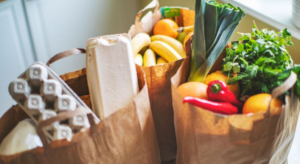
A typical locker holds a bag of shelf-stable food and a bag of perishables, such as longer-lasting fresh fruits like apples, as well as information about The River’s other programs. Hygiene and seasonal items, such as masks during wildfire season, may also be included. “One big positive has been the refrigerated produce,” Devkota said. “People have really liked that.” While The River would prefer to rely on donated food, stocking locker-appropriate items often requires purchasing food instead.
Devkota encourages pantries considering an after-hours locker program to define whom the program will serve and how the lockers will be used. When making plans for volunteers, restocking frequency, and what to distribute, he added, pantries should be prepared for fluctuations in demand. Beyond initial equipment and entry system costs, The River maintains a service contract with Click n Collect for support and system updates.
Going forward, The River hopes to address the current need for a cell phone to access lockers. It is exploring alternatives, but other options, such as manually assigning lockers on request, is too labor-intensive, Devkota said.
Food NOW reflects The River’s commitment to creating different access points for different circumstances. At the pantry’s walk-up/drive-through pantry, visitors select from a menu of 15 to 20 items, which volunteers then bag for them. While The River ran an indoor in-person pantry before Covid, it decided to maintain the drive-through/walk-up approach after Covid in response to client preference.
The indoor in-person pantry, Devkota said, could require neighbors to wait up to two hours to receive groceries, while the current approach cuts that wait to thirty minutes or less. “Folks were also worried about, ‘What do I do with my kids? What do I do with pets? I don’t necessarily want to be around strangers,’ or they might have privacy concerns or concerns about being seen,” he added. The River is now able to devote more of its new, 32,500-square-foot facility to storage and food prep.
The pantry also offers an array of other distribution points: an on-site, pre-bagged “express” service; home delivery for those unable to access the pantry; online ordering for those with specialized dietary and cultural needs; prepared meals; community dining, and a mobile meal program. Its distribution is informed by regular surveys. Devkota explained. Last year, exclusive of its partnerships with other agencies, the pantry’s access points directly served approximately 21,000 unduplicated individuals across over 387,000 points of service.
“We’re meeting needs for as many people as we can. We can’t be everything for everyone all the time, but we do our best to try to meet the needs of as many people in our community as possible,” he said. – Amanda Jaffe
Amanda Jaffe is a writer and former attorney with a deep interest in organizations and mechanisms that address food insecurity. You can find more of her writing on her Substack publication, Age of Enlightenment (https://amandajaffewrites.substack.com/), and at www.amandajaffewrites.com.
PHOTO, TOP: The Food NOW (Nights or Weekends) lockers at The River Food Pantry in Madison, Wis.
Like what you’re reading?
Support Food Bank News
This article was made possible by the readers who support Food Bank News, a national, editorially independent, nonprofit media organization. Food Bank News is not funded by any government agencies, nor is it part of a larger association or corporation. Your support helps ensure our continued solutions-oriented coverage of best practices in hunger relief. Thank you!