Community Farmacy, a joint health initiative between Fort Wayne, IN-based Community Harvest Food Bank and a local healthcare facility, is making an impact on public health without prescribing pills.
In just 12 weeks, participants in this year’s Community Farmacy program recorded notable improvements in their health, with some cutting their blood-sugar levels by nearly two full points, and others notching measurable drops in weight, blood pressure, and cholesterol.
The positive outcomes are in line with findings from recent research studies that also demonstrated the value of nutritious food in improving health. Such outcomes are notable at a time when Food is Medicine initiatives are facing increasing scrutiny from federal and state funders.
The Community Farmacy program seeks to help low-income and uninsured populations tackle chronic health conditions by providing food assistance and nutrition education, along with personalized medical support. The program is specifically focused on diabetes, which disproportionately affects low-income populations in the U.S., where healthy food is expensive; fast food outnumbers supermarkets five to one; nearly 27 million people lack health insurance, and limited health literacy can lead individuals to make pragmatic decisions that prioritize short-term over long-term health.
“Reducing barriers of access and education” is essential, said Joel Bowerman, Director of Programs at Community Harvest Food Bank, if communities hope to reverse this epidemic. Community Farmacy is showing what that future might look like.
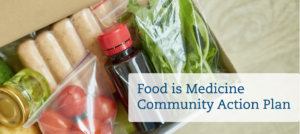
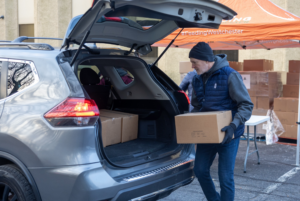
The program’s success lies in its design. Participants commit to a structured 12-week program that addresses both medical and lifestyle needs. Every other week, they are given a 50-pound food voucher to shop at Community Harvest’s Community Cupboard, giving them consistent access to fresh produce and healthy pantry staples during the program’s duration. Their clinic visits at Matthew 25 Health and Care, a local nonprofit focused on providing medical care, held on alternating weeks, are centered on diabetes education and monitoring, with continuous glucose monitors provided to track blood sugar changes in real time.
Matthew 25 staff explained that with the glucose monitors, “patients could finally see how the food they ate affected their sugar in real time,” said Katherine Delagrange, a registered nurse. Beyond food access and medical oversight, the program emphasizes long-term skill building. Participants attend cooking demonstrations and nutrition classes, learn label reading and meal planning strategies, and are asked to keep detailed records to monitor their caloric intake and physical activity, such as daily step counts.
Attendance and participation are carefully tracked, and those who do not meet the program’s standards are removed to ensure fairness and accountability. Those who successfully adopt healthier habits and show measurable improvements in key health indicators, such as reduced blood-sugar levels, lower weight, or improved cholesterol, are recognized at the program’s conclusion. This year, six participants successfully completed the program.
The collaboration between Community Harvest Food Bank and Matthew 25 was born about five years ago, when Dr. Eric Beier, a local physician entrepreneur, and his wife donated funds to support a program that would address the root causes of diabetes, rather than just its symptoms. The Farmacy was designed as a three-month initiative (occurring annually) that combined access to healthy foods with medical oversight and education, creating a program that not only fed individuals but also gave them the tools to improve their long-term health.
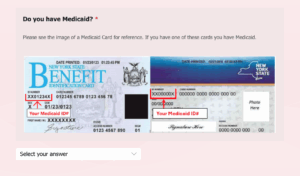
The Community Farmacy program targets a very specific patient population: those who often face the steepest barriers to managing chronic conditions like diabetes. To qualify, participants must be eligible patients of Matthew 25, meaning they are 18 years of age or older, live in one of the surrounding counties in Northeast Indiana or Northwest Ohio, have no form of medical insurance (including Medicaid, Medicare, or HIP), and fall at or below 200% of the Federal Poverty Level.
In addition to these requirements, individuals must also meet health-related benchmarks, such as having a body-mass index within a qualifying range and a blood sugar level (hemoglobin A1C) of 6.5 or greater, and must be formally referred into the program by their Matthew 25 primary care provider. Bowerman notes that these requirements ensure that the program is serving exactly who it’s meant to serve: “the uninsured, the underserved, and those at the highest risk of diabetes complications.”
Once enrolled, patients quickly began to see – and feel – the benefits of the program. According to Dr. Tammie Stinson, Medical Director of Matthew 25, “participants really seemed to enjoy the dietitian education sessions, being introduced to new foods and recipes that they as well as their families could enjoy.” In fact, several patients tried foods they otherwise may not have had the chance to access, and many carried their new cooking skills back to their households, improving the diets of entire families.
Dr. Tammie Stinson also noted that “with the 2025 program, we saw three participants who improved their hemoglobin A1C between 1.5–1.9 points in just 12 weeks,” while others saw measurable reductions in BMI, waist circumference, cholesterol, and blood pressure. To celebrate these successes, prizes such as bicycles, Fitbits, and grocery gift cards were awarded to encourage participants to continue their healthier lifestyles.
As Delagrange put it, these improvements show “the start of a healthier body and lifestyle” and illustrate how access, education, and accountability can improve health outcomes. The program is helping to “reduce reliance on medications and prevent the progression of diabetes,” Bowerman explained.
While food banks play a vital role in providing nutritious food to underserved communities, addressing health disparities across socioeconomic classes demands more than short-term solutions. As Dr. Tammie Stinson emphasized, it requires “long-term education that empowers patients to take charge of their health.” That is exactly the mission at the heart of Community Farmacy. – Nolan Paul
Nolan Paul is a high school senior from Fort Wayne, Indiana. He spent his last two summers interning and volunteering at the Community Harvest Food Bank of Northeast Indiana and has a passion for spreading awareness about food insecurity.
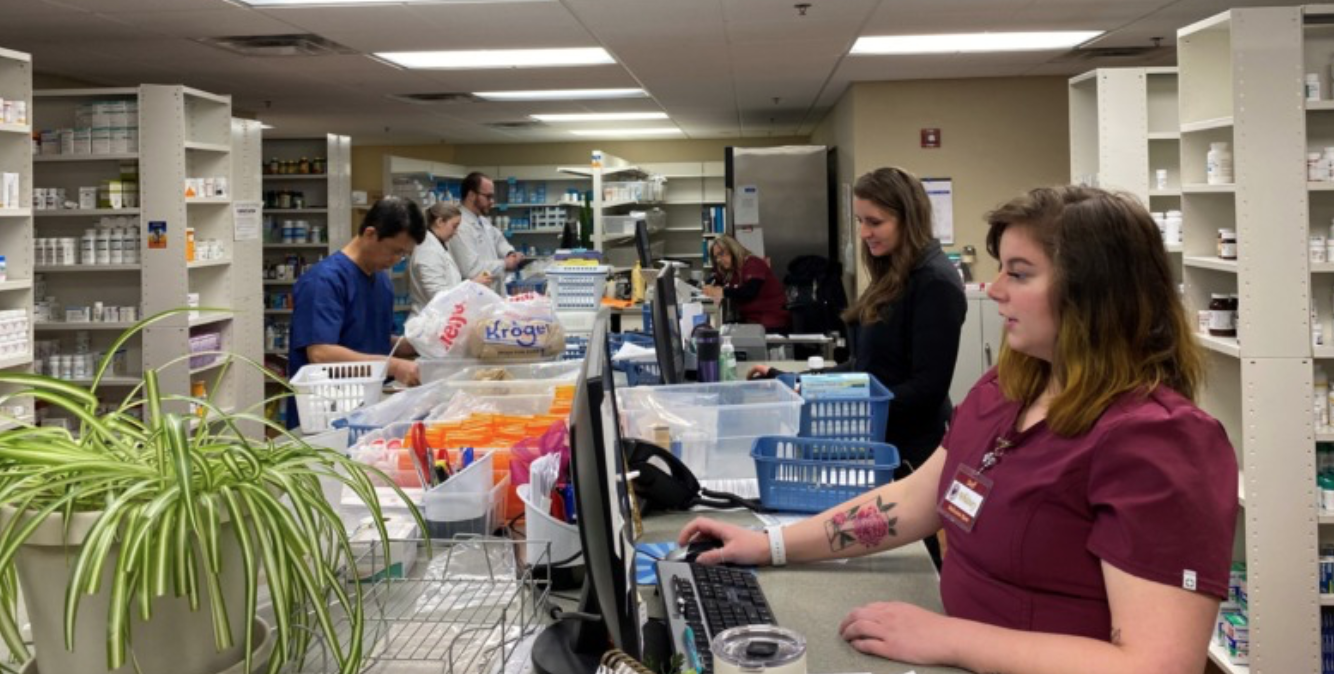
PHOTO, TOP: Healthcare workers at Matthew 25 Health and Care.
Like what you’re reading?
Support Food Bank News