Some of the things that make Food is Medicine attractive to community-based organizations also make it attractive to for-profit companies. Both, for example, would like to use the insurance reimbursements they get for providing healthy food to help sustain their operations.
That tension has helped propel an action plan designed to help community organizations create Food is Medicine plans that stand out, even against for-profit companies that offer competing services. The Aspen Institute published the plan last month.
The outlook in California – one of 16 states that is testing Food is Medicine in its Medicaid program – offers some perspective on the competitive landscape for contracts. In California, two-thirds of the contracts for Food is Medicine services are going to for-profit, often venture-capital funded companies, said Cathryn Couch, CEO of the nonprofit medically tailored meal provider Ceres Community Program. Such contracts, however, do not tend to prioritize building out local food systems or supporting critical safety-net organizations, she noted.
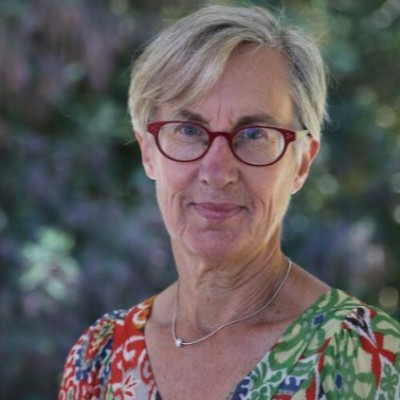
“There’s a lot at stake here,” Couch said during a webinar introducing the plan. “The Community Action Plan is really important in elevating the impact that community providers have.”
Ceres offers a case study in the type of Food is Medicine services that community organizations can offer. Ceres gets nutrition referrals from more than 90 partners, including housing, social services and mental health organizations, in addition to healthcare providers. “There is a whole set of patients we are unearthing because we have deep relationships with this broad spectrum of provider organizations,” Couch said, noting that out-of-area companies just don’t have the same connections.
Ceres sources the food for its nutrition services from more than 100 organic farms, ranches and dairies, most of them within 250 miles, as well as its own farm. And its volunteers provide trusted support, showing up at patients’ doors week after week to make deliveries. With a focus on local food systems and stronger social connections, community organizations like Ceres “provide far more value for the dollar invested” than other types of providers, Couch said, adding, “This is a moment in the Food is Medicine movement where we really, really need to uplift the choices that we’re making.”
Fear of being outpaced by venture-backed, for-profit companies was just one of seven issues raised in the Feeding America Workshop section of the Community Action Plan. Unreliable funding and underdeveloped technology also made the list, as did still-evolving definitions of Food is Medicine.
During the webinar, Christopher Long, recently named the Director of Research and Scholarly Partnerships at Heartland Whole Health Institute, acknowledged another tension: Insurers operating across large regions often find it easier to contract with a single for-profit company than multiple smaller community organizations. “You have to have a service that really spells out what exactly will be delivered, what is the proof of concept, and can you deliver it at scale in the places where it needs to be delivered?” Long said.
The action plan noted the importance of food banks aligning within their state to present a unified offering to insurers, a strategy already in evidence. The Federation of Virginia Food Banks, for example, has been corralling its seven food bank members to work together on establishing common definitions of healthy food, as well as standard tools to support referrals. And in Michigan, the Food Bank Council of Michigan is building a statewide database to support information-sharing between healthcare and hunger relief providers (see our story here for more on both those initiatives).
The importance of a statewide vision to promote the adoption of Food is Medicine got a boost from Rockefeller Foundation last month. It announced a $10 million fund to help up to ten states hire dedicated leaders known as State Officers for three years to develop policies and programs aimed at promoting nutrition services in their state healthcare plans. “We know states want to stand up effective and accessible programs, but have some capacity challenges,” said Dana Thomas, Managing Director of Food is Medicine at Rockefeller Foundation. “So we identified this fund as a way to resolve some of the capacity challenges.”
Thomas added that she hopes to see at least some states submitting applications that show an effort to work with their community-based partners. “There is an opportunity to bring in community-based organizations early and understand what their pain points are, understand their interest in participation, and figure out a way to bridge some of the gaps between programming and implementation,” she said. – Chris Costanzo
Like what you’re reading?
Support Food Bank News