With uncertainty riding high these days, many food banks are focused on the basic task of pushing out more food through their pantry networks. At the same time, some are also seeing the value of building up their pantry networks in search of longer-term solutions to food insecurity.
Capacity building may not be the first strategy that comes to mind when federal funding is scarce and the demand for food is up. But reimagining sustainable solutions to hunger may be just what this moment calls for, say some experts.
“Now is the time to create cross-sector partnerships,” said Katie S. Martin, Ph.D., CEO of More Than Food Consulting, which recently hosted a webinar, Capacity Grants from Food Banks to Food Pantries, on this topic. Such partnerships should aim to bring together different types of funding, as well as a broad range of partners to work on network-level strategies that better address hunger.
Good Shepherd Food Bank of Maine has been striving to be not just a source of food, but also a partner in the community, partly through a program it calls Nourish and Flourish. Initiated during the pandemic to award capacity-building grants, the program started with a bang, investing $1.8 million to 120 partners in 2020, another $1 million to 47 agencies in 2022; and $720,000 to 29 agencies in 2023.

By the end of year three, the impact of the program was “crystal clear,” said Shannon Coffin, Vice President of Community Partnerships. Agencies that got funding saw growth of more than 560% in meals from 2019 to 2024 – four times the growth of agencies that did not receive any investment. “It isn’t just about logistics. It’s relational,” Coffin said during the webinar. “When we invest in trust, trust returns in community impact.”
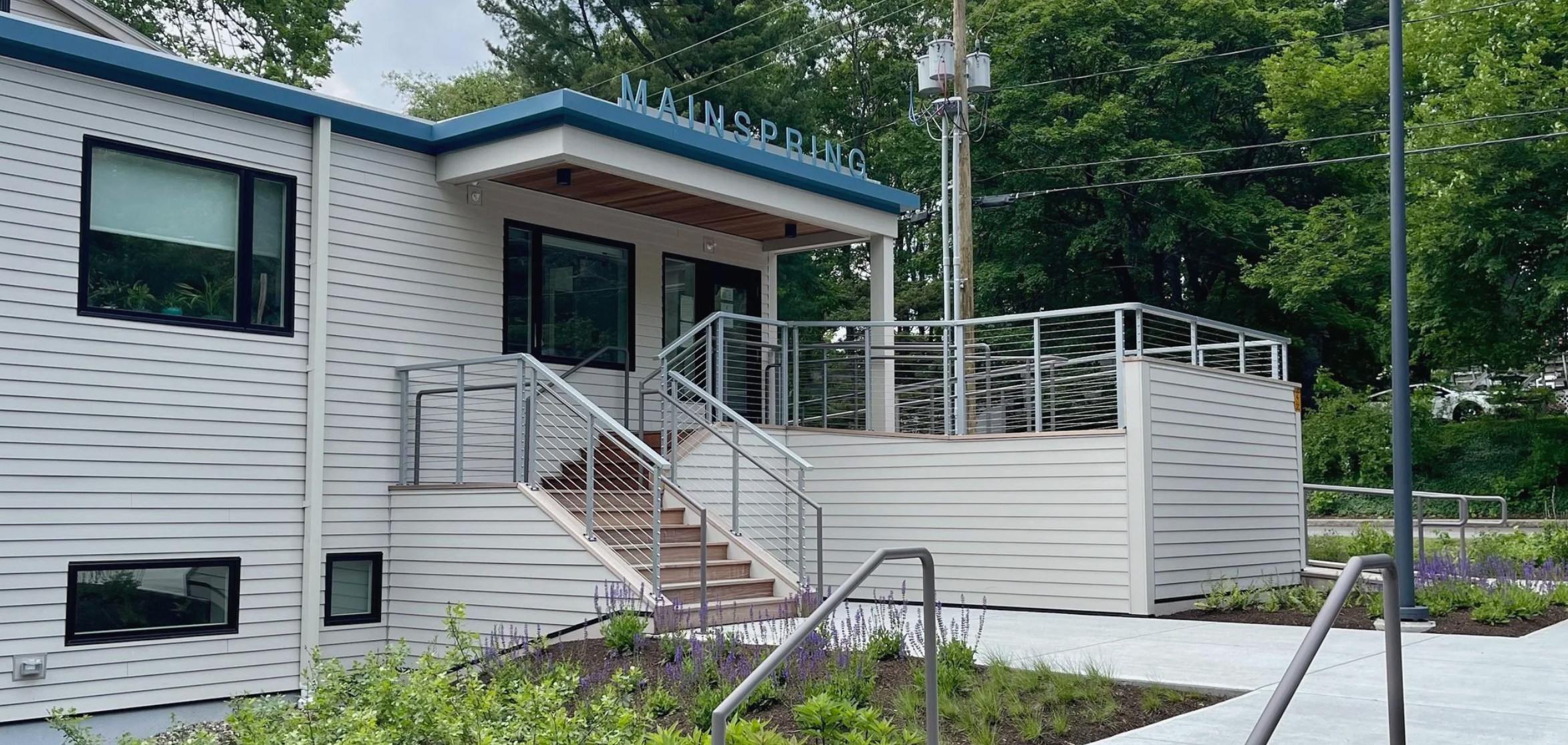
Among the projects that have been brought to life with the help of Nourish and Flourish is a multi-service community hub known as Mainspring that combines food access, housing, medical care, legal aid and workforce readiness all under one roof. Another is a stigma-busting advertising campaign called “Life Happens, but Hunger Shouldn’t,” which has helped to reshape the narrative around hunger relief.
Though the current times are leaner, Good Shepherd continues to fund Nourish and Flourish, vowing to open new rounds of the program once it has at least $350,000 to invest. “That protects us from inadvertently fostering competitiveness and a scarcity mindset within the network, and it respects our partners’ time and capacity,” Coffin said.
Coffin emphasized the diversity of ideas spurred by Good Shepherd’s grant-making. “We’re investing in our partners not just as service providers, but as visionaries, connectors and change-makers,” Coffin said, adding, “Don’t be afraid to think outside the box, because you’ll find your partners certainly are not.”

In a similar fashion, the Community Food Bank of New Jersey and the state’s other four major food banks are letting partner agencies choose their own paths toward growth through a statewide effort known as Growing Healthy Pantries. Funded by the health insurance provider Horizon ($300,000 over two years) and Feeding America ($800,000 over two years via a Boundless Collaboration grant), as well as half a dozen other funders, the program seeks to help pantries move forward on a number of fronts, such as increasing access to nutritious food, moving to client-choice, connecting families to local resources, and advocating for food security. As a statewide collaborative, Growing Healthy Pantries exists outside of each food bank’s own capacity-building efforts, which – for the Community Food Bank of New Jersey, for example – amounted to about $15 million in grants to its network over the past four years.
At the core of the Growing Healthy Pantries initiative is a best practices toolkit that is impressive for its size, detail and organization. At nearly 500 pages long, the document is organized into 12 highly readable chapters that walk pantry managers through the ins and outs of topics ranging from acquiring healthy foods, improving the pantry environment, participating in advocacy and getting funding – with self-evaluations, worksheets and checklists mixed in with the knowledge sharing. It’s not meant to be read in one shot; pantry managers can “choose their own adventure” by picking a single topic and diving in.
This spring, the five New Jersey food banks began awarding grants of up to $20,000 to their first cohort of 19 pantries (out of 33 that applied). In addition to the grant funding, the initial cohort will receive one-on-one technical assistance and be entered into a community of practice that emphasizes peer learning. The food banks hope to see continuous improvement among the state’s pantries as more cohorts get added into the program. “We have had a lot of interest from people who have started to look through the toolkit and think about what they might want to apply for in future years,” said Elizabeth McCarthy, President and CEO of Community Food Bank of New Jersey, in an interview.
Choosing awardees among applicants expressing their ideas and aspirations is a big responsibility that food banks do not take lightly. The Food Bank of Eastern Oklahoma established an internal task force of about six staff members to evaluate all the requests that came in when it opened a capacity enhancement grant opportunity in 2023. About 25% of the food bank’s pantry partners submitted applications requesting over $18 million, said Mikayla Higginbotham, Director of Partner Services, during the More Than Food Consulting webinar.
Teams of two reviewed about 30 applications each before the entire task force met multiple times to review and discuss the recommendations. In all, each application was reviewed about three times using a rubric and a grant scoring form and sometimes including conversations with partners and site visits. With funding provided by Feeding America, USDA and a transformational gift from a donor, the food bank awarded 86 partners a total of $3.5 million for various projects, including funding a full-time food pantry manager for two years, a greenhouse used to sell plants to raise money, and a transition from a drive-through to a full-choice pantry.
Higginbotham described the grant process as going beyond providing equipment to promoting resources that can bring about long-term sustainable change, adding, “We asked ourselves how can we bring about transformation, and not just be transactional in our relationships with our partners.” – Chris Costanzo
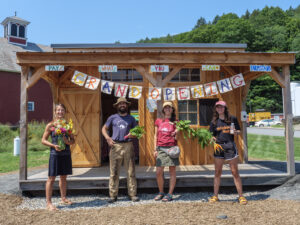
CAPTION, TOP: A community resources hub is among the projects that Good Shepherd Food Bank’s Nourish and Flourish capacity grant-making program helped bring to life.
Like what you’re reading?
Support Food Bank News