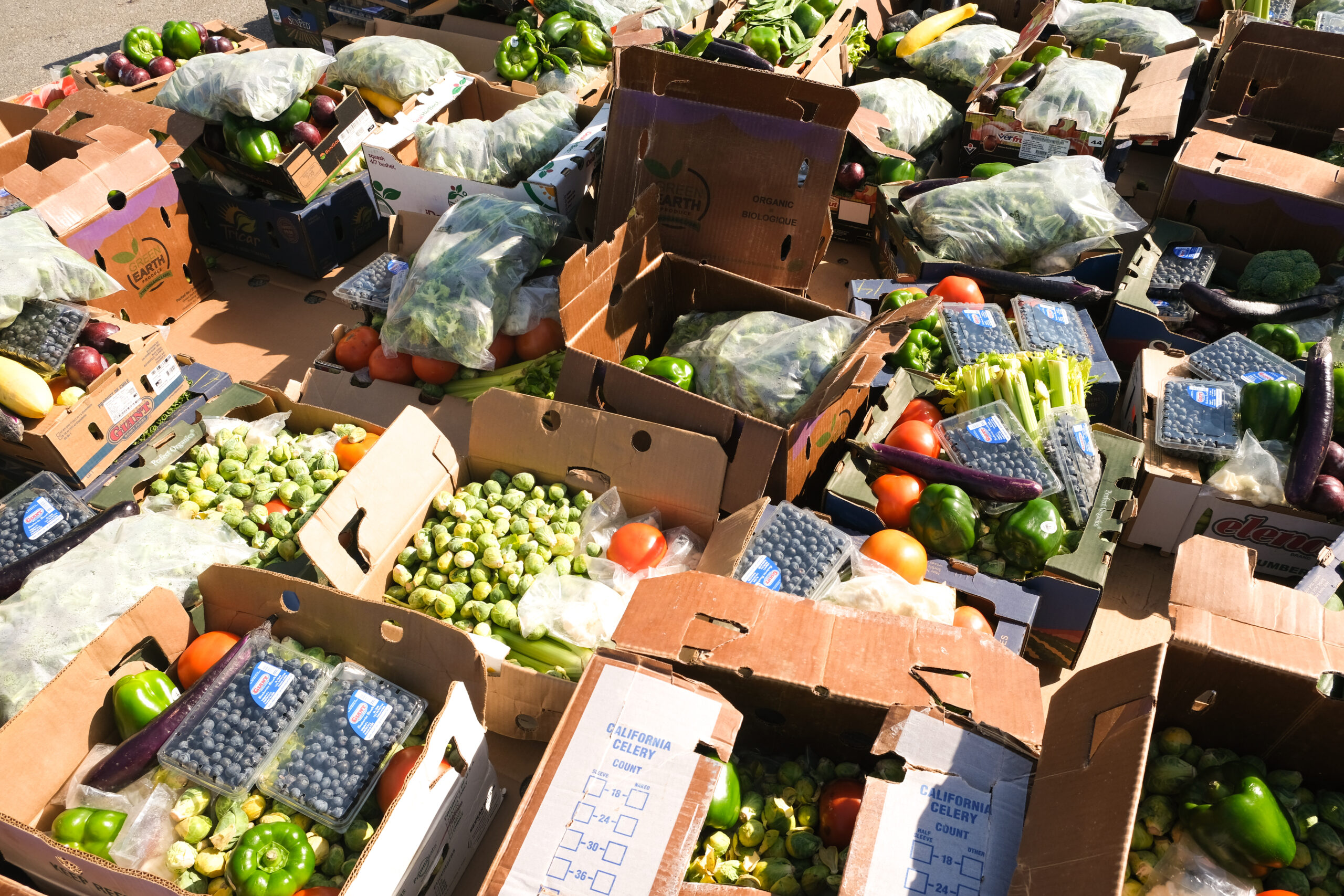
Food banks have a new way of describing their impact to potential donors. For the first time, they can speak with authority about their environmental impact related to rescuing food, potentially opening up a wave of interest from climate-conscious donors.
The opportunity is the result of years of work by standard-setters, technology companies and the food bank network itself to develop a first-of-its-kind in the carbon credit world: a certificate that recognizes the methane avoided when food is rescued. Methane, a super-pollutant generated in part from food waste and loss, is seen as a critical lever against climate change.

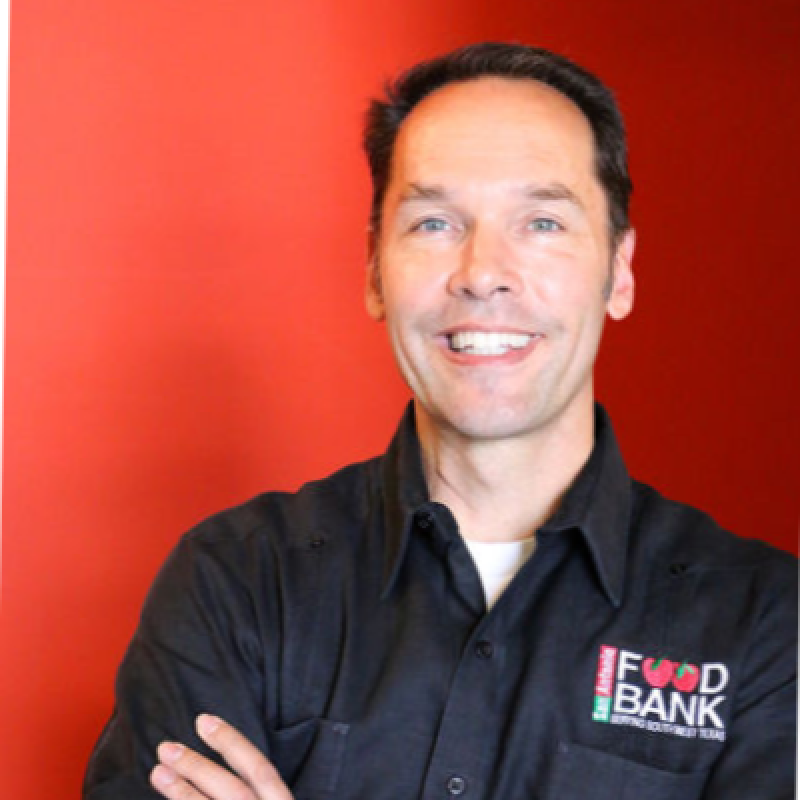
Developing a carbon credit for rescued food has been a long-time area of interest for Feeding America and the subject of a Feeding America task force run by Eric Cooper, President and CEO of San Antonio Food Bank. The initiative got a jumpstart when Cooper connected with a technology company named Brightly that was developing a carbon credit for rescued food.
By teaming with Brightly, the food banking community offset the risk that it would have had to take on to build a data and measurement infrastructure for carbon credits on its own. “Brightly accelerated our opportunity and eliminated our risk,” Cooper said.
After spending about three years establishing the methodology and infrastructure, the partners announced last month the issuance of a series of carbon credits for rescued food. Between March 2020 and December 2023, the participating organizations of 198 Feeding America food banks and 28 independent organizations saved 15.3 billion pounds of food, 3.1 billion pounds of which were deemed to qualify for carbon credits, after accounting for historical baselines and emissions spent related to gathering the food.
The qualifying rescued food resulted in a pool of more than 700,000 highly rated carbon credits, which are now being sold to corporations that want to offset their own emissions. Importantly, the majority of the revenue generated through the carbon sales will go back to the partner food banks and food rescue organizations, allowing them to build up a sustainable revenue stream that’s expected to grow over time. “That enables them to recover more food, feed more people, and keep more methane gas out of the atmosphere,” said Andy Levitt, Founder and CEO of Brightly.
While earned revenue is welcome in food banking, Cooper emphasized that the bigger benefit for participating partners is the ability to scientifically validate the environmental impact of the specific food they rescued. Doing so is expected to strengthen relationships with existing donors that care about the environment as much as they care about feeding people. In addition, he noted, 4% of all philanthropy in America is restricted to environmental organizations. “We could never talk to those foundations and donors because we didn’t have a scientific claim,” Cooper said. “Now that we do, it will open the door for additional partners to help fund this incredibly important work.”
The goal of Feeding America’s carbon offset task force now is to “empower food banks with validated data about their work, and then help them tell that story at the local level,” Cooper said. San Antonio Food Bank, for example, has a tracker on a blog post on its website that shows the environmental impact of the food it rescued in 2023 – it was the equivalent of taking 3,300 cars off the road.

For individual food banks, participating in the carbon credit program is free of cost and submitting the required data is intended to be simple going forward, now that the kinks have been worked out. Even building the initial methodology was relatively straightforward, since the organizations were already tracking and recording their food-rescue data, though there was still a lot of back and forth required. “I’m thrilled that it was such an incredibly rigorous process because it underscores the accuracy and the quality and the integrity of these credits,” Levitt said.
Verra, the largest carbon registry in the world, has approved Brightly’s carbon credits for food rescue under its newly created methodology for avoided food loss and waste, making Brightly the first and only project developer to utilize the methodology. Brightly also has undergone a rigorous audit process with SCS Global Services, a leader in sustainability standards. BeZero Carbon, an independent carbon ratings agency, has assigned Brightly an overall A rating for its credits. “We feel really proud of the high quality, high integrity product that we have, combined with the social impact of these carbon credits,” Levitt said.
Brightly has already begun to sell the credits in the voluntary carbon credit market, pricing them at between $10 and $15. Selling all 700,000+ of the current credits at a premium price would generate more than $10 million of top-line revenue, Levitt said, which would then be distributed proportionately to the individual participating organizations based on their contributions to the pool. “There should be, at a broad level, millions of dollars flowing into the food rescue ecosystem from our work,” he said.
Work has already begun on quantifying food rescued in 2024, and additional years will follow. “We’ll just keep growing,” Cooper said. The renewable funding mechanism, along with the expected increase in the amount of donor support for food rescue, should ultimately grow the overall amount of food rescued, he added.
Levitt, a serial entrepreneur who started and sold a plant-based meal kit delivery service, worked as a consultant during Covid to Farmlink Project, where he became attuned to the connection between food waste and climate change. With no funding nor connections in hunger relief, he took a chance on building the carbon credits for food rescue, keeping a larger purpose in mind. “You’ve got these two interconnected issues of climate change and food insecurity,” he said. “What Brightly aims to do is to tackle both of these huge existential issues that we face.” – Chris Costanzo
Like what you’re reading?
Support Food Bank News
This article was made possible by the readers who support Food Bank News, a national, editorially independent, nonprofit media organization. Food Bank News is not funded by any government agencies, nor is it part of a larger association or corporation. Your support helps ensure our continued solutions-oriented coverage of best practices in hunger relief. Thank you!