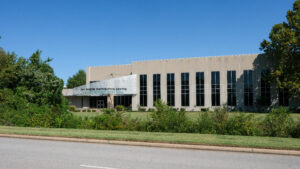
GUEST POST BY STACEY CRNICH OF GOODROOTS NORTHWEST – When GoodRoots Northwest, formerly the Bonney Lake Food Bank, quietly closed the doors of its client-choice pantry, it wasn’t a sign of failure. It was a declaration of strategy and a replicable model for success.
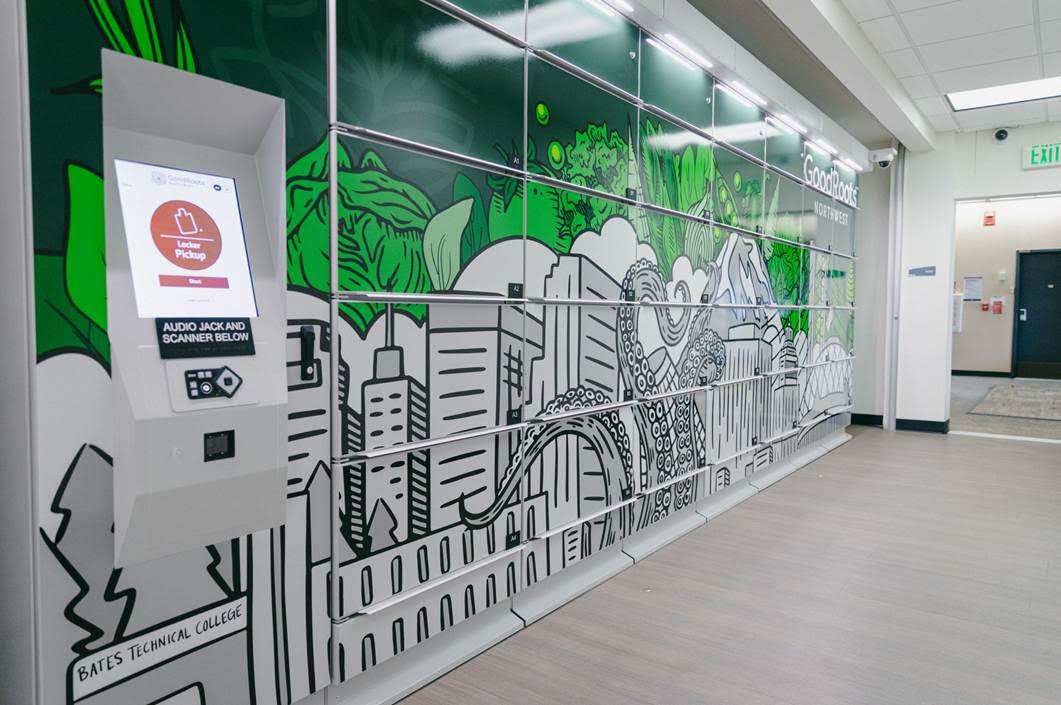
Our Pierce County, Wash.-based organization made a decision that no food bank in the country had made before: abandon the traditional pantry model entirely and replace it with a network of temperature-controlled smart lockers distributed across eleven community locations, including libraries, fire stations, post offices, transit hubs, college campuses and community markets, spanning more than 380 square miles. (See how the system works here.)
Most organizations would call that a pilot. We called it the future, and the results are making it hard to argue otherwise.
We now process between 250 and 350 locker orders every day, exceeding 400 during peak months, and we estimate more than 140,000 client visits to our locker network annually. One locker alone is outpacing 95% of brick-and-mortar food banks in Pierce County. We are now planning to expand our service area to 500 square miles.
We didn’t stumble into this model; we pursued it with intention. Our network of regional food lockers are internet-connected, self-service, and open around the clock. Closing our physical storefront wasn’t a loss. It was the point.
What makes our model distinct isn’t just operational efficiency — it’s what the experience feels like for the people we serve. Clients browse available items through an online ordering interface, select what they need, and schedule a pickup at a locker near them. When they arrive, a unique access code unlocks their compartment. No staff member needs to be present. No appointment window needs to be kept. No one is watching.
It’s the dignity of your own anonymity. We have a system in place that’s so automated that we never need to lay eyes on you as a provider. And we think that’s the ultimate dignity.
For working parents, rural residents, and communities historically underserved by English-only, daytime-only food systems, that anonymity and 24 x 7 accessibility are not nice-to-have. They are the difference between using the service or not.
The locker infrastructure we deployed — Bell and Howell’s QuickCollect GL smart lockers, paired with SmartChoice, a client-choice e-commerce platform built for food access programs — maintains refrigerated and frozen temperature zones simultaneously. Orders flow through the platform, are loaded into the appropriate lockers, and clients receive mobile notifications when their pickup is ready. Transactions are private, automated, and available around the clock.
For food programs with clinical components, the same platform supports integration with electronic health records, allowing dietary orders to trigger food fulfillment automatically. It also provides the outcomes data that Medicaid managed care organizations and value-based care contracts increasingly require. For rural programs, weekly replenishment routes can serve multiple locker locations from a single run, extending reach without proportional cost.
What GoodRoots has built is not a custom solution engineered for a single organization. Our model is replicable. The infrastructure is available today as a turnkey deployment, applicable to urban food pantries, federally qualified health centers running Food is Medicine programs, rural health initiatives integrating food into chronic disease management, and college campuses addressing student food insecurity.
The sector has watched retail, pharmacy and package delivery go through this same transformation, from fixed-hour, staff-dependent pickup to automated, on-demand access. Food programs have been slower to follow. GoodRoots Northwest just made the case for why waiting no longer makes sense.
Stacey Crnich is CEO of GoodRoots Northwest.
Like what you’re reading?
Support Food Bank News