A visit to San Diego’s Comic Con museum has given rise to a social enterprise business at Feeding San Diego that uses superhero tales to inspire school kids to get involved in fighting hunger.
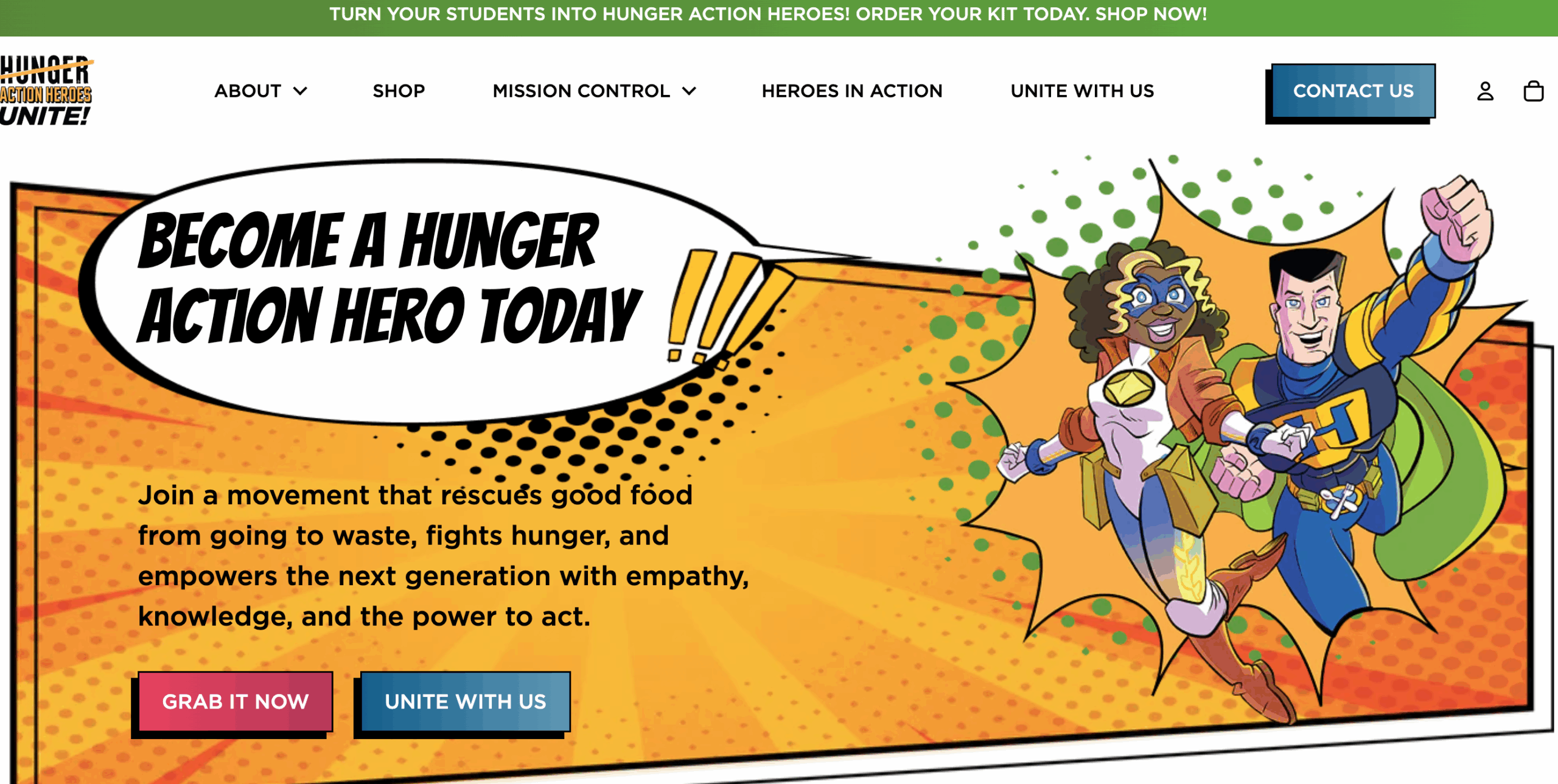
Feeding San Diego’s comic book and classroom curriculum, Hunger Action Heroes Unite!, is designed to educate and empower kids, guided by two superheroes who rescue surplus food and distribute it to people experiencing hunger. The program has reached hundreds of students to date, mostly in San Diego County, and is on course to scale throughout California and eventually nationwide with the help of a new website. Feeding San Diego is looking to involve other food banks in its effort by offering revenue-sharing opportunities for organizations that promote the program to their communities.
“We very much want this to be a community effort right across the country,” said Dana Williams, the food bank’s former Director of Marketing and Communications, now serving full-time as the Social Impact Director for Hunger Action Heroes Unite!.

Williams was visiting the Comic-Con Museum when she was struck by a thought: “Even superheroes need help sometimes.” She pitched the museum on a county-wide art contest inviting students to create a hunger-fighting superhero and origin story. Over 300 students entered the competition, funded by the David C. Copley Foundation. Two winning characters – Demeter and Hunger Halter – came to life, aided by a professional costume designer.
Williams and co-creator Alison Glader, Feeding San Diego’s Strategic Marketing & Communications Consultant, weren’t finished. With support from the Aqualia Foundation, Feeding San Diego commissioned a professionally written comic book and companion curriculum. The goal, said Williams, is “to infuse the messaging and the key concepts that hunger relief organizations across the country grapple with, in a way that can appeal to upper elementary/middle school kids in particular.”
Grounded in national/core standards, the curriculum emphasizes four “big ideas” – hunger’s health impacts, food waste and the environment, empathy, and empowerment. The lessons culminate in a project-based activity, in which Demeter and Hunger Halter invite students to help them by becoming Hunger Action Heroes themselves.
“That could look like a number of different things, depending on the kids and what their preferences are,” said Williams. “We want to get kids off the pages, outside the walls of the classroom and into their communities to help make a difference.”
After 70 fourth and fifth graders at Creekside Elementary participated in a November 2024 pilot, they weren’t done. They organized a food drive for Los Angeles wildfire victims in January 2025, volunteered to glean apples at Feeding San Diego in March, and then organized a lemonade stand to benefit the food bank’s hunger and food rescue efforts.
As Williams heard the students recite statistics they’d learned months earlier, she realized the project’s potential and wondered. “If this is just one example of one school … what if schools across the country could do this and help support their local hunger relief organizations and get involved?”
Feeding San Diego recently began selling program materials on its new Hunger Action Heroes Unite! website. Offerings range from a single comic book ($8.99) to a Classroom Superhero Bundle ($750.00), which includes comic books, handbooks, certificates, and stickers for 40 students; a curriculum guide; a digital animated audiobook; and six video messages from Hunger Halter and Demeter to kick off each activity. In addition to product offerings, the site includes a page designed for students that suggests ways to become a Hunger Action Hero and connects them to resources, such as how to find their local food bank.
While Feeding San Diego’s goal for the first year is $150,000 in sales, “Our current focus is on driving awareness, building partnerships, and getting the curriculum into classrooms,” Williams said. Every dollar of sales helps Feeding San Diego provide two meals and rescue two pounds of food, she added.
Recognizing that many schools face budgetary challenges, Williams hopes to work with mission-aligned organizations to help sponsor curriculum sets for classrooms. Every product offered on the website can be gifted to a classroom by donors or businesses, she noted. – Amanda Jaffe
Amanda Jaffe is a writer and former attorney with a deep interest in organizations and mechanisms that address food insecurity. In addition to writing articles for Food Bank News, she publishes humorous essays on her Substack, Age of Enlightenment (https://amandajaffewrites.substack.com/). You can find more of her writing at www.amandajaffewrites.com.
Like what you’re reading?
Support Food Bank News
This article was made possible by the readers who support Food Bank News, a national, editorially independent, nonprofit media organization. Food Bank News is not funded by any government agencies, nor is it part of a larger association or corporation. Your support helps ensure our continued solutions-oriented coverage of best practices in hunger relief. Thank you!